SchwartzReport: Celibacy Syndrome in Japan — An End to Skin on Skin, Heart to Heart?

Cultural Intelligence, Earth Intelligence

schwartzreport newThis is an extraordinary trend going on in Japan. It is a very clear example of how national beingness is shaped through unnumbered small seemingly mundane choices made by individuals.

Why Have Young People in Japan Stopped Having Sex?
Abigail Haworth – The Guardian/Observer (U.K.)

Ai Aoyama is a sex and relationship counsellor who works out of her narrow three-storey home on a Tokyo back street. Her first name means “love” in Japanese, and is a keepsake from her earlier days as a professional dominatrix. Back then, about 15 years ago, she was Queen Ai, or Queen Love, and she did “all the usual things” like tying people up and dripping hot wax on their nipples. Her work today, she says, is far more challenging. Aoyama, 52, is trying to cure what Japan's media calls sekkusu shinai shokogun, or “celibacy syndrome”.

Japan's under-40s appear to be losing interest in conventional relationships. Millions aren't even dating, and increasing numbers can't be bothered with sex. For their government, “celibacy syndrome” is part of a looming national catastrophe. Japan already has one of the world's lowest birth rates. Its population of 126 million, which has been shrinking for the past decade, is projected to plunge a further one-third by 2060. Aoyama believes the country is experiencing “a flight from human intimacy” – and it's partly the government's fault.


Continue reading “SchwartzReport: Celibacy Syndrome in Japan — An End to Skin on Skin, Heart to Heart?”

Jon Rappoport: How the Matrix Deals with Power

Corruption, Cultural Intelligence, Media
Jon Rappoport
Jon Rappoport

How the Matrix deals with power

by Jon Rappoport

I've been asked to reprint this piece.

Here it is a with a new brief introduction.

Most people use memory to explain why they're living the lives they have. They arrange memories as if they're symbols, and the sum is: this is the life I have; no other.

If you could somehow take away all those memories and insert a whole new synthetic raft, people would arrange those to come to the same conclusion. And the same life.

So it is with the world. People look out at it and decide, on some subterranean level, that the world dictates what degree of choice and power they possess.

Put them in a different home, a different city, on a different planet, and they would eventually settle on the same assessment of their power: small.

In that sense (and many others), memory and the world are constructs the individual ingests, arranges, and builds to suit and fortify his conception of his “geometry”: the shape of his life.

In previous articles, I've been making clear how THE VOICE narrates the story of our times through television anchorage.

Continue reading “Jon Rappoport: How the Matrix Deals with Power”

Jon Rappoport: How Many Lies Can We Tell Before We Collapse?

Corruption, Cultural Intelligence, Government
Jon Rappoport
Jon Rappoport

How many lies can the White House tell before the walls collapse?

Obama has no one to blame but himself:

He was the one who campaigned, in 2008, on Hope and Change. He was the one who deployed high-flying rhetoric to promise a new day in Washington politics.

He was the one who said he was going elevate the level of discourse and make government transparent. He positioned himself as a new kind of leader. He was the one who turned his candidacy into a religious experience.

He was the one who convinced voters he stood above the fray, as a man and as a symbol, and on that basis they boarded his train and rode it all the way.

He was the one who, inheriting a desperate economy, made his signature move upon gaining office:

Continue reading “Jon Rappoport: How Many Lies Can We Tell Before We Collapse?”

NIGHTWATCH: Saudi Arabia Splits with US & UN

04 Inter-State Conflict, 07 Other Atrocities, 09 Terrorism
Click on Image to Enlarge

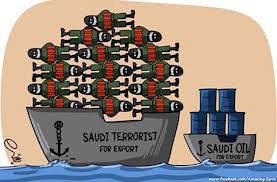
Saudi Arabia-US: Saudi Arabia's intelligence chief Prince Bandar bin Sultan told European diplomats the kingdom will make a “major shift” in its relations with the United States, according to an unidentified source close to Saudi policy on 22 October.

Prince Bandar said the US had failed to act effectively on the Syria crisis and the Israeli-Palestinian conflict, was growing closer to Tehran, and had failed to back Saudi support for Bahrain when it crushed an anti-government revolt in 2011.

Prince Bandar also that he plans to limit interaction with the US. “Relations with the US have been deteriorating for a while, as Saudi feels that the U.S. is growing closer with Iran and the U.S. also failed to support Saudi during the Bahrain uprising,” according to the source. Bandar reportedly said there would be no further coordination with the United States over the fighting in Syria.

Comment: The information comes from an unidentified source, but appears consistent with Saudi Arabia's reasons for refusing to accept a seat on the UN Security Council as a rotating member. That suggests it is an official leak. In announcing this action, the Saudi attitudes towards the US resembles the Iranian hardline clerics who said this week that if the US is encouraged by Iranian diplomacy then the diplomacy is wrong.

Saudi Arabian leaders have been quietly but sternly critical of multiple recent US actions in the Middle East, especially the installation of a Shiite-led government in Baghdad through elections. They have not broken openly with the US.

Continue reading “NIGHTWATCH: Saudi Arabia Splits with US & UN”

Patrick Meier: Why Anonymity is Important for Truth and Trustworthiness Online

Cultural Intelligence, Culture, Ethics, Governance, P2P / Panarchy
Patrick Meier
Patrick Meier

Why Anonymity is Important for Truth and Trustworthiness Online

Philosophy Professor, Karen Frost-Arnold, has just published a highly lucid analysis of the dangers that come with Internet accountability (PDF). While the anonymity provided by social media can facilitate the spread of lies, Karen rightly argues that preventing anonymity can undermine online communities by stifling communication and spreading ignorance, thus leading to a larger volume of untrustworthy information. Her insights are instructive for those interested in information forensics and digital humanitarian action.

Click on Image to Enlarge

To make her case, Karen distinguishes between error-avoidance and truth-attainment. The former seeks to avoid false beliefs while the latter seeks to attain true belief. Take mainstream and social media, for example. Some argue that the “value of traditional media surpasses that of the blogosphere […] because the traditional media are superior at filtering out false claims” since professional journalists “reduce the number of errors that might otherwise be reported and believed.” Others counter this assertion: “People who confine themselves to a filtered medium may well avoid believing falsehoods (if the filters are working well), but inevitably they will also miss out on valuable knowledge,” including many true beliefs.

Continue reading “Patrick Meier: Why Anonymity is Important for Truth and Trustworthiness Online”

noble gold