Marcus Aurelius: Army of None — Pentagon Loses Best & Brightest

Corruption, Military
Marcus Aurelius
Marcus Aurelius

Unusually interesting article.  Some aspects of problem I was aware.  Disagree with several of proposed fixes.  Understand Air Force has had some success with running an open bid system on upcoming assignments.

An Army Of None

Why the Pentagon is failing to keep its best and brightest.

Tim Kane

ForeignPolicy.com, January 10, 2013

As the war in Iraq wore into its most corrosive years, a problem began to emerge — the military, and especially the U.S. Army, was losing its young officers. Editorials were published and examples cited, and by early 2011, the crisis had been recognized at the military's highest levels. But the young captains and lieutenants whose departures at the height of the Iraq war caused this soul-searching at the Pentagon are only half of the story, the superficial half; these are young warriors in harm's way with young spouses and toddlers back home. The military's retention crisis cuts deeper into the heart of the Army. The more complicated and more important half of the story is about the colonels.

Getting a great first assignment after commissioning is essential in climbing the professional military ladder, especially given the nature of Army promotions. Soldiers need to check exactly the right boxes — get the right jobs, go to the right professional schools on time, earn “distinguished graduate” from those schools — to prove themselves. And getting into the infantry, armor, or other combat-arms branches is considered important. If one is “going infantry,” the ideal path is to get light but not too light. Specialized units such as the Navy SEALs or the Army's Delta Force might be too light, whereas mechanized infantry might be a shade too heavy.

Dick Hewitt graduated near the top of the class from West Point. His first assignment was with the legendary 82nd Airborne Division at Fort Bragg, North Carolina. Hewitt, like many of the young officers that received so much attention at the height of the Iraq war, also decided to leave the Army a few years after the 9/11 attacks. But here's the difference: Hewitt had served a full 20-year career. He had checked all the right boxes, even getting tapped to command a battalion when he was just a major. So when Hewitt decided to leave, it was not because the Army had a minor morale problem causing retention heartburn, but rather it was because of a deeper and more nuanced institutional dysfunction.

Read full article.

Tim Kane, the chief economist at the Hudson Institute, is the author of Bleeding Talent: How the U.S. Military Mismanages Great Leaders and Why It's Time for a Revolution, from which this article was adapted. He blogs at balanceofeconomics.com.

Continue reading “Marcus Aurelius: Army of None — Pentagon Loses Best & Brightest”
Chuck Spinney: Arab Spring Act II — Near Enemies Falling First?

Cultural Intelligence, Peace Intelligence
Chuck Spinney
Chuck Spinney

Arab spring, act two

Are the Arab monarchies next?

As the chaotic transition towards democracy continues in North Africa and Yemen, the fighting in Syria is intensifying. And, less noticed, opposition to the Arab monarchies is growing.

by Hicham Ben Abdallah El Alaoui

Le Monde Diplomatique, January 2012

The Arab Spring is not an outcome, it is a process. For those countries at the forefront of regional transformation, the fundamental question is can democracy become institutionalised? Though progress has been uneven and the outcomes of many state-society struggles have yet to be resolved, the answer is a cautious yes. In at least a few countries, we are witnessing the onset of democratic institutionalisation: whether the process of reform and transformation spreads to other parts of the Middle East depends on many factors — religious tensions, political mobilisation, regime adaptations, geopolitics. Meanwhile North Africa provides the most promising preview of the future.

Democratic institutionalisation means the healthy convergence of politics around three arenas of competition: elections, parliaments and constitutions. When these institutions are robust and durable, then the democratic governments they engender are relatively safe from radical groups, reactionary forces and authoritarian backsliding (due to alternation: democracies that uphold the rule of law and hold regular elections require that power alternates between competing parties).

Read full article.

Continue reading “Chuck Spinney: Arab Spring Act II — Near Enemies Falling First?”

Chuck Spinney: Afghan Fraud, Permanent War, VERY Expensive – Robert Steele: $2 Trillion a Year for DoD is Criminally Insane

Commerce, Corruption, Government, Military, Peace Intelligence
Chuck Spinney
Chuck Spinney

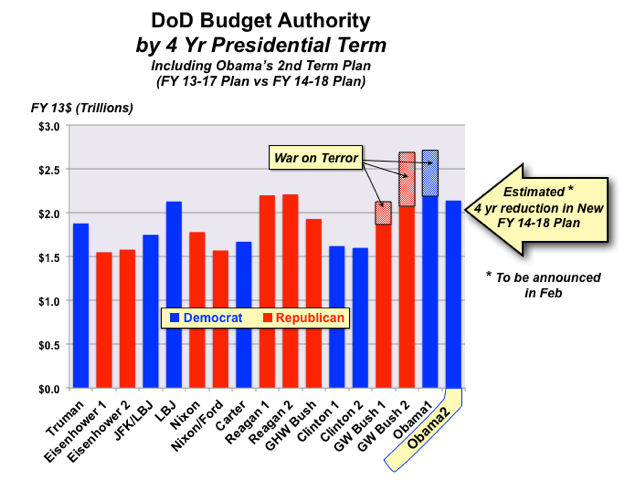
Obama may want out of Afghanistan, but he is under to pressure to stay, and the Military – Industrial – Congressional Complex (MICC) still has a budgetary interest in maintaining perpetual war, be it cold or hot ( for reasons I explained here).

The bloom is off the Karzai rose (as Amy Davidson explained in her 11 Jan New Yorker blog), but when one combines

  • (1) the not-so-zero option explained by Kate Clark  in the very important report attached below, with
  • (2) the no-so-different high-cost plan for waging the American style of high-tech war described by General Barno in Ms. Clark's report (note: contrary to Barno's claim, his is hardly a new idea; in fact, the Pentagon has been flogging this this idea since McNamara's Electronic Line failed so disastrously in Vietnam), and
  •  (3) the possibilities of a new cold war implied by Obama's (really the MICC's) “pivot” to China,
Click on Image to Enlarge
Click on Image to Enlarge $2 T

The sum 1+2+3 makes it easy to understand why Obama's new (albeit still unauditable*) budget plan, if executed perfectly, will result in the biggest eight year boom to the defense industry (including foreign military sales) since since the golden years of Ronald Reagan.

And … as indicated this chart (which I explained in latter part of this essay), this measure of the MICC's golden cornucopia would be true out to 2017,* even if a real zero option for the Afghan war and the war on terror, took place tomorrow!

Zero or Zero Plus? US-Afghan negotiations over the war

Presidents Obama and Karzai are due to start the wrangling over their countries’ post-2014 military relationship during the Afghan president’s current visit to Washington. US soldiers, bases, training, equipment, money, immunity all need to be hammered out, although no-one is expecting results just yet. Figures floated in recent days by US government and military officials speak of plans for anything from 20,000 to zero US troops to be left behind after 2014. Talk of the ‘zero option’ on troops might just be a bargaining ploy to put pressure on President Karzai, although as AAN senior analyst, Kate Clark, reports, it needs taking seriously, as does the possibility of a ‘zero plus’ option, ie a full withdrawal of troops which would still leave intelligence agents and military contractors fighting the Taleban. 

Kate Clark, Afghan Analysts Network, 11/01/13

Read full article.

Continue reading “Chuck Spinney: Afghan Fraud, Permanent War, VERY Expensive – Robert Steele: $2 Trillion a Year for DoD is Criminally Insane”

Anthony Judge: Flatulence is a Problem Aired Resmelling the stench of past undertakings (personal, organizational, and national)

Corruption, Idiocy, Ineptitude
Anthony Judge
Anthony Judge

Flatulence is a Problem Aired: Resmelling the stench of past undertakings

Introduction
Resmelling the stench of past undertakings — review and commentary
Flatulence | Internationalism | Absurdity of the global problematique
Unusual smells | Crisis of crises | Irrelevance | Mediocrity | Connectivity
Collective impotence | Questions and answers | Plethora of potential possibilities
Decision-making perfumery of the future | Blaming the messenger
Conclusion

Introduction

The third edition of the Encyclopedia of World Problems and Human Potential (1990) was reviewed for The Guardian by John Vidal under the title Flatulence is a Problem Aired (The Guardian, 7 February 1992). The review was introduced by the phrase: John Vidal finds the authors of a definitive guide to all the world's ills treading an ever thinner line between the sublime and ridiculous. The author of the review is a renowned editor on environmental matters, most notably for The Guardian. At that time the review could be seen as a highly skillful journalistic exercise in what has since been recognized as characteristic of negative campaigning — although the intention in so framing the undertaking was unclear at the time.

Continue reading “Anthony Judge: Flatulence is a Problem Aired Resmelling the stench of past undertakings (personal, organizational, and national)”

SchwartzReport: Mercury Poisoning Going Critical

03 Economy, 03 Environmental Degradation, 05 Energy, 07 Health, 11 Society

schwartz reportMercury poisoning is a growing global menace we have to address

As the US knows to its cost, coal-fired power is a major cause of mercury pollution. The world needs a treaty tough on emissions

and

guardian.co.uk,

Click on Image to Enlarge

Next week, diplomats from around the world will gather in Geneva to negotiate a treaty on global emissions of mercury – a lethal neurotoxin that includes, among an inventory of grim effects, brain damage and the loss of IQ points in unborn children, injuries to kidneys and heart, and results in tens of billions of dollars in healthcare costs every year in the US alone. The Geneva conference is the final of five meetings, with a treaty expected soon thereafter.

While global mercury emissions are on the rise, negotiators, unfortunately, appear to be leaning towards a treaty with soft measures unlikely to prevent continued catastrophic impacts from this deadly and debilitating poison. Ironically, signatories propose to ink their treaty in Minamata, Japan, a town that famously suffered widespread mercury poisoning.

Health experts first described mercury poisoning, then called “Minamata disease”, in Minamata city, in Japan, in 1956. Mercury discharges from the Chisso chemical plant contaminated finfish and shellfish, devastating the community's human and animal population for decades. Many of the region's citizens died and tens of thousands of people suffered mercury-related illnesses.

Continue reading “SchwartzReport: Mercury Poisoning Going Critical”

Marcus Aurelius: 2004 Evaluation of Assault Weapons Ban 1994-2003 Bottom Line Irrelevant

Cultural Intelligence
Marcus Aurelius
Marcus Aurelius

Federal Government's assessment of the effectiveness of the ((FIRST)) assault weapons ban. Less than impressive.

2004 NIJ-Assault Weapons Ban Report

Phi Beta Iota:  The US Government lacks a central intelligence (decision-support) agency such as President Harry Truman signed into law.  The Office of Management and Budget (OMB) does not manage and does not have a grip on all relevant information, nor can it use shared decision support to harmonize investments and behaviors across the government — or eradicate the standard 50% waste per federal dollar.

See Also:

Graphic: Top Ten Killers In USA – Guns are LAST

2011 Open Source Agency: Executive Access Point

Berto Jongman: 80% of Anonymous Bloggers Identified by Stylometric Analysis?

07 Other Atrocities, Government, IO Impotency
Berto Jongman
Berto Jongman

Stylometric analysis to track anonymous users in the underground

paganinip

Security Affairs, January 10th, 2013

EXTRACT

According an interesting study presented by researcher Sadia Afroz at last edition of Chaos Communication Congress in Germany, the 29C3, up to 80 percent of certain anonymous underground forum users can be identified using linguistics, a data that is stunning in my opinion. Sadia is member of the The Drexel and George Mason universities research team composed of Aylin Caliskan Islam, Ariel Stolerman, Rachel Greenstadt, and Damon McCoy.

Read full article.

Continue reading “Berto Jongman: 80% of Anonymous Bloggers Identified by Stylometric Analysis?”

noble gold