Howard Rheingold: Critical Thinking vs. Information Literacy

Advanced Cyber/IO
Howard Rheingold

Is There a Difference Between Critical Thinking and Information Literacy?

John M Weiner

Abstract

This paper investigates the similarities and differences between two important ideas in information processing and knowledge utilisation. Those ideas are [critical thinking] and [information literacy].  The two phrases are shown in brackets to indicate that the two words involved in each idea are not arbitrarily combined but have been coupled by authors to represent a single entity or a focus for development of concepts describing the characteristics involved. By exploring terms related to this couplet from the same sentence, the meaning of each of the central ideas can be expanded.  The education, library science, and health science literature were used in this study, which analysed 8745 articles dealing with [critical thinking] and 8201 reports dealing with [information literacy] included in either ERIC or PubMed from 2000-2009.

The findings showed that combinations of terms (i.e. ideas) such as [information & literacy & related term] or [critical & thinking & related term], when organised based on Bloom’s Taxonomy of Learning (Bloom 1956), clarified the similarities and differences between the two central ideas. [Information literacy] was involved in all of the cognitive functions suggested by Bloom. This finding is consistent with the definitions of [information literacy] that relate it to lifelong learning and effective decision-making. In addition, the ideas describing [information literacy] were consistent with actions and perceptions that were more public and standardised than those associated with [critical thinking].

This suggests that [information literacy] and its associated procedures could significantly augment current instruction in [critical thinking] and indeed, the possibility has been explored by some authors in the current literature. A merging of the two ideas would involve [information literacy] providing tools and techniques in the processing and utilisation of knowledge and [critical thinking] supplying the particulars and interpretations associated with a specific discipline. This type of integration could lead to instructional programs similar in concept and application to those in research methodology where methods from statistics are integrated with the techniques and skills associated with a specific discipline. The development of a curriculum of this type would change functions and perceptions from private, individualised mentation, now associated with [critical thinking], to a more easily learned and practiced process suitable across the breadth of disciplines.

Keywords

critical thinking; information literacy; idea analysis

Full Text: PDF

Event: 18-20 June Games for Change [Submit by 17 Feb]

Games Serious / Change

The 9th Annual Games for Change Festival will be taking place on June 18-20, 2012. The call for talks and presentations is now live! The Festival is the leading global event that facilitates the creation and distribution of social impact games that serve as critical tools in humanitarian and educational efforts.

To submit a talk or presentation, visit:
http://www.jotform.com/form/13345329628

Submission deadline: Friday, February 17 at 11:59 pm EST.

Accepted speakers will receive a complimentary pass to the Festival and will be notified on March 16.

To learn more about what topics we're looking for this year as well as information about the review process, visit out website:
http://www.gamesforchange.org/2012/01/g4c-12-call-for-talks-presentations/

Robert Steele: Slate and New America Foundation a Propaganda Front – Taking Money Under the Table?

07 Other Atrocities, Corruption, Cultural Intelligence, IO Deeds of War, Media, Non-Governmental
Robert David STEELE Vivas

Warning: This Site Contains Conspiracy Theories

Does Google have a responsibility to help stop the spread of 9/11 denialism, anti-vaccine activism, and other fringe beliefs? 

By |Posted Monday, Jan. 23, 2012, at 7:43 AM ET

In its early days, the Web was often imagined as a global clearinghouse—a new type of library, with the sum total of human knowledge always at our fingertips. That much has happened—but with a twist: In addition to borrowing existing items from its vast collections, we, the patrons, could also deposit our own books, pamphlets and other scribbles—with no or little quality control.

Such democratization of information-gathering—when accompanied by smart institutional and technological arrangements—has been tremendously useful, giving us Wikipedia and Twitter. But it has also spawned thousands of sites that undermine scientific consensus, overturn well-established facts, and promote conspiracy theories. Meanwhile, the move toward social search may further insulate regular visitors to such sites; discovering even more links found by their equally paranoid friends will hardly enlighten them. Is it time for some kind of a quality control system?

Read full article.

Robert Steele:  I am disengaged from Phi Beta Iota most of the time, but this piece was brought to my attention with the observation that it combines a claim to legitimacy involving Stanford University and Foreign Policy (no longer a serious rag, now a sub-set of secrecy & rendition apologist The Washington Post), and that it appears to be an early shot in a new national security propaganda theme aimed as neutralizing the use of the Internet for self-education.  When Obama said in the State of the Union that it is known kids do better when they are forced to stay in school until graduation, I was sharply critical–the reality is that the best and the brightest leave school as soon as they can pass the GED, realizing that rote learning of old knowledge from poorly-paid burn-outs is not the way to “jack in.”  What we have here is a very troubling indicator that the New America Foundation (wittingly) and Slate (perhaps unwittingly) are now part of the domestic propaganda arm of the military-industrial complex.  The idiocy and illegitimacy of this piece should not have to be pointed out, but since Slate, which I thought had educated leadership, evidently saw nothing wrong with this piece, I will just point them to several books that will explain to them why collective intelligence, open source everything, and the three values of clarity, diversity, and integrity, are all essential to resilience and sustainability.  Transparency, truth, and trust are the heart of the matter.  This article is a disgrace to Slate and to Stanford, and confirms my growing disdain for the New America Foundation and Foreign Policy.

Robert David Steele, The Open Source Everything Manifesto: Transparency, Truth, & Trust (Evolver Editions, 2012)

David Weinberger, Too Big to Know: Rethinking Knowledge Now That the Facts Aren't the Facts, Experts Are Everywhere, and the Smartest Person in the Room Is the Room (Basic, 2012)

Robert David Steele, Intelligence for Earth: Clarity, Diversity, Integrity, & Sustainability (Earth Intelligence Network, 2010)

Mark Tovey (ed.), Collective Intelligence: Creating a Prosperous World at Peace (Earth Intelligence Network, 2008)

David Weinberger, Everything is Miscellaneous: The Power of the New Digital Disorder (Holt, 2008)

and then of course there are all the other books that in the aggregate would suggest to any intelligent reader that Slate has just published the biggest piece of crap in the recent history of digital journalism.

Worth a Look: Book Review Lists (Positive)

Worth a Look: Book Review Lists (Negative)

2012-01-28  Berto Jongmanprovides link to:

Dead and Alive: Beliefs in Contradictory Conspiracy Theories

Phi Beta Iota:  The puported article is totally inept, using students and a very narrow range of information provided to the students to attempt to replicate a much more nuanced and comprehensive range of networks with access to vaster information resources.  The article also does not provide for new sources coming into the public domain, with the inevitable result that the truth ultimately comes out, for example, on the JFK and MLK assassinations, the USS Liberty, and increasingly, 9/11 as a mix of let it happen, make it happen, and cover it up.

Lead Author Responds:

Thanks for your interest in the SPPS article. In response to your queries in the linked blog post, we didn't seek to inform people about particular theories in any great detail, to provide a model of the broader communities which advocates conspiracy as an explanation for world events, or to model opinion change as new information is presented. While those are interesting topics and we certainly hope to examine them in some detail in the future, they are beyond the scope of this rather small study, in which we attempted to extend previous work on correlations in beliefs between different conspiracy theories and examine the source of that correlation through multiple regression analysis of some novel data. As such we pass no judgement on the truth or falsity of any of the theories discussed; while the media may attempt to spin the study as “those crazy conspiracy theorists!”, be assured that this wasn't our intention, and in the paper itself we make the point that apparent contradictory belief is probably present in many different contexts, populations, and ideologies, rather than unique to people who hold particular opinions about geopolitics.

Yours,

Michael Wood

Ph.D. Candidate & Associate Lecturer, School of Psychology
Keynes College, University of Kent

Jim Fetzer: New Evidence Oswald Was In The Doorway

07 Other Atrocities
Jim Fetzer

JFK Special: Oswald was in the Doorway, after all!

EXTRACT:

In JFK: What We Know Now That We Didn’t Know Then (Veterans Today, 21 November 2011), Dr. James H. Fetzer provides a valuable summation of recent advances in JFK assassination research, including the discovery of the written notes of Detective Will Fritz concerning Oswald’s whereabouts during the shooting, as mentioned above. That Oswald told Fritz that he was “out in front with Bill Shelley” contravenes the established belief that he said he was in the lunchroom, where he was shortly before and would be confronted shortly after. Here are those notes:

. . . . . .

The Demise of the “Lone Nut” Theory

In conclusion, even though a lot of manipulation went into transforming Oswald into Lovelady, it didn’t work. We can still tell that it’s him, Oswald–and I would bet my life on it. The preponderance of the evidence is overwhelming, and the meager challenges to it are riddled with suspicion and doubt. The worst thing that ever happened to the JFK research community was relinquishing Doorway Man.

We need to take him back. We need to add the Altgens photo to the list of physical evidence that the conspirators altered and corrupted. We need to shout from the rooftops that Oswald could not have killed Kennedy because he was standing outside in front of the building at the time. This settles it. This ends it. This is checkmate for THE WARREN REPORT (1964).

The cover-up of the murder of President Kennedy, by our government and our media, has been going on for 48 years, and it must stop. It has been poisoning us as a people, that is, our society and our culture. To heal, to recover, and to start anew, we need to know the truth.

See Also:

Rules of Logic and Probability: Thinking About Conspiracy

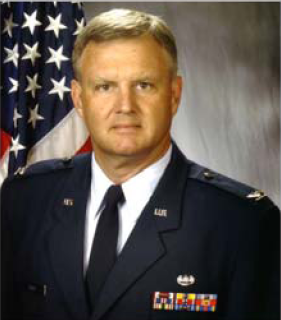
Col Morris Davis, USAF (Ret): Understanding Guantanamo Military Commissions

09 Justice, 11 Society, Corruption, Military
Col Morris Davis, USAF (Ret)

Interview with Col. Morris Davis

The Moderate Voice, Jan 25th, 2012

While most people weren’t looking, America’s controversial detention facility at Guantanamo Bay turned ten years old a few weeks ago; for some reason, the President didn’t mention this during the State of the Union. I used the occasion of Guantanamo’s birthday party in Washington, D.C. to meet, and to arrange an interview with, retired Air Force Col. Morris Davis, once the Chief Prosecutor of the Guantanamo military commissions, and now one of the most outspoken critics of our nation’s entire “indefinite detention” regime. The interview is here (and cross-posted at
the talking dog blog.)

Col. Morris Davis (USAF, Ret.) is a professor at the Howard University School of Law. From 2005 until 2007, Col. Davis was the Chief Prosecutor for the Guantanamo Bay military commissions. He resigned from that post in 2007 in protest of political interference in prosecutorial functions. He retired from active military service in 2008 and became the head of the Foreign Affairs, Defense and Trade Division in the Congressional Research Service. He served in that post until January 2010, when he was terminated after publishing op-ed articles critical of Guantanamo and war on terror policies.

On January 12, 2012, I had the privilege of interviewing Col. Davis by telephone. What follows are my interview notes, as corrected by Col. Davis.

Read full interview.

Chuck Spinney: Israel, Not Iran, is Central Threat in Middle East

05 Iran, 08 Wild Cards, IO Deeds of War
Chuck Spinney

Robert Fisk: We've been here before – and it suits Israel that we never forget ‘Nuclear Iran'

The Ayatollah ordered the entire nuclear project to be closed down because it was the work of the devil

Robert Fisk, Independent

Wednesday, 25 January 2012

Turning round a story is one of the most difficult tasks in journalism – and rarely more so than in the case of Iran. Iran, the dark revolutionary Islamist menace. Shia Iran, protector and manipulator of World Terror, of Syria and Lebanon and Hamas and Hezbollah. Ahmadinejad, the Mad Caliph. And, of course, Nuclear Iran, preparing to destroy Israel in a mushroom cloud of anti-Semitic hatred, ready to close the Strait of Hormuz – the moment the West's (or Israel's) forces attack.

Read full article.

noble gold