EXTRACT:
China and Central Asia
None of the works under review provides the full answers to these questions, although Alexander Cooley’s book, Great Games, Local Rules, comes closest. They all agree on the unprecedented rise of China’s influence in Central Asia. Marlène Laruelle and Sébastien Peyrouse, scholars at George Washington University in Washington, D.C., demonstrate in The Chinese Question in Central Asia that China is already the dominant economic power in the region.
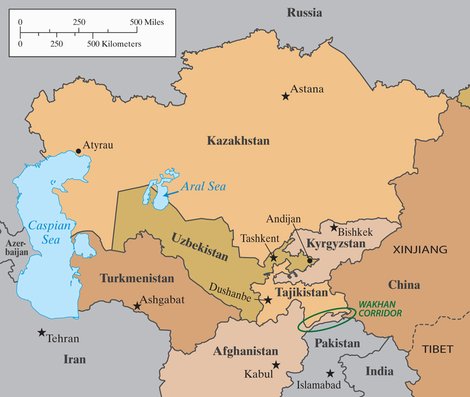
China has also taken care of one vital strategic interest since 1991: making sure that the Uighurs, China’s largest Muslim ethnic group who live in the western province of Xinjiang, do not seriously threaten to become independent and that the hundreds of thousands of Uighurs who live in Central Asia do not help them do so. During the 1950s large numbers of Uighurs fled the Maoist regime to seek shelter in Soviet Central Asia where they were relatively well treated.
After 1991 China put immense pressure on the three Central Asian states that border Xinjiang—Kazakhstan, Tajikistan, and Kyrgyzstan—to tightly restrict all Uighur political activity on their soil. China offered sweeteners such as resolving the border disputes that had plagued Chinese–Soviet relations in Central Asia for decades. Within a decade the borders between China and the Central Asian states were demarcated and settled, allowing for China’s rapid economic involvement in the region.
Still, Uighur nationalism and Islamic militancy have continued to mount in Xinjiang, as China has inundated the province with Han Chinese and severely repressed the Muslims. While the Uighur populations in Central Asia have been largely silenced, some Uighurs have been training and fighting with the Taliban in Pakistan and Afghanistan.
During the past decade China has invested heavily in Central Asia. Laruelle and Peyrouse write that
Continue reading “Berto Jongman: Ahmed Kashid on Why, and What, You Should Know About Central Asia”