The internet needs to be re-built from the bottom up. Network locally first and only then connect to the world “out there”. A local wireless network might be coming to your neighbourhood soon.
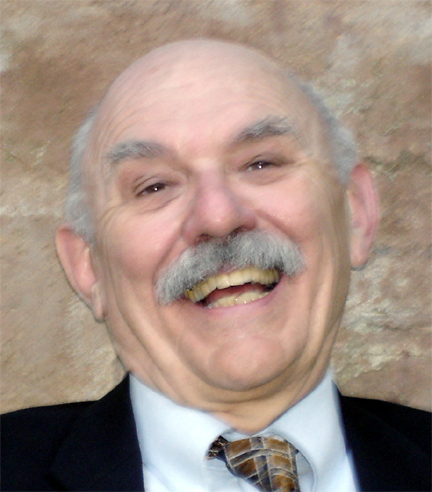
Robert Horn is a political scientist with a special interest in public policy, organizational strategy, and knowledge management. These days, he deals mostly with social messes. Social messes are more than complicated problems. I define them as tightly interconnected clusters of wicked problems and other messes. They are very complex; ambiguous; highly constrained; seen differently from different ideologies and worldviews; and contain many value conflicts. They usually contain major entanglements of economic, social, and political, cultural, and psychological factors. Bob is a pioneer in dealing with messes through interactive visual analysis with task groups.
Below the Fold Are Links and Some Astonishing Visuals
Can local manufacturing compete with automobile mass production? It seems that yes, it can. The technology will improve as time goes on and you can't beat the price…
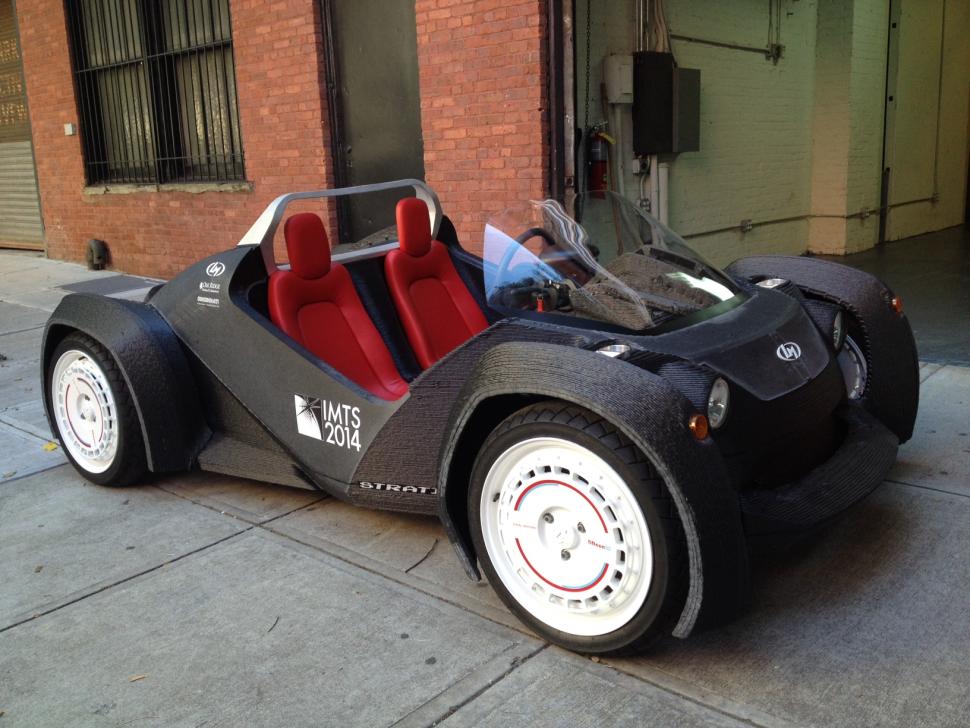
The world’s first 3-D printed car is now a reality, and the Daily News Autos got to ride in the car of the future on the streets of Brooklyn, New York. Engineered and built by Phoenix-based Local Motors, the 2-passenger roadster, called the “Strati,” can be printed in 44 hours and has a top speed of approximately 50 mph.
Click on Image to Enlarge
EXTRACT
“This is about simplification and streamlining,” explains Jay Rogers, co-founder and CEO of Local Motors. Rogers was present to give us a tour of the Strati and explain, exactly, 3-D printing tech brings to the automotive world. “All this material you’re looking at,” he says, pointing to the car, “is about $3,500 dollars.”
. . . . . . .
Granted, it’s not pretty, but the prototypes ridged edges can be smoothed over with human-powered grinding and sanding. Paint can also be applied to the body-work, though this negates the Strati’s near 100-percent recyclability.
Cryptocurrencies are novel as they are only possible because of the ready availability of high-speed computing and networks. They are a challenge to today’s currencies because of their decentralised nature, taking them out of national governments’ control. …What has been given less attention is the mechanism that makes the bitcoin network possible, the blockchain. . . . The use of the blockchain means that each contract is distributed across the network with time triggers agreed and written into the contract. … The Ethereum White Paper outlining the concepts and aims of the project describes how using the blockchain can be used to form decentralised autonomous organisations (DAO). … Various controversial claims around Ethereum suggest it will remove the need for lawyers, or even the need for bankers. … In a similar way open innovation could become a more powerful mechanism by using the blockchain as an arbitrator that offers attribution of original ideas in the correct chronological order. The blockchain can also be applied to education, used to verify attendance and identity for exams held at remote locations. … Ethereum is just the first to exploit the blockchain in novel and creative ways. Others are already arriving, for example IBM’s Adept project takes the blockchain in an entirely different direction, putting it at the centre of a future internet of things. Here the blockchain is used to authenticate devices so they can communicate with each other, using the blockchain to store a record of devices that have done so.
This post is the fourth of 4 posts about Digital manufacturing (fabbing) environments that we have been publishing weekly on Fridays. In these posts I have shared my research on fab labs, open innovation and smart cities, mainly in Europe and in Spain.
The fourth post is the result of a research on fab labs and their relationship with smartcities. In the last two articles I have written about two recent nodes of the global fab lab network. Although there are other fablabs in Spain, I decided to give visibility to these two initiatives in León and in Sevilla. Among all fab labs in Spain those two are giving a real opportunity to make personal production and digital manufacturing accessible and comprehensible for a wide range of people. However, the most popular manufacturing laboratory in Spain is Fab Lab Barcelona (2008). It is settled in the IAAC – Institute for Advanced Architecture of Catalonia and it is part of the Fab Lab Network. I would like to share my interest in their research on how the digital production ecosystem could make our cities smarter.
This article describes an initiative more in line with the approach I would take:
“find a place with unmet needs and unused space to lend a building to a group of young hackers. Live together cheaply, building open-source infrastructure for the commons. Repeat until it becomes a network.”
hristian monasticism began in earnest in the fourth century CE, just after Constantine made Jesus Christ the official god of Rome. No longer persecuted, believers who craved a holiness less compromised by empire fled to the desert and set up communes. These monastics came to wield power in their own right, putting on display a more strenuous, radical faith. Their successors became Europe's chief scholars and inventors and also served as guardians for the technology of writing.
The University of Maryland is a national treasure, one I consider the equal of MIT in part because it is much more focused on practical needs. Many possibilities in the way of innovative technology have been repressed these past decades by proprietary interests, while others have remained undiscovered due to biases and short-comings in research that has not been fully multidisciplinary. The times they are a'changing. Human-centric innovation and multidisciplinary innovation — including smart design informed by true cost economics (supply intelligence), holistic analytics (demand intelligence) and open source everything (engineering intelligence) — are going to accelerate positive developments in academia, the economy, governance, and society.
This is going to be a new development. New graphene-based light detector can unearth everything hidden
Terahertz radiation can be brought to market with the help of a new detector. Terahertz radiation is a type of light with far longer wavelengths compared to infrared rays and may be helpful in examining almost everything very effectively.
Researchers have concluded that this latest graphene-based light detector may be able to calculate wavelengths of light that human eye may not see.