Seymour M. Hersh on US intelligence sharing in the Syrian war
‘If Assad fails,’ Lin wrote in a paper published in September, ‘jihadi fighters from Russia’s Chechnya, China’s Xinjiang and India’s Kashmir will then turn their eyes towards the home front to continue jihad, supported by a new and well-sourced Syrian operating base in the heart of the Middle East.’
A few months ago, I freed myself from standard-procedure society. I broke the chains of fear that kept me locked up into the system. Since then, I see the world from a different perspective: the one that everything is going through change and that most of us are unaware of that.
Why is the world changing? In this post, I'll point out the eight reasons that lead me to believe it.
Phi Beta Iota: Ty Simpson helps us see that blockchain is about EVERYTHING, not just money. It is particularly (my view) about assuring the integrity of all information — including especially true cost information — in all languages. This is a hugely useful article with ten very specific examples of how blockchain makes integrity possible (this help eradicate corruption and waste).
Old power works like a currency. It is held by few. Once gained, it is jealously guarded, and the powerful have a substantial store of it to spend. It is closed, inaccessible, and leader-driven. It downloads, and it captures.
New power operates differently, like a current. It is made by many. It is open, participatory, and peer-driven. It uploads, and it distributes. Like water or electricity, it’s most forceful when it surges. The goal with new power is not to hoard it but to channel it.
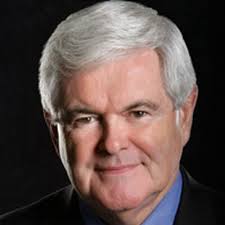
National Defense University speech given by Newt Gingrich on December 1, 2015.
We are living in a world rapidly evolving away from the mental constructs and language of the last 375 years. These ideas can be traced to the Treaty of Westphalia ending the 30 Years War in 1648 and Grotius proposal of a system of International Law in the same era. The ideas were then extended through the development of state warfare culminating in the Napoleonic Wars.
This intellectual framework was applied and reapplied through two World Wars and the Cold War. It is the framework within which academic and bureaucratic careers were made and are still being made.
It is now a framework which distorts reality, hides from uncomfortable facts, and cripples our ability to develop an effective national security and foreign policy.
The gap between the old world in our heads and the new world we now find ourselves in is so large that the very language of the past blocks us from coming to grips with an emerging future that will be radically different.