Berto Jongman: Big Data – Lost in Translation

IO Impotency
0Shares
Berto Jongman
Berto Jongman

Challenges are identified.

How will data change your boardroom?

EXTRACTS:

By 2020, the quantity of stored data could be 50 times greater than it was in 2010. Many pundits regard this massive explosion of data as the new oil, even a new asset class.

. . . . . . .

Tapping the potential of data analytics requires deep pools of advanced technical expertise. To be sure, workers skilled in data management and advanced analytics are in short supply, as are members of an emerging class of “translators” – those whose talents bridge IT and data, analytics, and business decision-making.

. . . . . . .

Few leaders have ever developed management muscle in completely new fields while assembling teams combining previously unknown types of talent. The strategic options confront equally fresh terrain, perhaps similar to when mass media opened a new era of marketing, or globalization required radical reshaping of organizational footprints.
Read full article.

Click on Image to Enlarge

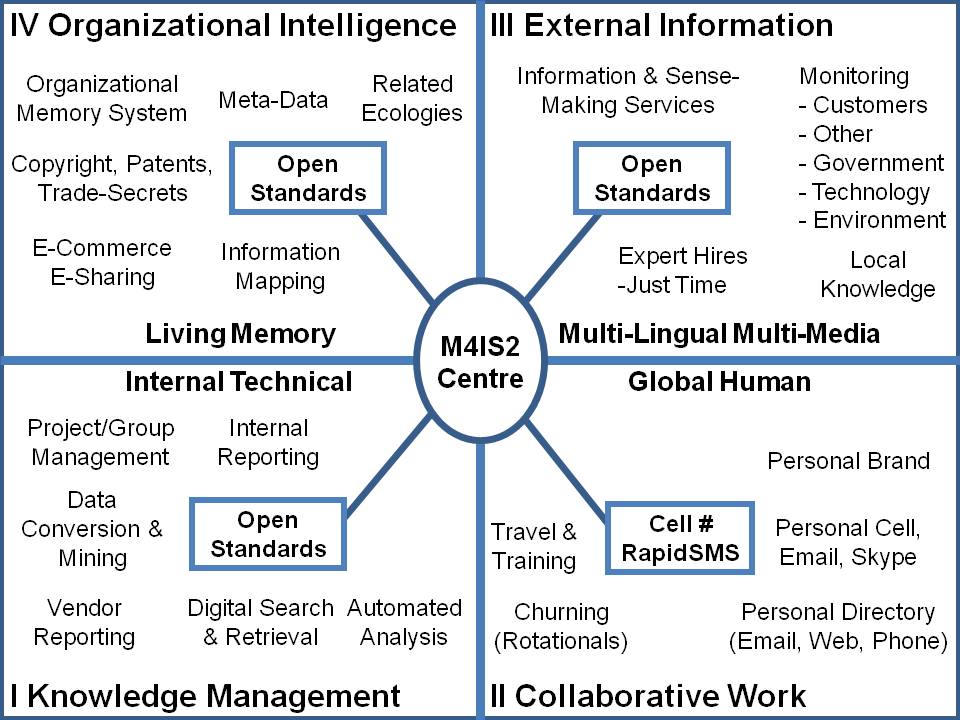
Phi Beta Iota: A very fine overview. Missing from the translators line-up are professional intelligence officers, collection managers, and strategists. Big data is found in the first two quadrants — absent the second two, it is not helpful.

See Also:

Big Data @ Phi Beta Iota

Berto Jongman: Bits, Bytes, & Stuff 1.2

Cultural Intelligence
0Shares
Berto Jongman
Berto Jongman

Bank of America employs 20 full-time social media spies, watches anarchists and occupy protesters

Children's Book, Death is Wrong Presses Singularity Life Extension Imperative

Customs Rules!

A federal judge in New York has ruled authorities can seize travellers' laptops at the border without citing a legal reason, suspecting the traveller of a crime, or explaining themselves in any way. What happens if they take yours?

Drug Data Lacking — Extreme Concern

Fukushima Denial – A Global Conspiracy?

‘Hannah Arendt: Thinking is Dangerous’

Amazon Page
Amazon Page

‘To think critically is always to be hostile,” the political philosopher Hannah Arendt declared in what turned out to be her last interview before her death in 1975. Pointing out that critical thought always challenges and undermines established rules and conventional wisdom, she added: “Thinking itself is such a dangerous enterprise.”

NSA Should be Expanded, Says Former CIA Acting Director Morell

Rwanda's Paul Kagame – Darling of the West, World's Worst War Criminal?

Andy Piascik: “OBAMACARE” and the Bogus Health Care Debate

07 Health
0Shares

“OBAMACARE” AND THE BOGUS HEALTH CARE DEBATE

The biggest secret of politics in the United States is that a majority of the population is to the left of both major parties. This can be amply demonstrated by comparing public opinion on a host of issues to the policies pushed by corporate and political elites. Whether it’s US aggression overseas, raising taxes on corporations and the Super Rich, expanding social services or any number of other issues, there is a vast disconnect between the people and those who purport to represent them.

This perhaps more than anything explains the widespread lack of public interest in voting. Rather than a result of apathy or ignorance, as many elite pundits arrogantly assert, public withdrawal from the electoral process is actually an informed choice. Since  people often rightly view voting as a lose-lose proposition, voter turn-out in the United States is significantly lower than anywhere else in the industrialized world, plus millions who do vote do so with little enthusiasm.

Continue reading “Andy Piascik: “OBAMACARE” and the Bogus Health Care Debate”

4th Media: Has Saudi Arabia Declared War on Russia?

04 Inter-State Conflict, 06 Russia, 08 Wild Cards, 09 Terrorism
0Shares

4th media croppedVolgograd and the Conquest of Eurasia: Has House of Saud Seen Its Stalingrad?

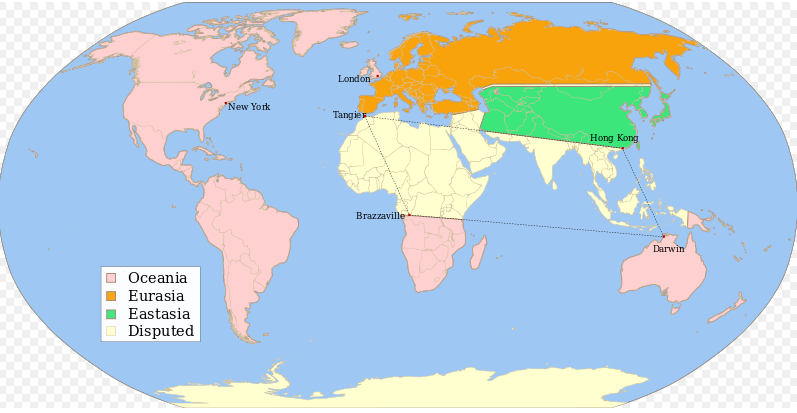
The events in Volgograd are part of a much larger body of events and a multi-faceted struggle that has been going on for decades as part of a cold war after the Cold War—the post-Cold War cold war, if you please—that was a result of two predominately Eurocentric world wars. When George Orwell wrote his book 1984 and talked about a perpetual war between the fictional entities of Oceania and Eurasia, he may have had a general idea about the current events that are going on in mind or he may have just been thinking of the struggle between the Soviet Union and, surrounded by two great oceans, the United States of America.

So what does Volgograd have to do with the dizzying notion presented? Firstly, it is not schizophrenic to tie the events in Volgograd to either the conflict in the North Caucasus and to the fighting in Syria or to tie Syria to the decades of fighting in the post-Soviet North Caucasus. The fighting in Syria and the North Caucuses are part of a broader struggle for the mastery over Eurasia. The conflicts in the Middle East are part of this very grand narrative, which to many seems to be so far from the reality of day to day life.

Read full article.

Yoda: Democracy, the Mob, & the Death of Expertise

Cultural Intelligence
0Shares
Got Crowd? BE the Force!

Smart, half the story, this is.

The Death of Expertise

I am (or at least think I am) an expert. Not on everything, but on many things in a particular but wide area of human knowledge, specifically social science and public policy. When I say something, I expect that my opinion holds more weight than that of most other people, particularly laymen.

In fact, I have been paid by many institutions, academic and professional, to speak, based precisely on the assumption that my views on certain matters are worth paying for. And they are, generally.

Now, to most people that seems like a blindingly obvious thing to say. Unfortunately, an increasing number of other folks now reject every assumption in what I just wrote; they would whine that I’m defending the fallacious “appeal to authority,” they might then invoke the dread charge of “elitism,” and finally accuse me (or people like me) of trying to use credentials to stifle democratic dialogue.

But democracy, as I wrote in an essay about C.S. Lewis and the Snowden affair, denotes a system of government, not an actual state of equality. Having equal rights does not mean having equal talents, equal abilities, or equal knowledge. It means, instead, that we enjoy equal rights versus the government, and in relation to each other.

Read full article.

Continue reading “Yoda: Democracy, the Mob, & the Death of Expertise”

Jean Lievens: Wall Street Analysts: Bitcoin Could Revolutionise the Non-Financial World Too

Money
0Shares
Jean Lievens
Jean Lievens

Wall Street Analysts: Bitcoin Could Revolutionise the Non-Financial World Too

Bitcoin technology has the potential to revolutionise the way we buy and sell property, enforce legal documents and even place bets, according to a new report from financial services and investment firm Wedbush Securities.

The system of decentralized trust, meaning that there is no central authority, that underpins bitcoin could have applications beyond the payments world that is most commonly associated with the cryptocurrency, write the report’s authors Gil Luria and Aaron Turner. The report reads:

“We see the potential for bitcoin technology to digitize and decentralize trust. The implications of eliminating the need for centralized trust may go beyond payment networks to areas such as securities markets, sports gambling and even legal contracts.”

The report, titled  ‘Digitizing Trust: Leveraging the Bitcoin Protocol Beyond the “Coin”’, cites the Bitcoin Foundation’s October decision to allow meta data to be embedded in the blockchain as opening the door for people to “leverage the blockchain protocol in other ways beyond traditional financial transactions”.

Read full article.

See Also:

Bitcoin @ Phi Beta Iota