Stephen E. Arnold: Business Intelligence Tools

IO Tools
0Shares
Stephen E. Arnold
Stephen E. Arnold

Shopping For Business Intelligence

There is not an Amazon equivalent for organizations in the market for business intelligence tools. They must rely on conducting their own research to find the best tool to suit their needs. Why has not one of the world’s IT experts taken the time to aggregate all BI reviews, software specifications, and other relevant information into one source? Oh, wait, someone did! Software Advice is a Web site where people can read about business intelligence software and select the proper tool for their organization. In the article, “Compare Business Intelligence (BI) Software Tools” there is a rundown of the top ten most recommended business intelligent systems along with an explanation about how there is a growing need for BI software to analyze data and give a user friendly interface.

Continue reading “Stephen E. Arnold: Business Intelligence Tools”

SchwartzReport: Truths That Matter

Commercial Intelligence, Cultural Intelligence
0Shares
Stephan A. Schwartz
Stephan A. Schwartz

I don't pretend to have any special insight into the markets; they are an insider's game and nothing is quite what it seems to outsiders, and most commentary is no better than throwing rabbit bones. So it is hard for me to evaluate the importance of this report. But it does strike me as a matter of concern that major insiders are dumping U.S. stocks.

Billionaires Dumping Stocks, Economist Knows Why
Moneynews

Phi Beta Iota: The source is a shill for a self-help investing program that uses faux news to sell itself. Generally the worst melt-downs occur in the final six months of a second presidential term. Right now frugality and getting out of the known stock market casino that is rigged, are good moves.

The wealth inequity is not just in the U.S., although we are the worst example in the developed world. It is a profound geopolitical shift with immense implications for every aspect of life. There is a small group of transnational people who quite literally live in a different world. Historically social unrest has always followed such extreme distortions. Click through to see the important charts that accompany this survey.

Worldwide, Richest 3% Hold One-Fifth of Collective Income
GLENN PHELPS and STEVE CRABTREE – The Gallup Organization

Here is an excellent essay on the relevant issues in what, I think, is correctly called The Great Marijuana Experiment. What I find interesting so far is that although every prohibitionist is trolling for even the smallest possible problem in fact almost nothing has turned up.

The Great Marijuana Experiment: A Tale of Two Drug Wars
BRUCE BARCOTT – Rolling Stone

The details concerning the rise of the American police and security state beggar the imagination. Here is the latest from the Snowden documents. I think it has become so comprehensive that people find it hard to believe they are under this level of surveillance. It is one of the most reprehensible trends in the nation's history. Click through to see the images which help explain it.

Your USB Cable, the Spy: Inside the NSA’s Catalog of Surveillance Magic
Sean Gallagher, IT Editor – arstechnica

Event: 22-23 Feb 14 DC Open Data Day #DC

#Events
0Shares

Open Data Day #DC

A yearly hackathon in the District of Columbia and on the same day as open data hackathons around the world.

February 22-23, 2014 at The World Bank, Washington, DC, USA.

Organized by Josh Tauberer (GovTrack.us), Eric Mill (Sunlight Foundation), Sam Lee (World Bank), Katherine Townsend (USAID), and Julia Bezgacheva (World Bank) and hosted by The World Bank.

What You Can Expect

Workshops

New to open data or hacking? We’ll have an introductory tutorial covering open data from the ground up, including exploring APIs through the web browser and using command-line tools to process CSV files.

We’ll have other workshops as well, to be announced.

Hacking

Come with your own project, or join someone else. We typically have people interested in government data, transit, international development, and issues local to the District.

You don’t have to be a coder to be a hacker! Designers, statisticians, subject matter experts, and anyone with a passion for open data will find something to do.

The Environment

Our goals are to strengthen the open data community and to make connections between people and between projects. There is no beer or pizza at our hackathon, no competitions, and no time pressure.

Also this year we are joining other tech events by adopting a code of conduct.

Learn more, register.

Berto Jongman: John Batelle’s Social IT Predictions

Commercial Intelligence, Cultural Intelligence
0Shares
Berto Jongman
Berto Jongman

Predictions 2014: A Difficult Year To See

EXTRACT:

So what’s making it harder than usual to predict what might happen over the coming year? In a phrase, it’s global warming. I know, that’s not remotely the topic of this site, nor is it in any way a subject I can claim even a modicum of expertise. But as I bend to the work of a new year in our industry, I can’t help but wonder if our efforts to create a better world through technology are made rather small when compared to the environmental alarm bells going off around the globe.

LIST ONLY:

Continue reading “Berto Jongman: John Batelle's Social IT Predictions”

Yoda: Nick Romeo in Daily Beast – Big Data Does Not Live Up to the Hype

IO Impotency
0Shares
Got Crowd? BE the Force!

Smart, Romeo is.

Why Big Data Doesn’t Live up to the Hype

A new book heralds the promise that big data will reveal more and more about how we live our lives and what we think, but is it really that useful?

EXTRACTS:

It’s easy to exaggerate the importance of what such a tool could discover. Sometimes it seems the only thing larger than big data is the hype that surrounds it. Within the first 30 pages of Uncharted: Big Data as a Lens on Human Culture, Erez Aiden and Jean-Baptiste Michel manage to compare themselves to Galileo and Darwin and suggest that they, too, are revolutionizing the world. The authors were instrumental in creating the Google Ngram viewer, which allows researchers or anyone else so inclined to explore the changing frequencies of words across time. Likening their creation to a cultural telescope, they proceed to share some of their ostensibly dazzling findings.

. . . . . . .

Ultimately, however, Aiden and Michel’s enthusiasm seems best explained by an Ngram that plots the relative frequency of the words “God” and “data.” Data eclipsed God in 1973, and its continuing ascendance suggests a culture that treats it as a surrogate divinity.

Read full article.

See Also:

Big Data @ Phi Beta Iota

HUMINT @ Phi Beta Iota

Berto Jongman: 10 Hopeful Happenings

Collective Intelligence, Commercial Intelligence, Cultural Intelligence, Earth Intelligence, Peace Intelligence
0Shares
Berto Jongman
Berto Jongman

10 Hopeful Things That Happened in 2013 to Get You Inspired for What’s to Come

Beyond the headlines of conflict and catastrophe, this year’s top stories offered us some powerful proof that the world can still change—for the better

by Sarah van Gelder

Common Dreams, 4 January 2014

LIST ONLY:

Continue reading “Berto Jongman: 10 Hopeful Happenings”

Patrick Cockburn: Hazards of Revolution — and Counter-Revolution

Cultural Intelligence, Peace Intelligence
0Shares
Patrick Cockburn
Patrick Cockburn

Hazards of Revolution

Patrick Cockburn

London Review of Books, 9 January 2014

EXTRACTS:

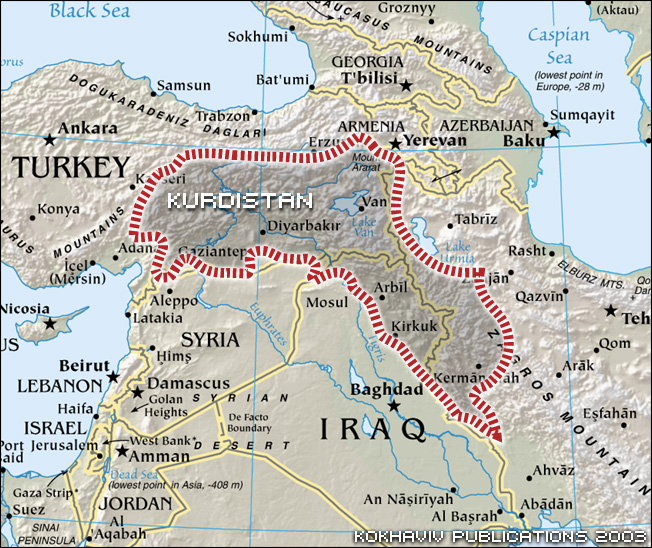
Why have oppositions in the Arab world and beyond failed so absolutely, and why have they repeated in power, or in pursuit of it, so many of the faults and crimes of the old regimes? The contrast between humanitarian principles expressed at the beginning of revolutions and the bloodbath at the end has many precedents, from the French Revolution on. But over the last twenty years in the Middle East, the Balkans and the Caucasus the rapid degradation of what started as mass uprisings has been particularly striking.

. . . . . . .

The inability of new governments across the Middle East to end the violence can be ascribed to a simple-minded delusion that most problems would vanish once democracies had replaced the old police states. Opposition movements, persecuted at home and often living a hand to mouth existence in exile, half-believed this and it was easy to sell to foreign sponsors. A great disadvantage of this way of seeing things was that Saddam, Assad and Gaddafi were so demonised it became difficult to engineer anything approaching a compromise or a peaceful transition from the old to a new regime.

. . . . . . .

Click on Image to Enlarge

So the insurgencies in the Middle East face immense difficulties, and they have faltered, stalled, been thrown on the defensive or apparently defeated. But without the rest of the world noticing, one national revolution in the region is moving from success to success.

Read full article.

Continue reading “Patrick Cockburn: Hazards of Revolution — and Counter-Revolution”