Jean Lievens: Thomas Malone on Collective Intelligence — You Have to Give Away Old Power In Order to Gain New Power

Crowd-Sourcing, Culture, Governance, Innovation, Knowledge, P2P / Panarchy
0Shares
Jean Lievens
Jean Lievens

Thomas Malone, director of the MIT Center for Collective Intelligence,  is one of the leading thinkers in the realm of anticipating how new technologies will transform the way work is done and leaders lead. His 2004 book, The Future of Work: How the New Order of Business Will Shape Your Organization, Your Management Style, and Your Life,helped thousands of executives and would-be executives see their organizations, and themselves, in startling new ways. As a result, many organizations are becoming more collaborative and democratic. Now, Malone is exploring how social business, data analytics and cognitive computing will transform organizations once again. Here, he talks about the revolution that is coming.

IBM: In your book The Future of Work, you talked about society being on the verge of a new world of work, a key element of which is decentralization of the organization. Since then, the social networking phenomenon has emerged and is sweeping not just popular culture but business organizations as well. How has this explosion of social networking affected your thinking?

Malone: Social networking is a good example of the kind of thing I was talking about in my book when I talked about how the cost of communication was decreasing. At the time I wrote the book, people were looking at e-mail and the Web. But since the book was written, there are these new ways of communicating electronically–Twitter, Facebook, et cetera. I think those are all excellent examples of the same underlying phenomena.

As information technology reduces the cost of communication, it becomes much easier for lots more people to know lots more things and in many cases they’re able to be well enough informed to make more decisions for themselves instead of just following orders from somebody above them in a hierarchy.

Continue reading “Jean Lievens: Thomas Malone on Collective Intelligence — You Have to Give Away Old Power In Order to Gain New Power”

Berto Jongman: Data visualisation aims to change view of global health

Advanced Cyber/IO
0Shares
Berto Jongman
Berto Jongman

Data visualisation aims to change view of global health

By creating a new and innovative way to look at massive amounts of patient data worldwide, one man hopes he can change the way public health crises are managed, as Cynthia Graber reports.

Imagine you are a foreign aid worker trying to persuade a senior politician in a developing world country to introduce a pneumococcus vaccination programme. It’s not just a case of stressing how the bacterium causes diseases including pneumonia, meningitis, and sinusitis, and kills over a million children under the age of five every year worldwide. The politician has to decide how to allocate scant resources. How does the death toll compare with malaria and AIDS? Aren't road traffic accidents a bigger problem? Has vaccination been a success in neighbouring countries?

These statistics exist, but you don't have the relevant reports and academic papers to hand. And even when you do have the information, a list of numbers may not the best way to express the strength of your case.

By creating new and innovative visual displays out of oceans of data, Christopher Murray hopes his tool can change this situation for the better. Called GBD Compare, users can rapidly determine which diseases are most harmful to children in Africa, or view how the developing and developed worlds compare in terms of heart disease, all with a few clicks of a computer mouse.

The data viz tool processes data from the Global Burden of Disease (GBD) report, which compiles statistics, charts and graphs on causes of death and disease. “The thing that’s really neat about the visualisations is they allow people to see the problem in context – in the context of all the other problems, how it’s changing over time, how it compares to other countries,” says Murray, director of the Institute for Health Metrics Evaluation (IMHE), based in Seattle.

When Murray shows this tool to people outside the academic world of public health, Murray says, they immediately get it. “That just totally changes who you can engage in a thoughtful discussion about what are the key health problems and where they’re going,” he says.

The new tool has the enthusiastic backing of no less an advocate than Bill Gates, and, just three months after its launch, it's already leading to changes in health policies.

Read full article (2 more screens).

Berto Jongman: The Infinite Resource: The Power of Ideas on a Finite Planet, by Ramez Naam

Crowd-Sourcing, Knowledge
0Shares
Berto Jongman
Berto Jongman

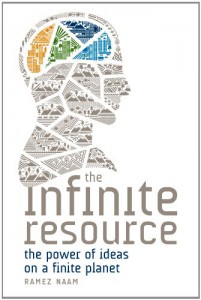
The Infinite Resource: The Power of Ideas on a Finite Planet, by Ramez Naam

Brenda Cooper

IEET, Posted: Jun 20, 2013

There are writers and futurists who are swimming upstream against a tide of people screaming about the sky falling. Ramez Naam is one of the them, offering practical tools and illuminating the power of imagination and initiative.

Amazon Page
Amazon Page

The Infinite Resource:  The Power of Ideas on a  Finite Planet, Ramez describes a future full of prosperity and new ideas.This is, of course, generally what has happened before. Even though the future never turns out exactly like we futurists or anyone else imagines it, our progress along the arrow of time has almost always been positive. We live longer and better lives, we live in less repressive societies, and we have more opportunities.We still have problems.  Maybe our most serious challenges so far.  Ramez offers up solutions and plans that appear to be possible.  He tells stories about our past to illuminate how we have prevailed before, and could do so again.One of the things I particularly liked about The Infinite Resource is that Ramez’s positions about the most functional roles for governments and businesses are very closely aligned to mine.  He makes a strong case for government regulation where it’s needed, but of the type that encourages innovation rather the stifling prescriptive regulation style that has never worked as well.  He provides examples of how good regulation has worked to make the market stronger and to encourage new businesses and business practices. He also strongly supports the power of a functional free market.  I’d call this book a celebration of  practical capitalism with a progressive agenda meant to help us protect the Earth.Note that some of the things Ramez talks about are not popular with environmentalists, but I encourage readers to keep an open mind and do independent research.  There were a few ideas here where I had to do the same thing.The Infinite Resource left me – an optimist – feeling even more positive about the future.Some other ways to learn about this book:Blog entry about the race to save the planet on Ramez’s site.  Video of Ramez talking at Ingnite Chicago.

Continue reading “Berto Jongman: The Infinite Resource: The Power of Ideas on a Finite Planet, by Ramez Naam”

Berto Jongman: Millimeter Waves May be the Future of 5G Phones

Advanced Cyber/IO
0Shares
Berto Jongman
Berto Jongman

Millimeter Waves May Be the Future of 5G Phones

Samsung’s millimeter-wave transceiver technology could enable ultrafast mobile broadband by 2020

By Ariel Bleicher

IEEE Spectrum, 13 Jun 2013

Clothes, cars, trains, tractors, body sensors, and tracking tags. By the end of this decade, analysts say, 50 billion things such as these will connect to mobile networks. They’ll consume 1000 times as much data as today’s mobile gadgets, at rates 10 to 100 times as fast as existing networks can support. So as carriers rush to roll out 4G equipment, engineers are already beginning to define a fifth generation of wireless standards.

What will these “5G” technologies look like? It’s too early to know for sure, but engineers at Samsung and at New York University say they’re onto a promising solution. The South Korea–based electronics giant generated some buzz when it announced a new 5G beam-forming antenna that could send and receive mobile data faster than 1 gigabit per second over distances as great as 2 kilometers. Although the 5G label is premature, the technology could help pave the road to more-advanced mobile applications and faster data transfers.

Continue reading “Berto Jongman: Millimeter Waves May be the Future of 5G Phones”

Patrick Meier: Using Big Data to Inform Poverty Reduction Strategies — Data Science for Social Good: Not Cognitive Surplus but Cognitive Mismatch

01 Poverty, 03 Economy, 07 Health, 11 Society, Crowd-Sourcing, Geospatial
0Shares
Patrick Meier
Patrick Meier

Using Big Data to Inform Poverty Reduction Strategies

My colleagues and I at QCRI are spearheading a new experimental Research and Development (R&D) project with the United Nations Development Program (UNDP) team in Cairo, Egypt. Colleagues at Harvard University, MIT and UC Berkeley have also joined the R&D efforts as full-fledged partners. The research question: can an analysis of Twitter traffic in Egypt tell us anything about changes in unemployment and poverty levels? This question was formulated with UNDP’s Cairo-based Team during several conversations I had with them in early 2013.

Read full post.

Data Science for Social Good: Not Cognitive Surplus but Cognitive Mismatch

I’ve spent the past 12 months working with top notch data scientists at QCRI et al. The following may thus be biased: I think QCRI got it right. They strive to balance their commitment to positive social change with their primary mission of becoming a world class institute for advanced computing research. The two are not mutually exclusive. What it takes is a dedicated position, like the one created for me at QCRI. It is high time that other research institutes, academic programs and international computing conferences create comparable focal points to catalyze data science for social good.

Read full post.

David Swanson: Ten Problems with War on Syria

Peace Intelligence
0Shares
David Swanson
David Swanson

10 Problems with the Latest Excuse for War

If you own a television or read a newspaper you've probably heard that we need another war because the Syrian government used chemical weapons.

If you own a computer and know where to look you've probably heard that there isn't actually any evidence for that claim.

Below are 10 reasons why this latest excuse for war is no good EVEN IF TRUE.

1. War is not made legal by such an excuse.  It can't be found in the Kellogg-Briand Pact, the United Nations Charter, or the U.S. Constitution.  It can, however, be found in U.S. war propaganda of the 2002 vintage.  (Who says our government doesn't promote recycling?)

Click on Image to Enlarge

2. The United States itself possesses and uses internationally condemned weapons, including white phosphorus, napalm, cluster bombs, and depleted uranium.  Whether you praise these actions, avoid thinking about them, or join me in condemning them, they are not a legal or moral justification for any foreign nation to bomb us, or to bomb some other nation where the U.S. military is operating.  Killing people to prevent their being killed with the wrong kind of weapons is a policy that must come out of some sort of sickness.  Call it Pre-Traumatic Stress Disorder.

3. An expanded war in Syria could become regional or global with uncontrollable consequences.  Syria, Lebanon, Iran, Russia, China, the United States, the Gulf states, the NATO states . . . does this sound like the sort of conflict we want?  Does it sound like a conflict anyone will survive?  Why in the world risk such a thing?

Continue reading “David Swanson: Ten Problems with War on Syria”