It’s time for ‘debunkers’ to showcase their years of hard work. I’m looking for a concise and agreed-upon explanation for each of the following items so that we might forever put to rest these ‘nonsense conspiracy theories’ about 9/11.
Ideally, I’m hoping for a 1-4 sentence long, simplified explanation for each of these listed circumstances, explaining how they fit into the widely-accepted narrative. If any of these conditions were not present as alleged, or if you find them to be irrelevant, just explain a more accurate interpretation of the corresponding data.
Choose any number or set of numbers from the following list. For each point, write what you believe to be the official stance relative to the mainstream “Arab terrorist” narrative. Consistency and consensus is what we’re looking for. The goal of this article is to have each of these points adequately addressed in order to demonstrate, for any future “truthers”, that there is a reasonable explanation for these circumstances that was simply overlooked by the 9/11 Truth movement.
Eventually, I would like to be able to construct a full outline of the ‘debunker’ consensus on these most-relevant aspects of 9/11.
Some of the points, below, may seem familiar. Special thanks to Architects and Engineers for 9/11 Truth (VIDEO) andall of the honest institutions and individuals who have made this article possible.
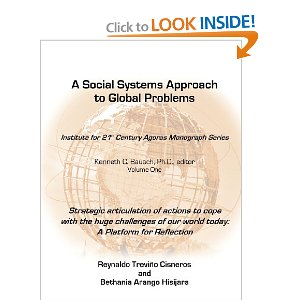
Volume 1 of Monograph Series, “A Social Systems Approach to Global Problems” A principal failing of research on large-scale, complex social/technological problems is the excessive reliance upon easily measured technical observations and the accompanying minimal regard for hard-to-measure humanist aspirations, intentions, and hopes (Flanagan and Bausch, 2011). By focusing on the easily harvested quantitative data of technological science, complex systems research too easily excludes people’s life experiences, their need for practical relevance, their desires, and their traditions.. In doing this, they have alienated popular culture from the research and lay the grounds for ignoring its findings. A new science is emerging that takes account of people’s life concerns in the context of critical human problems.This science accepts the observations of all stakeholders, helps observers as they combine these observations, and results in a composite, rich definition of the problem. This comprehensive definition melds many contexts in which stakeholders view the problem. By using this contextualized definition, scientists and populace working together can reach consensus on the nature of the problem and what they are to do about it. This new science was formulated by Gerard DeZeeuw as Third Phase science (1997). If we are to reach a common ground for collective action, we need to talk not only with each other but also to reason together. Such a process requires dialogue. And not just any dialogue, but a highly structured one. In this volume, Reynaldo Treviño Cisneros and Bethania Arango Hisijara present an analysis that joins the 15 global challenges found by the Millennium Project (Glenn, J., Gordon, T., and Florescu, E., 2010) with the 49 Continuous Critical Problems (CCPs) identified by Hasan Ozbekhan (1970). The method they used is expert-analysis using Interpretive Structural Modeling (ISM). It relies upon its two source documents to provide the required diversity of observations. It also reflects the considered judgment of only two people. It nevertheless illustrates the complexity that is inherent in a deep consideration of the challenge of global sustainability. In preparation, the authors immersed themselves in the world as viewed in the 15 challenges and the 49 critical problems. Then they used Interpretive Structural Modeling (Warfield, 1974, 1976; Christakis and Bausch, 2006) to rank the 15 challenges on the basis of the influence they have on each other. In doing this, they generated a map that indicates the most influential challenges. This map points out that these challenges possess leverage and therefore deserve priority in efforts to improve the global situation. Second, they clustered the individual CCPs with the corresponding Challenges. Third, they generated actions that work to solve the individual Challenges. Finally, they generated a second map that indicates how the actions can confront the Challenges. The central message from Bethania and Reynaldo is to invite civil society and governmental organizations to shape transdisciplinary groups and to follow their own journey of discovery, dialog and design, to achieve, by themselves, shared and clever strategies that might address at global, national, regional or local levels some of the challenges they had identified as needing attention, to pursue together a better quality of life for themselves and their communities.
I’m going to keep this blog post technical because the emotions from yesterday’s events are still too difficult to deal with. Within an hour of the bombs going off, I received several emails asking me to comment on the use of social media in Boston and how it differed to the digital humanitarian response efforts I am typically engaged in. So here are just a few notes, nothing too polished, but some initial reactions.
Once again, we saw the outpouring of operational support from the “Crowd” with over two thousand people in the Boston area volunteering to take people in if they needed help, and this within 60 minutes of the attack. This was coordinated via a Google Spreadsheet & Google Form. This is not the first time that these web-based solutions were used for disaster response. For example, Google Spreadsheets was used to coordinate grassroots response efforts during the major Philippine floods in 2012.
The burly American was escorted by Pakistani policemen into a crowded interrogation room. Amid a clatter of ringing mobile phones and cross talk among the cops speaking a mishmash of Urdu, Punjabi and English, the investigator tried to decipher the facts of the case.
“America, you from America?”
“Yes.”
“You’re from America, and you belong to the American Embassy?”
“Yes,” the American voice said loudly above the chatter. “My passport — at the site I showed the police officer. . . . It’s somewhere. It’s lost.”
On the jumpy video footage of the interrogation, he reached beneath his checkered flannel shirt and produced a jumble of identification badges hanging around his neck. “This is an old badge. This is Islamabad.” He showed the badge to the man across the desk and then flipped to a more recent one proving his employment in the American Consulate in Lahore.
“You are working at the consulate general in Lahore?” the policeman asked.
“Yes.”
“As a . . . ?”
“I, I just work as a consultant there.”
“Consultant?” The man behind the desk paused for a moment and then shot a question in Urdu to another policeman. “And what’s the name?”
“Raymond Davis,” the officer responded.
“Raymond Davis,” the American confirmed. “Can I sit down?”
“Please do. Give you water?” the officer asked.
“Do you have a bottle? A bottle of water?” Davis asked.
Another officer in the room laughed. “You want water?” he asked. “No money, no water.”
Another policeman walked into the room and asked for an update. “Is he understanding everything? And he just killed two men?”
Hours earlier, Davis had been navigating dense traffic in Lahore, his thick frame wedged into the driver’s seat of a white Honda Civic. A city once ruled by Mughals, Sikhs and the British, Lahore is Pakistan’s cultural and intellectual capital, and for nearly a decade it had been on the fringes of America’s secret war in Pakistan. But the map of Islamic militancy inside Pakistan had been redrawn in recent years, and factions that once had little contact with one another had cemented new alliances in response to the C.I.A.’s drone campaign in the western mountains. Groups that had focused most of their energies dreaming up bloody attacks against India were now aligning themselves closer to Al Qaeda and other organizations with a thirst for global jihad. Some of these groups had deep roots in Lahore, which was why Davis and a C.I.A. team set up operations from a safe house in the city.
But now Davis was sitting in a Lahore police station, having shot two young men who approached his car on a black motorcycle, their guns drawn, at an intersection congested with cars, bicycles and rickshaws. Davis took his semiautomatic Glock pistol and shot through the windshield, shattering the glass and hitting one of the men numerous times. As the other man fled, Davis got out of his car and shot several rounds into his back.
He radioed the American Consulate for help, and within minutes a Toyota Land Cruiser was in sight, careering in the wrong direction down a one-way street. But the S.U.V. struck and killed a young Pakistani motorcyclist and then drove away. An assortment of bizarre paraphernalia was found, including a black mask, approximately 100 bullets and a piece of cloth bearing an American flag. The camera inside Davis’s car contained photos of Pakistani military installations, taken surreptitiously.
Here is a brilliant essay on the endless wars that enrich the few, and destroy the lives of many, and drain our treasury of the money we should be using to prepare our society for the world that is coming. We are destroying ourselves because we cannot mount the political will to demand life affirming change.
How to Turn a World Lacking in Enemies into the Most Threatening Place in the Universe The Enemy-Industrial Complex
The communist enemy, with the “world’s fourth largest military,” has been trundlingmissiles around and threatening the United States with nuclear obliteration. Guam, Hawaii, Washington: all, it claims, are targetable. The coverage in the media has been hair-raising. The U.S. is rushing an untested missile defense system to Guam, deploying missile-interceptor ships off the South Korean coast, sending “nuclear capable” B-2 Stealth bombers thousands of miles on mock bombing runs, pressuring China, and conducting large-scale war games with its South Korean ally.
Only one small problem: there is as yet little evidence that the enemy with a few nuclear weapons facing off (rhetorically at least) against an American arsenal of 4,650 of them has the ability to miniaturize and mount even one on a missile, no less deliver it accurately, nor does it have a missile capable of reaching Hawaii or Washington, and I wouldn’t count on Guam either.
It also happens to be a desperate country, one possibly without enough fuel to fly a modern air force, whose people, on average, are inches shorter than their southern neighbors thanks to decades of intermittent famine and malnutrition, and who are ruled by a bizarre three-generational family cult. If that other communist, Karl Marx, hadn’t once famously written that history repeats itself “first as tragedy, then as farce,” we would have had to invent the phrase for this very moment.