Patrick Meier: Comparing the Quality of Crisis Tweets Versus 911 Emergency Calls

Crowd-Sourcing
0Shares
Patrick Meier
Patrick Meier

Comparing the Quality of Crisis Tweets Versus 911 Emergency Calls

In 2010, I published this blog post entitled “Calling 911: What Humanitarians Can Learn from 50 Years of Crowdsourcing.” Since then, humanitarian colleagues have become increasingly open to the use of crowdsourcing as a methodology to  both collect and process information during disasters.  I’ve been studying the use of twitter in crisis situations and have been particularly interested in the quality, actionability and credibility of such tweets. My findings, however, ought to be placed in context and compared to other, more traditional, reporting channels, such as the use of official emergency telephone numbers.

So I did some digging and found the following statistics on 911 (US) & 999 (UK) emergency calls:

  • “An astounding 38% of some 10.4 million calls to 911 [in New York City] during 2010 involved such accidental or false alarm ‘short calls’ of 19 seconds or less — that’s an average of 10,700 false calls a day”.  – Daily News
  • “Last year, seven and a half million emergency calls were made to the police in Britain. But fewer than a quarter of them turned out to be real emergencies, and many were pranks or fakes. Some were just plain stupid.” – ABC News

I also came across the table below in this official report (PDF) published in 2011 by the European Emergency Number Association (EENA). The Greeks top the chart with a staggering 99% of all emergency calls turning out to be false/hoaxes, while Estonians appear to be holier than the Pope with less than 1% of such calls.


Read full article.


Berto Jongman: 50 Global Risks, 5 Categories, 5 Major Crises, 3 Major Risk Cases

Advanced Cyber/IO
0Shares
Berto Jongman
Berto Jongman

The world is more at risk as persistent economic weakness saps our ability to tackle environmental challenges, according to the World Economic Forum’s Global Risks 2013 report. This is one of the key findings of a survey of over 1000 experts from industry, government and academia, who were polled on how they expect 50 global risks to play out over the next ten years.

Three Major Risk Cases:
Testing Economic and Environmental Resilience
Digital Wildfires in a Hyperconnected World
The Dangers of Hubris on Human Health.

The report also includes a special chapter on resilience as well as a section on “X Factors” – emerging concerns with unknown consequences.

Top Five Risks by Likelihood:
Severe income disparity
Chronic fiscal imbalances
Rising greenhouse gas emissions
Water supply crises
Mismanagement of population ageing

Top Five Impacts:
Major system financial failure
Water supply crisis
Chronic fiscal imbalances
Food shortage crisis
Diffusion of weapons of mass destruction

Report Home Page (short video, download PDF or browse HTML)

Berto Jongman: Promising Approach to Analytics

Advanced Cyber/IO
0Shares
Berto Jongman
Berto Jongman

Predicting the unpredictable

By MICHAEL SUSSMAN

Jerusalem Post, 01/07/2013 22:55

Real-world, on-the-ground effort is one way Israel is able to showcase its unique abilities on the world stage.

Israel’s contributions in the hi-tech sector, innovative renewable energy projects, and breakthroughs in military technology are well known. What is less known are Israel’s achievements in strategic assessment, planning and predictive decision- making. One group that has made these achievements happen is the Program in Political Psychology and Decision Making [POP-DM].

The program, housed at the Interdisciplinary Center Herzliya has addressed pressing issues concerning strategic policy planning for the Israeli government and governments around the world.

Following the 2006 cease-fire agreement between Israel and Hezbollah, marking the end of the Second Lebanon War, a team comprised of prominent academics was assembled. The team was tasked with evaluating whether the leader of Hezbollah, Hassan Nasrallah, would adhere to the terms of the cease-fire agreement.

Continue reading “Berto Jongman: Promising Approach to Analytics”

Winslow Wheeler: Will Chuck Hagel Stand Up to Drone Lobby?

Corruption, Cultural Intelligence, Ethics, Government, IO Deeds of War, Military, Peace Intelligence
0Shares
Winslow Wheeler
Winslow Wheeler

Everyone has an opinion and the speculation is almost entirely based on what former Senator Hagel has said, rather than his actions–or lack of them–which speak a lot louder. Take an acutely political career that seems to have valued words above everything and match it with Pentagon myths about defense systems, and you get a somewhat different picture of what to expect from Secretary of Defense Chuck Hagel.  It is not at all encouraging. This commentary about the all embracing mythology of drones and Chuck Hagel was published at Foreign Policy last evening.

Foreign Policy
Or will he be yet another victim of Pentagon operators?
WINSLOW WHEELER | JANUARY 7, 2013

U.S. Central Command has released some interesting numbers on the performance of modern air systems in Afghanistan; the data do not auger well for our defenses in the next decade, nor for the suitability of the man who appears likely to be the next secretary of defense, former Senator Chuck Hagel — his admirable iconoclasm toward some national security dogmas notwithstanding.

Continue reading “Winslow Wheeler: Will Chuck Hagel Stand Up to Drone Lobby?”

Mongoose: The bloodhounds of [corrupt] capitalism

Commercial Intelligence
0Shares
Mongoose
Mongoose

Corporate intelligence

The bloodhounds of capitalism

It is a good time to be a corporate investigator

SHERLOCK HOLMES once remarked that: “It is my business to know what other people don’t know.” These days, detective work is a huge business. Thanks to globalisation, there is a lot that companies would like to know but don’t, such as: is our prospective partner in Jakarta a crook?

Corporate detectives sniff out the facts, analyse them, share them with clients and pocket fat fees. Yet, oddly for a multi-billion-dollar industry devoted to discovering the truth, little is known about private investigators. So your correspondent took up his magnifying glass and set off in pursuit of the bloodhounds of capitalism.

Read full article and comments.

Continue reading “Mongoose: The bloodhounds of [corrupt] capitalism”

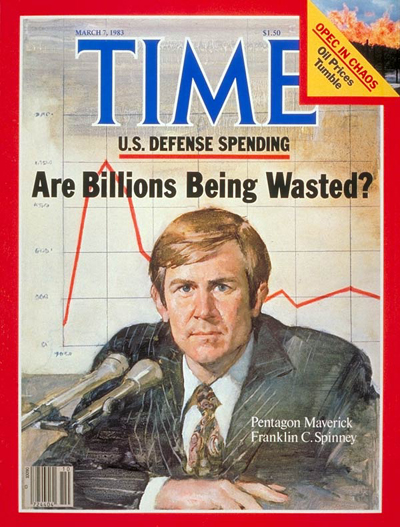
Chuck Spinney: The Real Challenges Facing the Next Secretary of Defense, Robert Steele Comments

Corruption, Government, Ineptitude, Military
10Shares
Chuck Spinney
Chuck Spinney

No Guts, No Glory

The Real Challenges Facing the Next Secretary of Defense

FRANKLIN C. SPINNEY,
This essay appeared in Counterpunch (12 Dec 2012) and Time's Battleland (3 Jan 2013)

EXTRACT:

The problem is not just a strategic one of extracting our forces with dignity; nor is it a political one of fingering who is to blame, although there is plenty of blame to go around. It stems from deep institutional roots that reveal a need for reform in our military bureaucracies and particularly our leadership selection policies.

That is because the next Secretary of Defense must deal with the consequences of a strategic oversight that was made by and approved at the highest professional levels of the American military establishment — a plan which it then imposed on its weak and insecure political leaders.  This suggests a question: Will the new defense secretary succumb to business as usual by sweeping the dysfunctional institutional causes of the Afghan debacle under the rug or have the courage and wisdom to use this sorry affair as a reason to clean out the Pentagon’s Augean Stables?

. . . . . . . . .

A far more significant challenge will be posed by the need to sort out the programmatic chaos in the Pentagon’s hugely bloated defense budget, which, while not unrelated to the Afghan debacle, is caused primarily by out-of-control institutional prerogatives and bureaucratic game playing.  Notwithstanding its bloat, the current defense budget plan cannot modernize the  military’s weapons inventories on a timely basis; nor can it insure our shrinking, aging equipment will be maintained in a state of combat readiness, while providing sufficient funds for training troops.  Most importantly, the Pentagon’s accounting systems are a shambles.  The Pentagon’s budget and program planning books can not even pass the most basic constitutional requirements for accountability, much less provide the management information needed to fix the aforementioned modernization, force structure, and readiness problems.

As I explained here and here, these dysfunctional problems are connected and have deep behavioral roots.  Fixing these problems will require harmonizing and reining in the disparate factions making up the dysfunctional political-economy of the Military – Industrial – Congressional Complex — a heretofore intractable problem President Eisenhower first warned America about in his farewell address in January 1961 (note: the reference to Congress was included in the first draft of his speech but subsequently dropped).

What I find depressing is that not one of these pressing issues has been the subject of speculations about the choice of a new defense secretary.  Au contraire, the press has been obsessed with the lobbying concerns of the discredited neocons on the right who helped to create Afghan and Iraqi messes, proponents of continuing American empire in the middle (who are now promoting our intervention in Syria and the budget busting pivot to the Pacific), and gender balancers on the left.

Read full article.

Continue reading “Chuck Spinney: The Real Challenges Facing the Next Secretary of Defense, Robert Steele Comments”

Theophillis Goodyear: Power-Mongers Blinding Us All

Cultural Intelligence
0Shares
Theophillis Goodyear

Power-Mongers Are Putting Our Eyes Out

Reveal the system and you reveal options. Conceal the system and you slam doors of opportunity and weld them shut.

One of the best quotes I've ever come across is by Peter Fryer:

“I have found that in nearly all situations I can view what is happening in Complex Adaptive Systems terms and that this opens up a variety of new options which give me more choice and more freedom.”

It was the last sentence of this article:

That means is that anyone who is preventing the citizens of humanity from seeing the actual operations of the greater system is limiting the options of humanity at a time when we have few enough options as it is, because they are preventing us from viewing what's happening in the system.

Through their actions they are collectively digging the grave of humanity.

Of course this is why transparency and openness are so vital. This applies to nations, political parties, corporations, and any other institution that routinely hides the truth from the people and that expends massive amounts of effort to keep us from seeing what's really going on. And even they don't see the greater system because other human collectives are hiding things from them too.

Everyone is hiding a part of the global system for one reason or another, usually for self-interest or for the benefit of the corrupt network of mutual back-scratchers to which they belong. And they think they're being clever. But because the collective actions of agents within a system change the environment in which they all operate, they're only hiding the operation, not the catastrophic consequences of their actions, which will become all too apparent in time.

By blinding us, the rest of humanity, to what they do . . . by putting our eyes out . . . those who conceal the system from us are slamming the doors of opportunity that might be the only hope for our continued survival as a species