DefDog: Amazon Price Check versus Main Street

Commercial Intelligence
0Shares
DefDog

Isn't this what is supposed to happen in a Free Market System?  What is wrong with comparison shopping?  Taking advantage of technology by a nimble company versus a staid old one is the essence of entrepreneurship And now a Senator is getting involved?  Looks like more of the same, no integrity…

Furor surrounds Amazon's price-comparison app

Retailers and a senator denounce a one-day promotional offer that will give discounts to Amazon customers who use the Price Check app while browsing at physical stores.

Read full article.

Phi Beta Iota:  Amazon has gotten inside the OODA Loop of the small retailers.  If they were adept, which they are not, they would return the favor by focusing on “true cost” to the consumer of all the externalities, and restructure their businesses to emphasize local employment,  customer-driven inventory, etcetera, etcetera.

Theophilis Goodyear: Panarchy versus Anarchy – Non-Hierarchal, Network-Controled Governance + Panarchy RECAP

Uncategorized
0Shares
Theophilis Goodyear

“Non-Hierarchal, Network-Controled Governance” Is a Better Term Than Anarchy

For me, the anarchy argument is a philosophical can of worms. It's like pulling a loose thread on a suit that never ends. Bryan Kaplan Ph.D. (of George Mason University), in his Anarchist Theory FAQ makes a pretty good case that the only thing anarchists have in common is a belief that “all forms of government are unnecessary, oppressive, and undesirable and should be abolished . . . ”

Unfortunately, this is probably the least supportable of all anarchist claims. To begin with (as Kaplan points out) the argument is framed in the negative. And that's not an enviable starting position for a philosopher or debater. And even Kropotkin, one of the most prominent anarchists (as Kaplan also points out), argued that “No destruction of the existing order is possible, if at the time of the overthrow, or of the struggle leading to the overthrow, the idea of what is to take the place of what is to be destroyed is not always present in mind. Even the theoretical criticism of the existing conditions is impossible, unless the critic has in mind a more or less distinct picture of what he would have in place of the existing state. Consciously or unconsciously, the ideal, the conception of something better is forming in the mind of everyone who criticizes social institutions.”

In other words, abolishing government would bring everyone out of the woodwork; and they would all have their own ideas about what to replace it with, and they would all be talking at once (perhaps shooting as well). It's hard to imagine much could get accomplished in that kind of environment.

Now, panarchy is an idea I can agree with, because it means non-hierarchal governance. But I think non-hierarchal governance is a far better term because it's associated with systems theory, which is about taming complexity. I can't think of many philosophies that are less intellectual as a whole than anarchy. And I have exactly the opposite point of view of non-hierarchal governance. So from my perspective, the value of open-source systems and collective-intelligence should not even be loosely associated with anarchy.

Continue reading “Theophilis Goodyear: Panarchy versus Anarchy – Non-Hierarchal, Network-Controled Governance + Panarchy RECAP”

NIGHTWATCH: China Leads Multinational Intelligence and Operations Initiative within Mekong River Basin

02 China, 03 Economy, 08 Wild Cards, 10 Security, 11 Society, 12 Water, Commerce, Military
0Shares
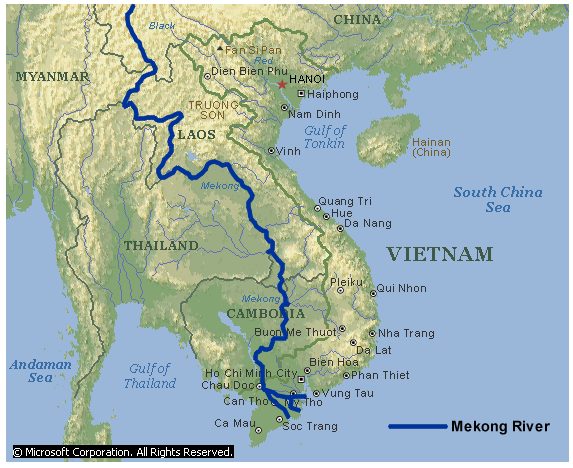
Click on Image to Enlarge

China-Mekong River Nations: Chinese press reported that joint security patrols with Thailand, Laos and Burma/ Myanmar will begin along the Mekong River. At a ministerial meeting in Beijing, the four countries agreed to begin the first patrol before 15 December and that the operation's headquarters be located in China. The patrols will allow shipping to restart and guarantee security with China to help train and equip police in Laos and Myanmar.

Comment: Many younger Readers might not know that the Mekong River originates in southwest China and flows southwards through Southeast Asia to the South China Sea. The omission of Cambodia from the joint agreement indicates the security problems are in the upper reaches of the river. Thus, the security problems are in effect, inland waterways security issues along navigable waterways.

The interesting dynamic is the Chinese success in moving southward, by exploiting lapses of local security along a key waterway, to extend the Chinese sphere of influence. The Chinese have not had Chinese patrol boats or river security advisors on the Mekong along the Laos, Burma and Thai borders in centuries.

NIGHTWATCH KGS Home

Phi Beta Iota:  Viet-Nam, long a co-equal and counter-weight to China in Southeast Asia, is not mentioned.  As the map illuminates, Cambodia and Viet-Nam control the entry points to the Mekong River.  Viet-Nam's control of the eastern coast also precludes–absent an agreement–an obvious option for future commerce, a major canal or rail cut from the Mekong east to Vinh, one of four Grade 1 cities in Viet-Nam, a major ground transport hub, and a notable port.

Marcus Aurelius: Peru’s Shining Path Leader Admits Defeat

08 Wild Cards, 10 Security, Law Enforcement
0Shares
Marcus Aurelius

Peru's Shining Path defeated, rebel leader admits

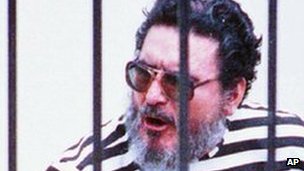
The arrest of Shining Path founder Abimael Guzman in 1992 hastened the group's demise

Peru's Shining Path rebel movement has been defeated, one of the group's few active remaining leaders has admitted.

Comrade Artemio, who heads a group in northern Peru, said they were ready to talk to the government about ending their armed rebellion.

It is not known if other rebels would be prepared to give up their arms.

The arrest of Shining Path founder Abimael Guzman in 1992 hastened the group's demise

An estimated 70,000 people died in the conflict with the Shining Path, which was at the height of its powers in the 1980s and early 1990s.

Speaking to reporters from his jungle hideout, Comrade Artemio said the Shining Path had been defeated.

“I am not going to deny that,” he said.

He said his group was prepared for dialogue with the authorities, but added that they would only surrender their weapons if the government were serious about wanting to end the armed conflict.

The Shining Path guerrillas launched their armed struggle in 1980 to remove what they saw as Peru's bourgeois democracy.

The rebels' avowed aim was to establish a communist government, of Maoist inspiration.

The arrest of Shining Path founder and leader Abimael Guzman, in 1992, and a fierce campaign during the government of President Alberto Fujimori all but dismantled the organisation.

Remnants of the guerrilla group are still active in Peru's cocaine-producing regions, engaging in sporadic clashes with police and soldiers.

Tom Atlee: Sources of the Occupy Movement Part II

Uncategorized
0Shares
Tom Atlee

Sources of the Occupy Movement: Part Two


Let's take a look at the influence of activist arts and video game culture – and the novel idea that fun and social change are a marriage made in heaven.

One of the trademark characteristics of Occupy is an out-of-the-box, creatively courageous exuberance. The 60s had some of that and there have been flashes of it since, but the Occupy has stood high on the shoulders of its predecessors and taken exuberance and courageous creativity a giant next step, making it a life-affirming leaven for their outrage and a key element in their broad appeal. How can we be light-hearted and serious at the same time? Just look at their signs! Here are three collections (with some obviously popular overlaps)….

http://bit.ly/t34sYt
http://bit.ly/vhD3gs
http://bit.ly/to3T35

These folks are ALIVE!

Check out the articles below…

Coheartedly,
Tom

————-

*** CONSIDERING THE ROLE OF THE EMERGENCE OF STREET THEATER / ART-AND-MUSIC ACTIVISM / IMPROVISATION CULTURE ***

Occupy LAAAAAA: Artists in SolidarityInterview with Elana Mann

Excerpt:

[Much] criticism of the Occupy movement comes from the clashing of staid historical scripts of protest and the current improvisation that is happening on the ground right now. Folks seem to be looking toward each other rather than the political agendas of those already in power. …. The Occupy movement is improvising new relationships to uncertainty and power… The scripts of how past protests operated (particularly protests from the 60s/70s) are clouding people’s minds for how protest should function and operate now…. I am so glad that the members of the Occupy movement try to listen to the people next to them instead of the demands of the media or the politicians…. I see the current improvisational thrust of Occupy to be moving around consciousness-raising on a national and international level, an attempt at deeply listen to the concerns of people who have been silenced for a long time.

My desire is that the improvisational practice of freedom within the Occupy movement continues to grow and expand beyond the confines of the protest. This improvisational way of living creates further flexibilities and responsibilities to change rather than fixed states driven by fear. Echoing this sentiment, artist and mediator Dorit Cypis wrote so beautifully in a recent Facebook post: “So right. Occupy has no one site. Occupy has become a state of mind that we each must take on and spread through individual and collective daily actions. Protest the ‘empire’ while self-witnessing how we each may be colluding in small ways. Live reciprocity and generosity. Listen empathically and choose when to take decisive action to enliven ‘a brave new world’.” Through improvisation, maybe we will discover a way toward a more equal, functional, and just future.

Read full post.