2000 Presidential Leadership and National Security Policy Making

Articles & Chapters, Decision-Making & Decision-Support, Strategy
Presidential Leadership

Chapter 12, “Presidential Leadership and National Security Policy Making,” pp. 245-282.

PDF (38 Pages): Chapter 12 Presidential Leadership

Background

The Ninth Annual Strategy Conference, held at the U.S. Army War College in 1998, addressed the theme of “Challenging the United States Symmetrically and Asymmetrically: Can America be Defeated?” In the course of that event, a number of speakers and participants, including the author, reflected on our existing policymaking process and our existing force structure, but without making recommendations for specific changes.

In the largest sense, the Ninth Annual Strategy Conference called into question every aspect of Joint Vision 2010 and clearly identified a need to come to grips with several asymmetric threats for which our existing force structure is not well suited as a primary defense. A summary of the conference was subsequently published and is readily available online.2

Continue reading “2000 Presidential Leadership and National Security Policy Making”
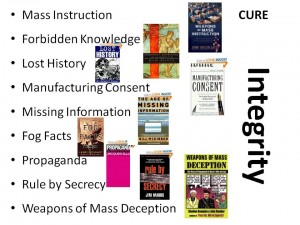
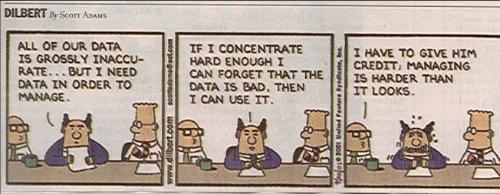
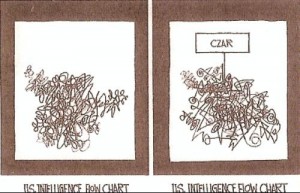
Graphic: Data Pathologies

Advanced Cyber/IO, Information Society, Intelligence (Government/Secret), Misinformation & Propaganda, Power (Pathologies & Utilization)

I'm sticking to my story–there is nothing wrong with America, the government, the department of defense, or the secret intelligence community, that cannot be restored with one word–INTEGRITY.

In no way does this impugn the honor or the good intentions of specific individuals or organizations.  Instead, this addresses the reailty that our industrial-era society has failed to adapt and is on the verge of collapse in the face of complexity.  Only bottom-up Collective Intelligence can cope, but that requires innovative and pervasive education for all.

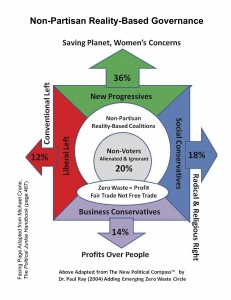
Graphic: Political Factions 002

Advanced Cyber/IO, Political, Politics
Pau Ray's Depiction of US Interest Groups

Used with permission, this was created by Paul Ray, co-author with Sherri Anderson of the brilliant early book, Cultural Creatives, see my review.

Contrast this issue-based factionalization–one that can be drawn together by first focusing on the 80% where we are all in general agreement–in contrast to the ideological divisions represented by the Tyranny of Two.

2000 ON INTELLIGENCE: Spies and Secrecy in an Open World

Books w/Steele
Free PDF Text
Free PDF Text

2020: It just kills me to have wasted decades wandering in the wilderness (but I did learn a lot no one in the US IC has a clue about).  I am praying for a second chance to help our government get it right under President Trump.

Foreword by Senator David Boren (D-OK), whom I helped with the National Security Act of 1992, and now the President of one of my educational passages, the University of Oklahoma. The Act was blocked by Senator John Warner, who feared losing jobs in Virginia. This is how I learned that transformation and reform must always be job and revenue neutral across all sub-state political boundaries.

Continue reading “2000 ON INTELLIGENCE: Spies and Secrecy in an Open World”