
 Airbnb does business in 34,000 cities, has a valuation of over 10 billion dollars, and in a very short time has disrupted the world of hospitality and travel. Its co-founder and CEO Brian Chesky envisions the future city as a place where sharing is front and center — where people become micro-entrepreneurs, the local mom and pops will flourish once again, where space isn't wasted, but shared, and more of almost everything is produced, except waste. But the journey from here to there won't be all smooth sailing. What are the ups and downs of the sharing economy, as businesses like Airbnb confront critiques about regulation, economic development, and fairness? What role might businesses play in creating more shareable, more livable cities? How will the sharing economy, with its de-emphasis on ownership, be a tool for addressing urban inequality?
SchwartzReport: Joseph Stiglitz – Inequality Not Inevitable
Civil Society, Commerce, Commercial Intelligence, Cultural Intelligence, Government
Inequality Is Not Inevitable
AN insidious trend has developed over this past third of a century. A country that experienced shared growth after World War II began to tear apart, so much so that when the Great Recession hit in late 2007, one could no longer ignore the fissures that had come to define the American economic landscape. How did this “shining city on a hill” become the advanced country with the greatest level of inequality?
One stream of the extraordinary discussion set in motion by Thomas Piketty’s timely, important book, “Capital in the Twenty-First Century,” has settled on the idea that violent extremes of wealth and income are inherent to capitalism. In this scheme, we should view the decades after World War II — a period of rapidly falling inequality — as an aberration.
This is actually a superficial reading of Mr. Piketty’s work, which provides an institutional context for understanding the deepening of inequality over time. Unfortunately, that part of his analysis received somewhat less attention than the more fatalistic-seeming aspects.
Eagle: Citigroup Study on Global Protests
Commercial Intelligence, Cultural Intelligence
Citigroup Study on Global Protests
Published by Justin Wedes
TAKING IT TO THE STREETS
What the New Vox Populi Risk Means for Politics, the Economy and
Markets
Citi GPS: Global Perspectives & Solutions May 2014
Jean Lievens: Ethical Economics
Commercial Intelligence, Cultural Intelligence, Earth IntelligenceRethinking Economics is an international network of students campaigning for pluralism within economics, particularly the economics curriculum, which is, at present, heavily biased towards the methods of the neoclassical school. Rethinking Economics was launched with the 2013 conference, and brought together a number of smaller groups advocating changes to economics. Together, those groups, along with many others, produced the ISIPE open letter, calling for an overhaul of the way … read more
NYC Conference 12-14 September 2014
Mason Gaffney & Fred Harrison, The Corruption of Economics(2007)
Fred Harrison, The Power in the Land: An Inquiry into Unemployment, the Profits Crisis and Land Speculation (1983)
Yoda: Ucadia Financial System
Commercial Intelligence
The Ucadia Financial System Model- A sustainable system under the Golden Rule for prosperity
MP3 Audio Broadcast of this Blog > here (40 min 13 Mb)
Hello and thanks for reading and listening to the Ucadia blog for this week (the 9th of October 2013) entitled “The Ucadia Financial System Model- A sustainable system under the Golden Rule for prosperity”.
Jean Lievens: Sarwant Singh on Smart Cities – A $1.5 Trillion Market Opportunity — With Comment by Robert Steele on the Real $4 Trillion Opportunity Being Ignored
Commerce, Commercial Intelligence, Earth Intelligence, True CostSmart Cities — A $1.5 Trillion Market Opportunity
Sarwant Singh
Forbes, 19 June 2014
Mahatma Gandhi once said, “India is to be found not in its few cities, but in its 700,000 villages.” Though that may at one time have been true, it is no longer the case. With about 30 country dwellers moving lock, stock and barrel every minute from Indian villages to become city dwellers, not many villages will be left in India by end of this century.
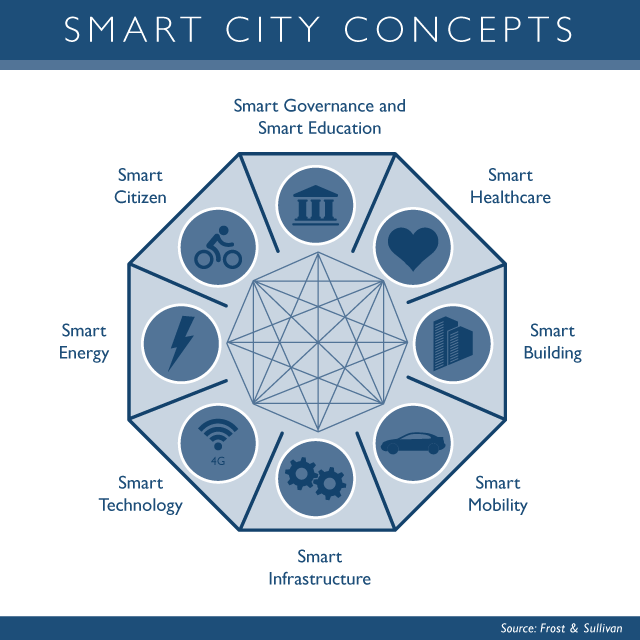
Towards the end of the last decade, our planet achieved two remarkable feats. First, our human population crossed the seven billion mark and for the first time in history, 50 percent of the world’s population was living in urban areas. This is expected to accelerate to 60 percent before 2025, globally; with the Western, developed world reaching an 80 percent urbanization level during this time frame. Urbanization has become so important that it has elevated some cities, like Brussels, Seoul, Bogota, and many more, to be even more important than the countries themselves contributing to over 40 percent of the country’s GDP. Interestingly, the UK has already demonstrated its efforts in focusing on this Mega Trend of urbanization and city as growth hubs with the creation of a new ministry role called the “minister for cities.” This person is tasked with unlocking the economic potential of cities, thus giving them more empowerment and freedom to do so.
Penguin: Russia Zeros Out Petrodollar
05 Energy, 06 Russia, Commerce, Commercial Intelligence, Government
Russia turns its back on the petrodollar
The Russians are actually making a move against the petrodollar. It appears that they are quite serious about their de-dollarization strategy. The largest natural gas producer on the planet, Gazprom, has signed agreements with some of their biggest customers to switch payments for natural gas from U.S. dollars to euros. And Gazprom would have never done this without the full approval of the Russian government, because the Russian government holds a majority stake in Gazprom. There hasn't been a word about this from the big mainstream news networks in the United States, but this is huge. When you are talking about Gazprom, you are talking about a company that is absolutely massive. It is one of the largest companies in the entire world and it makes up 8 percent of Russian GDP all by itself. It holds 18 percent of the natural gas reserves of the entire planet, and it is also a very large oil producer. So for Gazprom to make a move like this is extremely significant.
