
A recording of Michael Shuman's talk to kick off New Economy Week. (“[M]any people think the key to prosperity is to occupy Wall Street.”

The truth at any cost lowers all other costs — curated by former US spy Robert David Steele.
A recording of Michael Shuman's talk to kick off New Economy Week. (“[M]any people think the key to prosperity is to occupy Wall Street.”
 What Will Happen to the Global Economy If BRICS Announce Launch of New Currency – BRISCO?
Peter Koenig, a former World Bank economist and a Voice of Russia regular, outlines one of the scenarios in which America’s plans for a New World Order are broken.
Part I

For several decades, we’ve been told by the mainstream media that the West has a firm grip on the word’s economy and that America decides the future of the world. Peter Koenig, former World Bank economist and Voice of Russia regular, outlines one of the scenarios in which America’s plans for a New World Order are broken. This is the first part of the series about “How to dismate the New World Order”.
Imagine – it is December 31, 2013. The Presidents of the BRICS (Brazil, Russia, India, China and South Africa) plus Iran and Venezuela call an impromptu press conference – in Paris – to present a ‘Sea of Change in Economics,’ as they call it. The announcement was circulated throughout the international media and diplomatic offices and embassies just a day before – an indication of urgency. Despite it being the last day of the year with most people thinking of their year-end festivities, the event calls the attention of many – especially the world of finance – and of course the media. The press meeting is planned for 18:00 at theDolce Chantilly, in Chantilly, just 40 minutes from the center of Paris.
The seven presidents, accompanied by their Ministers of Finance, are seated in a half-moon panel in front of about 500 journalists from all over the world. The Chinese President and General Secretary of the Communist Party, Mr. Xi Jinping, opens the conference without fanfare, introducing the subject as an event that may have worldwide repercussions. He elaborates,
By PARAG KHANNA
New York Times, October 12, 2013
SINGAPORE — EVERY five years, the United States National Intelligence Council, which advises the director of the Central Intelligence Agency, publishes a report forecasting the long-term implications of global trends. Earlier this year it released its latest report, “Alternative Worlds,” which included scenarios for how the world would look a generation from now.
One scenario, “Nonstate World,” imagined a planet in which urbanization, technology and capital accumulation had brought about a landscape where governments had given up on real reforms and had subcontracted many responsibilities to outside parties, which then set up enclaves operating under their own laws.
The imagined date for the report’s scenarios is 2030, but at least for “Nonstate World,” it might as well be 2010: though most of us might not realize it, “nonstate world” describes much of how global society already operates. This isn’t to say that states have disappeared, or will. But they are becoming just one form of governance among many.
A quick scan across the world reveals that where growth and innovation have been most successful, a hybrid public-private, domestic-foreign nexus lies beneath the miracle. These aren’t states; they’re “para-states” — or, in one common parlance, “special economic zones.”
Who really runs things in America?
By Jon Rappoport
October 11, 2013
The infamous Trilateral Commission still exists.
Many people think the TC, created in 1973 by David Rockefeller, is a relic of an older time.
Think again.
Patrick Wood, author of Trilaterals Over Washington, points out there are only 87 members of the Trilateral Commission who live in America. Obama appointed eleven of them to posts in his administration.
Keep in mind that the original stated goal of the TC was to create “a new international economic order.” Knowing that you have to break eggs to make an omelette, consider how the following TC members, in key Obama posts, can help engender further national chaos; erase our sovereign national borders; and install binding international agreements that will envelop our economy and money in a deeper global collective: a new world order:
Continue reading “Jon Rappoport: Who Really Runs America (Into the Ground)?”

Google Forces Users to Join Google Plus
Face it, when it comes to social networks Google+ is not everyone’s favorite. User adoptions have been less than hefty and Google is not happy. What does the search giant do? Force people to sign up. ReadWrite reports that if you “Want To Comment On YouTube? You’ll Need A Google+ Account First.” In an attempt to cut back on haters’ comments on videos, Google will make anyone who wants to comment on YouTube videos sign up on its social network.
The goal is to clean up content and improve overall quality in the YouTube content section.
How many times have you watched a video on a video with serious content, i.e. animal cruelty, nuclear bombings, child abuse, or the 9/11 attacks, and someone posts a lewd comment or totally off base? As they say haters got to hate, but Matt McLernon, a YouTube spokesperson, wants the comment section to contain meaningful conversations.
Google never does something without a hidden agenda. It forces users to join the Google+ network. All Google users have been forced into this ploy one way or another and have said account, but that does not mean they use them. Google wants to drive its numbers up and may have a problem on its hands:
“The company is risking a user revolt by mandating all commenter’s be Google+ users, as many people are already unhappy that the service is being forced on them. YouTube will begin rolling out the changes on channel pages today, with the exclusive Google+ commenting and linking system due globally later this year.”
But you need to remember who these users are: YouTube commenters. No one takes them seriously in the first place, so staging a revolt probably will not do much. Good luck, though! Those snarky comments give you all the power in the world.
Whitney Grace, October 12, 2013
Sponsored by ArnoldIT.com, developer of Augmentext
Phi Beta Iota: Google also forces all Gmail links to go through Google rather than direct so that transaction data can be captured.
Posted: 09 Oct 2013 01:57 AM PDT

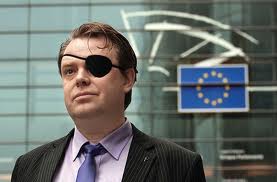
Privacy – Henrik Alexandersson: US corporations routinely ignore and abuse the strict privacy rules of European private citizen data, which they have accessed under the “safe harbor” agreement of the European Union. This surfaced in this week’s Europarl hearing on mass surveillance, causing the European Parliament’s rapporteur to call for a complete scrapping of the safe harbor arrangement right in the middle of the hearing. This is a further erosion of already-brittle trust in privacy respect by the United States.

‘US economy is just one giant hedge fund’ — RT Op-Edge
http://rt.com/op-edge/us-
