Marcus Aurelius: Army – Navy Retention Issues

Cultural Intelligence, Military
Marcus Aurelius
Marcus Aurelius

Month-old Rowan Scarborough article at bottom and transmittal messages above it are worth reading.  While I don't have Army numbers, I'd bet we have or will soon have same kinds of retention problems as the Navy.

What I am seeing are:

* A stated policy of “precision retention” whereby, in getting to end strength it thinks it can afford, Army does not intend to entice people to leave voluntarily.  Rather, it intends to try to cull out those it no longer wants, essentially anyone whose record is off-perfect in the slightest respect.

* A “back to basics” push that could be intended to set people up for getting blots on their copybooks.

* Radically fewer resources for training, constrained by dollars focused on buying gadgets.

* A great deal of political correctness, just like Navy

* Massive requirements for annual online training on intractible problems, just like Navy.

We have seen parts of this before and it didn't work out well.

Sailors leaving Navy over stress on social issues, Top Gun instructor says

A Navy F-18 fighter pilot and former Top Gun instructor is publicly warning admirals that retention is beginning to suffer from the military’s relentless social conditioning programs.

Cmdr. Guy Snodgrass, until recently a Pentagon speech writer for the chief of naval operations, Adm. Jonathan Greenert, said sailors are becoming fed-up with the constant emphasis on social issues — an apparent reference to gays in the military, women in combat and ending sexual harassment.


Berto Jongman: Jihadology – Pros and Cons and Outcomes of Imprisoning Muslims

Civil Society, Cultural Intelligence, Law Enforcement
Berto Jongman
Berto Jongman

GUEST POST: Damned if They Do, Damned if They Don’t: The Gordian Knot of Europe’s Jihadi Homecoming

By Zach Goldberg

Introduction

The homecoming of Europe’s jihadi volunteers (or émigrés) from Syria remains an enduring source of public disquiet. That battle-hardened and radicalized Muslim-European passport holders would return to leverage acquired “skills” at home is a specter haunting law enforcement across the continent. A recent discovery by French police of some 1000+ grams of explosives, nails and bolts in the apartment of a recently repatriated Jihadi émigré, did little to assuage such concerns.

Understandably, many European governments are throwing down the gauntlet on returning and hopeful émigrés, as well as their facilitators. Britain’s head of counter-terrorism at the Crown Prosecution Service, for instance, has threatened to deal “robustly” with any such individuals, threatening sentences of life-imprisonment and/or revoking their citizenships. Other countries have followed suit. In October, Holland established a legal precedent when it convicted and sentenced a would-be 22 year old émigré–publicly identified as ‘Omar H’–to a year in prison on charges of planning “arson or explosions” and adhering to “Jihadist ideas.” And most recently, in March, a French court slapped prison sentences ranging from 2-5 years on three Muslim citizens—previously arrested trying to board a plane for Turkey—for “criminal association with the intent to commit terrorist acts.”

On the face of it, the crackdown is common sense: better to take prospective ‘ticking time-bombs’ off the street than leave tragedy to chance. Unfortunately, the infusion of global jihadis into a European prison system teeming with Muslims may create medium to longer-term issues.

‘Prison Emirates’: Appraising the Problem

Prior to his 4-month jail sentence for car theft, an 18-year old French-Algerian Khalid Kelkal did not “know how to write and read Arabic.” Once behind bars, Khalid affirmed to himself: “I must not waste my time. There was a Muslim Brother with us…I learned Arabic fast.” Khalid quickly found his niche among the “tight-knit group” of Muslim cellmates. It was like he experienced a “great opening of the spirit.”

Continue reading “Berto Jongman: Jihadology – Pros and Cons and Outcomes of Imprisoning Muslims”

Berto Jongman: Scillia Elworthy on 10 Global Values Needing Replacement

Commercial Intelligence, Cultural Intelligence, Earth Intelligence
Berto Jongman
Berto Jongman

10 Global Values That Are Old and Stale, and How to Replace Them

Scillia Elworthy

Huffington Post, 23 April 2014

Two hundred and thirty remarkable people from North and South gathered in Reykjavik from April 9-12 to share actions for effective change on the issue of “the power of love and compassion in governance.”

CONCLUSION:

I presented the gathering with 10 values or norms that have governed our (Western) actions for centuries, and which have contributed to the state of the planet today, and then proposed what we can replace each one with the kind of values that could enable better decisions — decisions that could get us out of the mess we're in:

I presented the gathering with 10 values or norms that have governed our (Western) actions for centuries, and which have contributed to the state of the planet today, and then proposed what we can replace each one with the kind of values that could enable better decisions — decisions that could get us out of the mess we're in:

  1. (old value) “Humans have the right to do as we like with the Earth” — replace with “humans become responsible stewards of the Earth, in order to preserve its beauty and diversity.”
  2. (old value) “Science and the rational mind are what matter most” — replace with “the human body, mind, feelings and soul are all one, interacting constantly, and the entire package is consciousness.”
  3. (stale value) “Continuing economic growth is essential” is replaced with “growth in consciousness is now more urgent.”
  4. “Survival of the fittest” — so dated — becomes “it's more efficient to replace competition with co-operation for the greater good.”
  5. “Good fences make good neighbors” becomes “building trust is the most effective and least costly form of security available today.”
  6. “Might makes right” is replaced with “common security is safer and cheaper than an international system based on weapons and superior power.”
  7. “Short-termism is fine” becomes “our decisions now take account of future generations, as the oldest indigenous traditions have told us for centuries.”
  8. “The technical fix will always be invented in time to resolve serious problems” gives way to “the greater intelligence is not only available to us here and now, but is infinitely more powerful than human intelligence.”
  9. “Women are too emotional to deal with the real issues of business and world affairs” fades away, because “the capacities of the deep feminine and the deep masculine — in both men and women — are now seen as vital for human survival on the planet”.
  10. “Consuming is our right” (and our addiction!) gives way to the realization that “what we really desire is to satisfy the human need for meaning and beauty.”

Chuck Spinney: Freeman Dyson – Great Science Demands Great Blunders and Good Losers – Nature Never Loses and Always Plays Fair

Commercial Intelligence, Cultural Intelligence, Earth Intelligence
Chuck Spinney
Chuck Spinney

The author of the attached book review is a brilliant writer as well as one of the last of the great 20th Century scientists. “The Case for Blunders” is an important subject, because the confusion of theory with facts is perhaps the most persistent “Orientation” problem misshaping the OODA loops driving contemporary political discourse in economics, social policy, and defense policy as well as in the practice of institutional “big” science (where scientists are forced to cope with the conformist pressures of publication, gatekeeping, obtaining grants, etc). Dyson explains how practice of good science resolves this confusion in a constructive way.

The Case for Blunders

Freeman Dyson

New York Review of Books, 6 March 2014

Amazon Page
Amazon Page

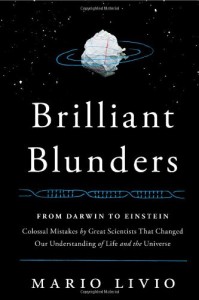
Review: Brilliant Blunders: From Darwin to Einstein—Colossal Mistakes by Great Scientists That Changed Our Understanding of Life and the Universe, by Mario Livio, Simon and Schuster, 341 pp., $26.00

Science consists of facts and theories. Facts and theories are born in different ways and are judged by different standards. Facts are supposed to be true or false. They are discovered by observers or experimenters. A scientist who claims to have discovered a fact that turns out to be wrong is judged harshly. One wrong fact is enough to ruin a career.

Theories have an entirely different status. They are free creations of the human mind, intended to describe our understanding of nature. Since our understanding is incomplete, theories are provisional. Theories are tools of understanding, and a tool does not need to be precisely true in order to be useful. Theories are supposed to be more-or-less true, with plenty of room for disagreement. A scientist who invents a theory that turns out to be wrong is judged leniently. Mistakes are tolerated, so long as the culprit is willing to correct them when nature proves them wrong.

Continue reading “Chuck Spinney: Freeman Dyson – Great Science Demands Great Blunders and Good Losers – Nature Never Loses and Always Plays Fair”

Michael Kearns: Leadership in the Great Turning

Cultural Intelligence
Michael S. Kearns
Michael S. Kearns

We have leadership in place from the Industrial Era. We are in the process of recognizing (in a bottom-up manner) the leadership that will nurture our collectives as we enter the Great Turning. I found this contribution from Joanna Macy quite helpful and even pointed — note the emphasis on analysis as the second dimension of three.

The Great Turning

Joanna Macy

The Great Turning is a name for the essential adventure of our time: the shift from the industrial growth society to a life-sustaining civilization.

The ecological and social crises we face are inflamed by an economic system dependent on accelerating growth. This self-destructing political economy sets its goals and measures its performance in terms of ever-increasing corporate profits–in other words by how fast materials can be extracted from Earth and turned into consumer products, weapons, and waste.

A revolution is underway because people are realizing that our needs can be met without destroying our world. We have the technical knowledge, the communication tools, and material resources to grow enough food, ensure clean air and water, and meet rational energy needs. Future generations, if there is a livable world for them, will look back at the epochal transition we are making to a life-sustaining society. And they may well call this the time of the Great Turning. It is happening now.

Whether or not it is recognized by corporate-controlled media, the Great Turning is a reality. Although we cannot know yet if it will take hold in time for humans and other complex life forms to survive, we can know that it is under way. And it is gaining momentum, through the actions of countless individuals and groups around the world. To see this as the larger context of our lives clears our vision and summons our courage.

Three Dimensions of the Great Turning

Continue reading “Michael Kearns: Leadership in the Great Turning”

Berto Jongman: Fixed (Drone) Mindsets versus Growth (Learner) Mindsets – Understanding Industrial Era Commoditized Human Gridlock versus Information Era Liberated Human Potential

Cultural Intelligence
Berto Jongman
Berto Jongman

Fixed vs. Growth: The Two Basic Mindsets That Shape Our Lives

by

How to fine-tune the internal monologue that scores every aspect of our lives, from leadership to love.

“If you imagine less, less will be what you undoubtedly deserve,” Debbie Millman counseled in one of the best commencement speeches ever given, urging: “Do what you love, and don’t stop until you get what you love. Work as hard as you can, imagine immensities…”

Amazon Page
Amazon Page

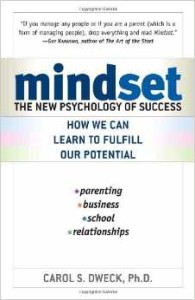
Far from Pollyanna platitude, this advice actually reflects what modern psychology knows about how belief systems about our own abilities and potential fuel our behavior and predict our success. Much of that understanding stems from the work of Stanford psychologist Carol Dweck, synthesized in her remarkably insightful Mindset: The New Psychology of Success (public library), which explores the power of our beliefs, both conscious and unconscious, and how changing even the simplest of them can have profound impact on nearly every aspect of our lives.

One of the most basic beliefs we carry about ourselves, Dweck found in her research, has to do with how we view and inhabit what we consider to be our personality. A “fixed mindset” assumes that our character, intelligence, and creative ability are static givens which we can’t change in any meaningful way, and success is the affirmation of that inherent intelligence, an assessment of how those givens measure up against an equally fixed standard; striving for success and avoiding failure at all costs become a way of maintaining the sense of being smart or skilled. A “growth mindset,” on the other hand, thrives on challenge and sees failure not as evidence of unintelligence but as a heartening springboard for growth and for stretching our existing abilities. Out of these two mindsets, which we manifest from a very early age, springs a great deal of our behavior, our relationship with success and failure in both professional and personal contexts, and ultimately our capacity for happiness.

Read full article with major graphic.

Jim Dean: Alexander Orlov on USA Implosion in Middle East — “Going, Going, Gone…”

05 Iran, 06 Russia, Commercial Intelligence, Cultural Intelligence, IO Deeds of War, Peace Intelligence
Jim W. Dean
Jim W. Dean

NEO – USA in Mid East – Going, Going, Gone

[Veteran's Today Editor's note:  Alexander brings us more analysis from the Russian perspective at this critical time. The US seems to be rolling the dice in a desperate game to create instability on Russia's border, establish an offensive base in the Ukraine, threaten Russia gas markets in Europe, and give Putin some payback for his solid support of Syria.

The famous quote of Carl von Clausewitz comes to mind, “War is the continuation of politics by other means.”

But I think 21st century America will be remembered for raising sanctions up to the level of conducting war and occupying a targeted country at the same time, while using the least amount of military power.

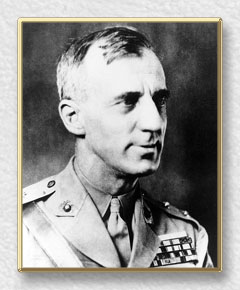
General Smedley Butler, USMC

America seems hell bent on conducting economic warfare across the globe, where our military has been relegated to the thug status that Marine General Smedley Butler described in his famous expose, War is a Racket. The modern Madison Avenue PR people had their fun trying to disguise the dirty deeds, with feints like calling them “color revolutions” versus the assaults that they really are.

But the bloom is off the rose now. We see the ugliness of it all for what it really is… just plain ugly. We also see that it is not being done for our benefit in any way. On the contrary, it never was.

We have been plantation assets to be used however the elites have wanted. And this endless game of serfdom will never end until we refuse to play the game… Jim W. Dean ]

US is losing its positions in the Middle East due to the Ukrainian Crisis

… by  Alexander Orlov,    … with  New Eastern Outlook, Moscow

By taking an extremely hostile position against Russia in the Ukrainian crisis, Washington has managed to hasten the reorientation of Moscow towards the East, especially the Mid East.

Iran is among the states that can expect the future development of bilateral relations with Russia, since it is one of the most influential countries in the region.

Complete article below the fold.

Continue reading “Jim Dean: Alexander Orlov on USA Implosion in Middle East — “Going, Going, Gone…””

noble gold