
SchwartzReport: 6 Greenest Cities in World (None in USA)

Commercial Intelligence, Cultural Intelligence, Earth Intelligence
Stephan A. Schwartz
Stephan A. Schwartz

Not all politicians are the corrupt morons we find at the Federal level in Washington. Here are six cities around the world trying to reorganize how their communities function. I take it as good news, although I think it should be noted that not one of these cities is to be found in the U.S.

6 of the Greenest Cities in the World
SARAH WOLFE – Global Post/Salon

Solar-powered buses. Carbon neutral buildings. Motion-sensitive lights and water faucets.

Sounds like something out of ‘The Jetsons.”

But cutting-edge technologies like these are already the norm in some of the world’s greenest cities, where the environment takes precedence over industry and the debate over sustainable living has long been decided in favor of it.

As the world celebrates Earth Day, GlobalPost takes a look at six cities that are among the most environmentally friendly based on their energy sources, transportation options, sustainable planning and other factors:

LIST ONLY:

Oslo, Norway
Copenhagen, Denmark
Adelaide, Australia
Masdar City within Abu Dhabi, UAE
Cape Town, South Africa

Read full article.

Berto Jongman: Small Arms Trade + Peacebuilding Strategy + State Out of Date

Cultural Intelligence, Peace Intelligence
Berto Jongman
Berto Jongman

Three items that complement each other.

Small Arms Trade: A Disturbing Visualization

Countries in Central Asia, the Middle East and Africa are witnessing a surge in violence. But as this astonishing interactive infographic reveals, many of the countries trying to curb this violence are also the ones making it possible by selling small arms and light weapons to the aggressors.

Peacebuilding Strategy: Restoring the Local

Gabriela Monica Lucuta explores the different elements of the UN’s peacebuilding strategy since the 1992 Brahimi Report, and argues that effective peacebuilding depends on a strong role for locals.

The State is Out of Date (Interview YouTube 1:17:09)

Key point is that states, politicians, and bureaucrats “thrive on the problems – they perpetuate the problems.”Second key point is that the state corrupts feedback loops among healthy elements of society, making problems worse by putting forth bad or corrupt solutions. See the book at Amazon,  Gregory Sims, The State is Out of Date: We Can Do It Better (Disinformation Books, 3 April 2014)  WARNING NOTICE: The book is being marketing under false pretenses. This is a reprint of the 1998 edition without substantive change. The YouTube is recommended, the book is not.

Berto Jongman: Linking Climate, Food Prices, & Revolution

01 Agriculture, 03 Economy, 06 Family, 07 Health, 11 Society, Civil Society, Commerce, Commercial Intelligence, Corruption, Cultural Intelligence, Earth Intelligence, Government, Peace Intelligence
Berto Jongman
Berto Jongman

Chinese Drought, Wheat, and the Egyptian Uprising: How a Localized Hazard became Globalized

Did climate change play an indirect role in the political upheavals that rocked Egypt in 2011? Absolutely, says Troy Sternberg. As he sees it, a once-in-a-century drought in China dramatically reduced global wheat supplies and sent prices skyrocketing in the world’s largest wheat importer.

By Troy Sternberg for Henry L Stimson Center

This article was originally published in The Arab Spring and Climate Change, which can also be accessed here.

Click on Image to Enlarge

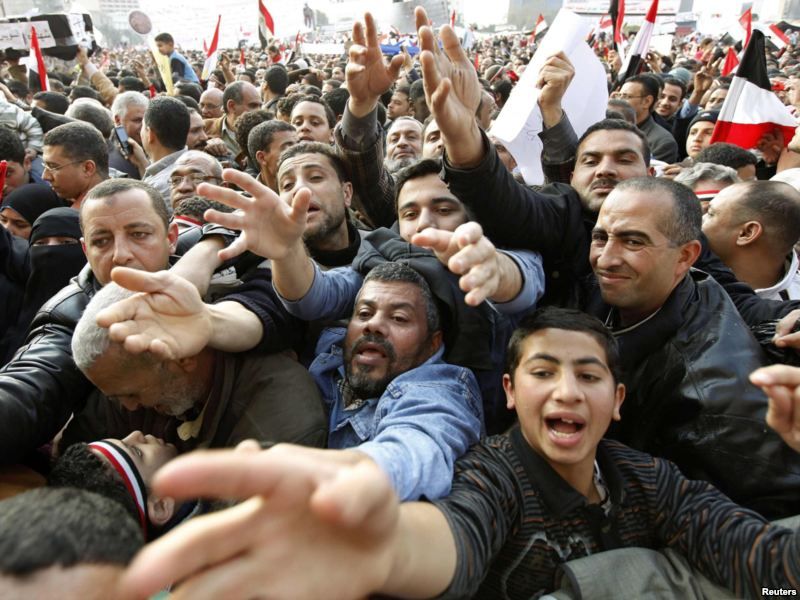
Chinese drought, global wheat prices, and revolution in Egypt may all appear to be unrelated, but they became linked by a series of events in the 2010–2011 winter.[1] As the world’s attention focused on protests in Egypt’s Tahrir Square, political and socioeconomic motives behind the protests were discussed abundantly, while significant indirect causes of the Arab Spring received little mention. In what could be called “hazard globalization,” a once-in-a-century winter drought in China reduced global wheat supply and contributed to global wheat shortages and skyrocketing bread prices in Egypt, the world’s largest wheat importer.[2] Government legitimacy and civil society in Egypt were upset by protests that focused on poverty, bread, and political discontent.

A tale of climate disaster, market forces, and authoritarian regimes helps to unravel the complexity surrounding public revolt in the Middle East. This essay examines the link between natural hazards, food security, and political stability in two developing countries—China and Egypt—and reflects on the links between climate events and social processes.

Continue reading “Berto Jongman: Linking Climate, Food Prices, & Revolution”

Berto Jongman: Barry Schwartz at TED on Our Loss of Wisdom

Civil Society, Cultural Intelligence, Ethics
Berto Jongman
Berto Jongman

Barry Schwartz makes a passionate call for “practical wisdom” as an antidote to a society gone mad with bureaucracy. He argues powerfully that rules often fail us, incentives often backfire, and practical, everyday wisdom will help rebuild our world.

VIDEO (20:45)

Interactive Transcript

Continue reading “Berto Jongman: Barry Schwartz at TED on Our Loss of Wisdom”

Tom Atlee: Climate Change as an Opportunity – Reconnecting to Place, Reality, & Reason

Civil Society, Cultural Intelligence, Earth Intelligence, Ethics
Tom Atlee
Tom Atlee

Climate challenges us to reconnect to place, reality and reason

We are out of sync with the world and especially with “place”. We lack the insights and capacities that come from knowing a place deeply over generations and from conscious vulnerability to the real world. Our speedy technological consumer culture not only created climate change but undermines our ability to respond to it. Understanding this dilemma and the dynamics that generate it could help us redirect our endangered destiny.

Dear friends,

Naomi Klein’s Climate Change Is the Fight of Our Lives – Yet We Can Hardly Bear to Look At It offers a novel view of our climate dilemma. She notes how “warming causes animals to fall out of step with a critical food source, particularly at breeding times, when a failure to find enough food can lead to rapid population losses.” She then notes how climate change is happening at a time in our social evolution where we are ill prepared to respond effectively: “The climate crisis hatched in our laps at a moment in history when political and social conditions were uniquely hostile to a problem of this nature and magnitude.”

She adds, however, that it is not all bad news. “The good news is that, unlike reindeer and songbirds, we humans are blessed with the capacity for advanced reasoning and therefore the ability to adapt more deliberately – to change old patterns of behaviour with remarkable speed.”

I find the details of her analysis fascinating. Given its brilliance, however, I was surprised to find several essential ingredients missing. Perhaps the most glaring is that the climate crisis didn’t just “hatch” or “happen”. It was created by the very same political, economic and psychosocial forces and institutions that she identifies as being responsible for our inability to respond to it. It’s all one big ball of yarn, as the saying goes. Furthermore, our disconnection from the historic and now shifting eco-realities of “place” that she highlights as underlying our inability to respond has been developing for centuries if not millennia. Obsessive global consumerism is just a recent development in our ever-growing capacity to separate ourselves from “the elements”.

Continue reading “Tom Atlee: Climate Change as an Opportunity – Reconnecting to Place, Reality, & Reason”

Berto Jongman: WIRED on Right Way to Build Smart Cities

Advanced Cyber/IO, Civil Society, Cultural Intelligence
Berto Jongman
Berto Jongman

Here’s the Right Way to Build the Futuristic Cities of Our Dreams

  • By Adie Tomer and Rob Puentes

Our technology-first approach has failed the city of the future. So-called “smart cities,” powered by technology, carry the promise of responding to the great pressures of our time, such as urban population growth, climate instability, and fiscal uncertainty. But by focusing on the cutting-edge technologies themselves and relying on private companies to move forward, we have lost sight of what we even want our cities to achieve with all that tech.

To date, smart city conversations mostly trade in optimism, focusing on images of cities without congestion and smart energy meters on every building. Global publications like this one devote space to specific solutions, while television commercials offer a visual taste of how our cities could look in the years ahead. Marketers fuel the fire by estimating a multi-trillion dollar market within a decade.

At what point do we prioritize the municipality–the actual governance of the city–to make great plans?

To help push the industry forward and achieve those trillion dollar market projections, we need to spend as much time and energy creating policy blueprints as we’ve spent researching and marketing new technologies. Smart policies must match smart technologies.

KEY POINTS ONLY::

1. Smart Cities Must Craft an Economic Vision That Includes a Specific Role for Technology

2. Smart Cities Must Use Technology to Promote a Healthy Economy

3. Smart Cities Must Include an Empowered Municipal Technology Executive

4. Smart Cities Must Balance Project Size and Appetite for Risk

5. Smart City Executives Need Stronger Networks and Improved Communication Tools

Read full post.

Continue reading “Berto Jongman: WIRED on Right Way to Build Smart Cities”

Evan Ellis: Latin America Engagement with China

Cultural Intelligence, Peace Intelligence
Evan Ellis
Evan Ellis

Latin America’s Foreign Policy as the Region Engages China

Security and Defense Studies Review (Volume 15 / 2014)

This article examines the foreign policy of Latin America and the Caribbean toward the People’s Republic of China. It finds that, for those nations recognizing Taiwan most Latin American nations have had relatively few political differences with the PRC. Exceptions include Brazil’s bid for a seat on the UN Security Council and Mexico’s receipt of the Dali Lama under the sexenio of Felipe Calderón. Within the region, the most important differences have emerged on issues of foreign economic policy. The article finds that Latin America’s heterogeneous orientation toward China on economic issues may be understood in terms of four cross-cutting cleavages, which reflect economic, political, and geographic divisions in the region more broadly: (1) north versus south, (2) populist regimes versus market economies, (3) pure resource exporters versus industrialized exporters versus nonexporting capital recipients versus pure importers , and (4) Pacific versus Atlantic.

PDF (19 Pages): Latin Americas Foreign Policy as the Region Engages China – Evan Ellis (SDSR)

See Also:

Evan Ellis @ Phi Beta Iota

noble gold