Berto Jongman: YouTube (1:52) Jeremy Scahill on Significance of Wikileaks as Source on US Dirty Wars and Department of State Being Over-Ruled

04 Inter-State Conflict, 05 Civil War, 07 Other Atrocities, 09 Terrorism, Corruption, Ethics, Government, Military, Peace Intelligence, YouTube
Berto Jongman
Berto Jongman

Published on Apr 24, 2013

Watch the full interview with Jeremy Scahill on Democracy Now! at http://owl.li/knEmh. Jeremy Scahill, author of the new book, Dirty Wars: The World Is A Battlefield, has spent years covering secret U.S. warfare through drone strikes, targeted killings, and enlisting foreign militias in countries from Somalia to Pakistan. Speaking to Democracy Now!, Scahill says U.S. diplomatic cables released WikiLeaks were instrumental in researching the book. “In terms of understanding how the covert apparatus works, WikiLeaks was indispensable,” he says. “We're going to look back decades from now and realize that because of the release of those documents, there was a huge shift in how we understand some of the more hidden aspects of U.S. policy.”

Watch the 50-minute Part 1 of our interview with Jeremy Scahill at http://owl.li/klnWN.

Democracy Now! is an independent global news hour that airs weekdays on 1,100+ TV and radio stations Monday through Friday. Check out our vast news archive and stream live 8-9am ET at http://www.democracynow.org.
Michael S. Kearns: Frederick Nietzsche on Truth and Lies in a Nonmoral Sense

Cultural Intelligence, Ethics
Michael S. Kearns
Michael S. Kearns

On Truth and Lies in a Nonmoral Sense

Über Wahrheit und Lüge im außermoralischen Sinn (in English: “On Truth and Lies in a Nonmoral Sense“, also called “On Truth and Lie in an Extra-Moral Sense[1]) is an (initially) unpublished work of Friedrich Nietzsche written in 1873, one year after The Birth of Tragedy.[2] It deals largely with epistemological questions of truth and language, including the formation of concepts.

Wikipedia / On Truth and Lies in a Nonmoral Sense

2013-04-23 Nietzsche on Truth and Lies in Nonmoral Sense

Berto Jongman: Existential Risk to Humanity

Collective Intelligence, Commercial Intelligence, Cultural Intelligence, Ethics
Berto Jongman
Berto Jongman

How are humans going to become extinct?

By Sean Coughlan

EXTRACT

Dr Bostrom believes we've entered a new kind of technological era with the capacity to threaten our future as never before. These are “threats we have no track record of surviving”.

Lack of control

Likening it to a dangerous weapon in the hands of a child, he says the advance of technology has overtaken our capacity to control the possible consequences.

Experiments in areas such as synthetic biology, nanotechnology and machine intelligence are hurtling forward into the territory of the unintended and unpredictable.

Synthetic biology, where biology meets engineering, promises great medical benefits. But Dr Bostrom is concerned about unforeseen consequences in manipulating the boundaries of human biology.

Nanotechnology, working at a molecular or atomic level, could also become highly destructive if used for warfare, he argues. He has written that future governments will have a major challenge to control and restrict misuses.

There are also fears about how artificial or machine intelligence interact with the external world.

Such computer-driven “intelligence” might be a powerful tool in industry, medicine, agriculture or managing the economy.

But it also can be completely indifferent to any incidental damage.

Continue reading “Berto Jongman: Existential Risk to Humanity”

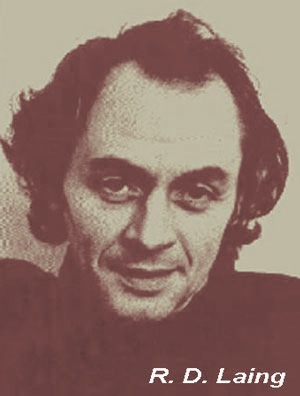
R. D. Laing: Sanity and Madness in Family and Society

Cultural Intelligence
R. D. Laing
R. D. Laing

2011  The Politics of the Family

Essays by the renowned psychiatrist on that most central unit: the family.  Focus on the breakdowns within families and between families and larger social networks.

1996  Mad to Be Normal: Conversations with R. D. Laing

As we listen to him describe his relations with the prominent philosophers, psychoanalysts, and critics of his day, his recounting of his emotional and spiritual development, and of his dashed hopes and unrealized dreams, we begin to get a sense of what it might have been like to be around Laing when he was alive.

1990  Sanity, Madness and the Family: Families of Schizophrenics

Family as heaven, family as hell — mind-control and duty within the modern family.

Continue reading “R. D. Laing: Sanity and Madness in Family and Society”

Theophillis Goodyear: Society Gone Mad

Cultural Intelligence
Theophillis Goodyear

Abnormalcy bias is an excellent term for describing the dynamic of society gone mad. Psychiatrist R.D. Laing also believed that human society has gone mad. It's hard to find good ways to explain it, but in the first paragraph of the following article, Aldous Huxley explained it very well:

Abnormalcy Bias

The first paragraph is what I'm most interested in. The rest of the article, by JimQ, is more political in nature and I only skimmed it, but it looks like an excellent article. And R.D. Laing also described the madness as having political roots, which is why he titled the book in which he described these things, The Politics of Experience, which is a collection of excerpts from a number of his books. But he was looking at it more from the perspective of a social psychologist and from the perspective of deep human history. And he believed the madness has even corrupted the family, to the point where the family structure was both the consequence of the madness and the institution that perpetuated it. The madness he describes has been common for thousands of years. It's so common that the roots of it stretch back into prehistory. And that's why we tend to see it as normal when it's not. Or that's the theory. This is the first paragraph of the article:

“The real hopeless victims of mental illness are to be found among those who appear to be most normal. Many of them are normal because they are so well adjusted to our mode of existence, because their human voice has been silenced so early in their lives that they do not even struggle or suffer or develop symptoms as the neurotic does. They are normal not in what may be called the absolute sense of the word; they are normal only in relation to a profoundly abnormal society. Their perfect adjustment to that abnormal society is a measure of their mental sickness. These millions of abnormally normal people, living without fuss in a society to which, if they were fully human beings, they ought not to be adjusted.” – Aldous Huxley – Brave New World Revisited

Eagle: Billions Being Spent on US Nuclear Bombs in Europe

Peace Intelligence
300 Million Talons...
300 Million Talons…

Obama accused of nuclear U-turn as guided weapons plan emerges

Plan to spend $10bn on updating nuclear bombs goes against 2010 pledge not to deploy new weapons, say critics

EXTRACT:

According to newly published budget figures, the US will spend about $10bn (£6.5bn) on a life extension programme for the B61 bombs, and another $1bn on adding controllable tail fins. Kristensen said the tail kit would give the B61 new capabilities, once some of the upgraded weapons were deployed as scheduled in Europe in 2019 or 2020.

Read full article.

noble gold