Ross Stapleton-Gray: DARPA Treats Public Data as a Threat

07 Other Atrocities, Government, Idiocy, IO Impotency, Military
Ross Stapleton-Gray
Ross Stapleton-Gray

Of note:

Just to show us that the national security state doesn't lack for a wicked sense of ironic humor, I see this DARPA topic in the new SBIR
solicitation out today:

“Investigate the national security threat posed by public data available either for purchase or through open sources. Based on
principles of data science, develop tools to characterize and assess the nature, persistence, and quality of the data. Develop tools for
the rapid anonymization and de-anonymization of data sources. Develop framework and tools to measure the national security impact of public data and to defend against the malicious use of public data against national interests.”

(Personally, I'd recommend (1) re-engineering government to see openness as less of a threat, and to focus on making vulnerable
systems, where the government has a responsibility, less so, e.g., ratchet back stock trading so it's not the province of millisecond
traders and flash crashes, but actually first serves the need for capital investment; and (2) giving *everyone*, and not just the state,
more privacy in their transactions on what are essentially common carriers… this “metadata” being snarfed up by the NSA is data about *me*, and I want to pay Verizon to complete my phone calls, not to be in the “information about me” business.)

Learn More at DARPA Call

Chuck Spinney: Sick People at the Aspen Summit — “Extermination” Fantasies of the Empire

07 Other Atrocities, 09 Justice, 10 Security, 11 Society, Commerce, Corruption, Government, Idiocy, Media, Military
Chuck Spinney
Chuck Spinney

What kind of people are running American?  Here are some insights.

Shocking ‘Extermination' Fantasies By the People Running America's Empire on Full Display at Aspen Summit

Security Forum participants expressed total confidence in American empire, but could not contain their panic at the mention of Snowden.

AlterNet / By Max Blumenthal, July 25, 2013 

Seated on a stool before an audience packed with spooks, lawmakers, lawyers and mercenaries, CNN’s Wolf Blitzer introduced recently retired CENTCOM chief General James Mattis. “I’ve worked with him and I’ve worked with his predecessors,” Blitzer said of Mattis. “I know how hard it is to run an operation like this.”

Reminding the crowd that CENTCOM is “really, really important,” Blitzer urged them to celebrate Mattis: “Let’s give the general a round of applause.”

Following the gales of cheering that resounded from the room, Mattis, the gruff 40-year Marine veteran who once volunteered his opinion that “it’s fun to shoot some people,” outlined the challenge ahead. The “war on terror” that began on 9/11 has no discernable end, he said, likening it to the “the constant skirmishing between [the US cavalry] and the Indians” during the genocidal Indian Wars of the 19th century.

“The skirmishing will go on likely for a generation,” Mattis declared.

Mattis’ remarks, made beside a cable news personality who acted more like a sidekick than a journalist, set the tone for the entire 2013 Aspen Security Forum this July. A project of the Aspen Institute, the Security Forum brought together the key figures behind America’s vast national security state, from military chieftains like Mattis to embattled National Security Agency Chief General Keith Alexander to top FBI and CIA officials, along with the bookish functionaries attempting to establish legal groundwork for expanding the war on terror.

Partisan lines and ideological disagreements faded away inside the darkened conference hall, as a parade of American securitocrats from administrations both past and present appeared on stage to defend endless global warfare and total information awareness while uniting in a single voice of condemnation against a single whistleblower bunkered inside the waiting room of Moscow International Airport: Edward Snowden.

Continue reading “Chuck Spinney: Sick People at the Aspen Summit — “Extermination” Fantasies of the Empire”

Marcus Aurelius: Pipe Dreams and the Lack of Integrity — How to Lose Two Wars at Great Expense

Corruption, Government, Military
Marcus Aurelius
Marcus Aurelius

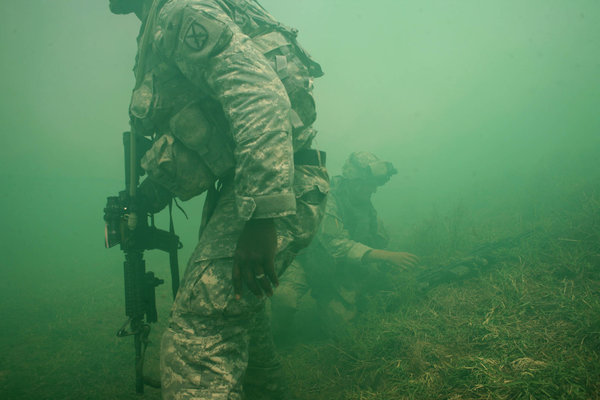
For those who have not seen from one of the Army's premier thinkers.  Opposition rebuttal follows from a consistent defense naysayer.The issues can also be framed in a couple of other ways, from the conventional and special operations perspectives:

CONVENTIONAL:  “Wars may be fought with weapons, but they are won by men.  It is the spirit of the men who follow and the man who leads that gains the victory.”

SPECIAL OPERATIONS:  “Humans are more important than hardware.  Quality is more important than quantity.”

Click on Image to Enlarge

The Pipe Dream Of Easy War

By H. R. McMaster

New York Times, July 21, 2013, Pg. SR9

FORT BENNING, Ga. — ”A GREAT deal of intelligence can be invested in ignorance when the need for illusion is deep,” the novelist Saul Bellow once wrote. We should keep that in mind when we consider the lessons from the wars in Iraq and Afghanistan — lessons of supreme importance as we plan the military of the future.

Our record of learning from previous experience is poor; one reason is that we apply history simplistically, or ignore it altogether, as a result of wishful thinking that makes the future appear easier and fundamentally different from the past.

Continue reading “Marcus Aurelius: Pipe Dreams and the Lack of Integrity — How to Lose Two Wars at Great Expense”

Mini-Me: US Embassy Kabul in Disarray, Vulnerable

Government
Who?  Mini-Me?
Who? Mini-Me?

Huh?

Crisis in Kabul: Security at U.S. Embassy in disarray, diplomats at risk

In wake of Benghazi attack, internal probe finds Afghanistan posts vulnerable

U.S. diplomatic facilities in Afghanistan have serious security lapses that pose “unnecessary risk to staff,” including poor emergency preparedness and inadequate protections that might allow classified materials to fall into the hands of attacking enemies, according to an internal report that raises fresh questions about the State Department’s commitment to safety in the aftermath of the Benghazi tragedy.

The confidential State Department inspector general’s report, obtained by The Washington Times under the Freedom of Information Act, directly criticizes the department’s Bureau of Diplomatic Security for failing to perform a physical inspection before approving the security plan for the U.S. Embassy in Kabul, which was the target of a brash attack by Taliban insurgents two years ago.

When IG investigators inspected the embassy in Kabul, they found inadequate emergency shelters, food, water rations, medical supplies and backup communication equipment that would be essential to repel or survive an attack, according to the report, which was released to The Times partly redacted for security reasons.

Similar inspections elsewhere found the U.S. diplomatic post in Afghanistan’s western city of Herat lacked an emergency action plan instructing employees on how to respond to an attack and that a Provincial Reconstruction Team outpost in Qala-e-Naw lacked an agreement with allied forces to provide a military response in case of attack.

“The lack of adequate emergency shelters [redacted] the lack of sufficient emergency supplies and equipment, the lack of redundancy in communications, the [redacted] absence of an agreement with the non-Department law enforcement on emergency assistance, and the inability to identify and destroy sensitive material unnecessarily increased the risk of injury to embassy staff and of compromising sensitive material during an emergency situation,” the report warns.

Read full article.

David Swanson: Cost of Compensated Emancipation versus War Over Slavery

Civil Society, Commerce, Ethics, Government


David Swanson
David Swanson

What Slavery Cost

As I head off to a rally for Trayvon Martin, I notice a column by Bob Koehler in which he says the unpaid work of slaves in the United States is now estimated at $1.4 trillion.  Oddly, that's not terribly far from the $1.2 trillion or so, possibly more now, that we spend each year preparing for and fighting wars.  If we abolished war we could perhaps afford to compensate descendants of those victimized by slavery.  If we abolished prisons, we'd have at least another $100 billion.  And, of course, we'd have all those savings again the next year and the next year and the next year.

I wrote a review recently of a film called Copperhead, and I brought up the idea of compensated emancipation.  Wouldn't it have been wiser, I asked, to have compensated the slave owners than to have fought the Civil War.  Since then, a number of readers have been sending me information on the extent to which compensated emancipation was discussed, proposed, or attempted — some of which I was unaware of.

Continue reading “David Swanson: Cost of Compensated Emancipation versus War Over Slavery”

David Swanson: Deep Dissection of Trans-Pacific Partnership — The Most Evil Reprehensible Impeachable Act To Come Out of Washington in Recent Memory

03 Economy, 07 Other Atrocities, 10 Transnational Crime, 11 Society, Commerce, Corruption, Government
David Swanson
David Swanson

TPP: The Terrible Plutocratic Plan

By David Swanson

Remarks July 21, 2013 at an Occupy Harrisonburg (Va.) Event.
Make your voice heard here.

Thanks to Michael Feikema and Doug Hendren for inviting me.  Like most of you I do not spend my life studying trade agreements, but the Trans-Pacific Partnership (TPP) is disturbing enough to make me devote a little time to it, and I hope you will do the same and get your neighbors to do the same and get them to get their friends to do the same — as soon as possible.

I spend most of my time reading and writing about war and peace.  I'm in the middle of writing a book about the possibility and need to abolish war and militarism.  I hate to take a break from that.  But if we think trade and militarism are separate topics we're fooling ourselves.

New York Timescolumnist Thomas Friedman, a big fan of the supposed wonders of the hidden hand of the market economy says, “The hidden hand of the market will never work without a hidden fist. McDonald's cannot flourish without McDonnell Douglas, the designer of the U.S. Air Force F-15.  And the hidden fist that keeps the world safe for Silicon Valley's technologies to flourish is called the U.S. Army, Air Force, Navy and Marine Corps.”

Continue reading “David Swanson: Deep Dissection of Trans-Pacific Partnership — The Most Evil Reprehensible Impeachable Act To Come Out of Washington in Recent Memory”

noble gold