Fear of officers “going native” keeps our intelligence agencies ill-informed about Somalia, Syria, and other hotspots.
When the British ran an empire they did it the right way, if one is into imperial management. They created an entire bureaucracy, the Colonial Service, which was manned by officers who were expected to go out to foreign posts for extended periods, to learn the local language, and to acquire an understanding of the indigenous culture. The knowledge gained was invaluable, enabling John Bull to skillfully manage a polyglot empire upon which the sun never set. Understanding the interplay of local ethnicities enabled London to play off one group against another, often empowering a minority which would remain loyal to the crown because to do otherwise would be suicidal. The formula worked in places like Iraq, where the minority Sunnis, initially propped up by Britannia, held sway over the more numerous Shi’ites until the Baath regime was toppled by U.S. forces in 2003.
If there is anything to learn from the Syrian conflict, it is that in the fog of war, truth really is the first casualty. Narratives and counter-narratives of the conflict have plagued media accounts and the blogosphere ever since it erupted in the form of angry street protests over two years ago. From the White House dossier to the United Nations report, from Syrian nuns to revelations from former and active intelligence officials, the propaganda war between pro and anti-interventionists to control the paradigm through which we understand the conflict — manifesting in Bashir al-Assad’s latest call for a ceasefire — may be feeding into little-known strategic imperatives that see the Syrian people as mere pawns in a wider gambit.
1. President Obama's opening lines at the U.N. on Tuesday looked down on people who would think to settle disputes with war. Obama was disingenuously avoiding the fact that earlier this month he sought to drop missiles into a country to “send a message” but was blocked by the U.S. Congress, the U.N., the nations of the world, and popular opposition — after which Obama arrived at diplomacy as a last resort.
2. “It took the awful carnage of two world wars to shift our thinking.” Actually, it took one. The second resulted in a half-step backwards in “our thinking.” The Kellogg-Briand Pact banned all war. The U.N. Charter re-legalized wars purporting to be either defensive or U.N.-authorized.
3. “[P]eople are being lifted out of poverty,” Obama said, crediting actions by himself and others in response to the economic crash of five years ago. But downward global trends in poverty are steady and long pre-date Obama's entry into politics. And such a trend does not exist in the U.S.
The Central Intelligence Agency tried to make “inappropriate” use of an exemption from the Freedom of Information Act to withhold information that was not subject to the exemption, a federal court ruled last month.
In a significant interpretation of the Central Intelligence Agency Act, Judge Beryl A. Howell narrowed the permissible scope of records that CIA may withhold under Section 403g of the Act. That section allows CIA to exempt from release information concerning “the organization, functions, names, official titles, salaries, or numbers of personnel employed by” the Agency.
But in a 163 page opinion in response to a lawsuit brought by the non-profit National Security Counselors, Judge Howell ruled on August 15 that CIA was interpreting this provision in a manner that was “inappropriately broad” (discussed at pp. 99-122).
Instead of just withholding information about CIA organization and personnel, she concluded, the Agency was also wrongly attempting to withhold “information that relates to” CIA organization and personnel– which is almost everything the Agency does.
“The Court holds that the CIA may not invoke [50 USC] 403g to withhold information merely because that information may be used by CIA personnel to carry out their responsibilities or functions,” Judge Howell wrote. “The CIA Act does not protect all information about CIA functions generally… The CIA may only invoke 50 USC 403g to withhold information under the FOIA if it would reveal the specific categories of personnel-related information enumerated in the statute.”
If that seems like a common-sense conclusion, it is also a rare judicial setback for the CIA, and a reversal of the more familiar expansion of national security secrecy authority.
“This really is something pretty remarkable,” said Harry Hammitt of Access Reports, which monitors FOIA policy. “Judge Howell has narrowed the interpretation of the statute dramatically.”
For more information contact:
Jeffrey T. Richelson – 202/994-7000 nsarchiv@gwu.edu
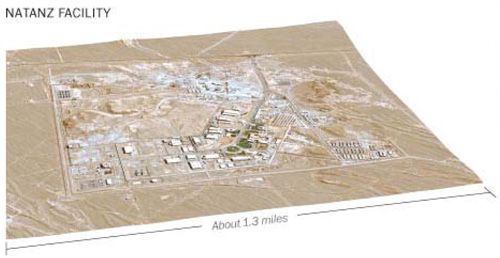
Washington, D.C., September 23, 2013 – While the focus on Syria's chemical weapons use, and the possibility of military action against Syrian government targets pushed aside, for a while, the issue of how to deal with Iran's nuclear program,1 the two situations have one thing in common — their reported reliance on underground facilities to shield the production and storage of weapons of mass destruction.
Documents posted today by the National Security Archive show that such sites in Syria are only the latest in a long line of alleged and real underground facilities that have posed a high priority challenge for U.S. and allied intelligence collection and analysis efforts, as well as for military planners. There may be more than 10,000 such facilities worldwide, many of them in hostile territory, and many presumably intended to hide or protect lethal military equipment and activities, including weapons of mass destruction, that could threaten U.S. or allied interests.
Today's posting features 21 new documents, in addition to the 41 records from the Archive's initial March 23, 2012, posting on this subject. The new materials include several concerning a key topic of Cold War intelligence collection and analysis — hardened and underground communications facilities. Also included for the first time are draft charters for the National Reconnaissance Office (NRO) working group on hardened and buried targets. The majority of the new materials consist of reports from the Asian Studies Detachment (ASD) of the 500th Military Group of the Army Intelligence and Security Command. The ASD reports, based on open source intelligence, focus on various aspects of hardened and buried facilities in North Korea and China.
The 21 new items, with one exception, were acquired via Freedom of Information Act requests or research in the National Archives. The original posting described in detail the agencies and programs the U.S. government has brought to the task of identifying and assessing underground structures in foreign countries since World War II.
This ought to be fairly self-evident. That it isn't tells us something about our media and the American voters, neither very complimentary. It should also be noted that the Republican Party has been doing everything in its power to destroy the Unions. If you are a working person and you vote Republican, I'm sorry, you're nuts. Anyone who cares about the middle class ou! ght to support Unions, and here is the evidence.
The middle class brings home a substantially larger share of aggregate earnings in states that have high rates of union membership than in those where fewer workers are organized, a Center for American Progress Action Fund (CAPAF) analysis of Census data shows. Amid very high and still increasing income inequality, union density appears to offer some buffer for middle-class Americans.
80 Percent of U.S. Adults Face Near-Poverty, Unemployment
Four out of 5 U.S. adults struggle with joblessness, near-poverty or reliance on welfare for at least parts of their lives, a sign of deteriorating economic security and an elusive American dream.
Survey data exclusive to The Associated Press points to an increasingly globalized U.S. economy, the widening gap between rich and poor, and the loss of good-paying manufacturing jobs as reasons for the trend.