LtCol X: CSA Sends – Strategic Priorities for the Army – with Phi Beta Iota Comments

10 Security, 11 Society, Corruption, Cultural Intelligence, Director of National Intelligence et al (IC), DoD, Ethics, Ineptitude, IO Deeds of War, IO Impotency, Lessons, Military, Officers Call, Peace Intelligence, Strategy
Click on Image to Enlarge

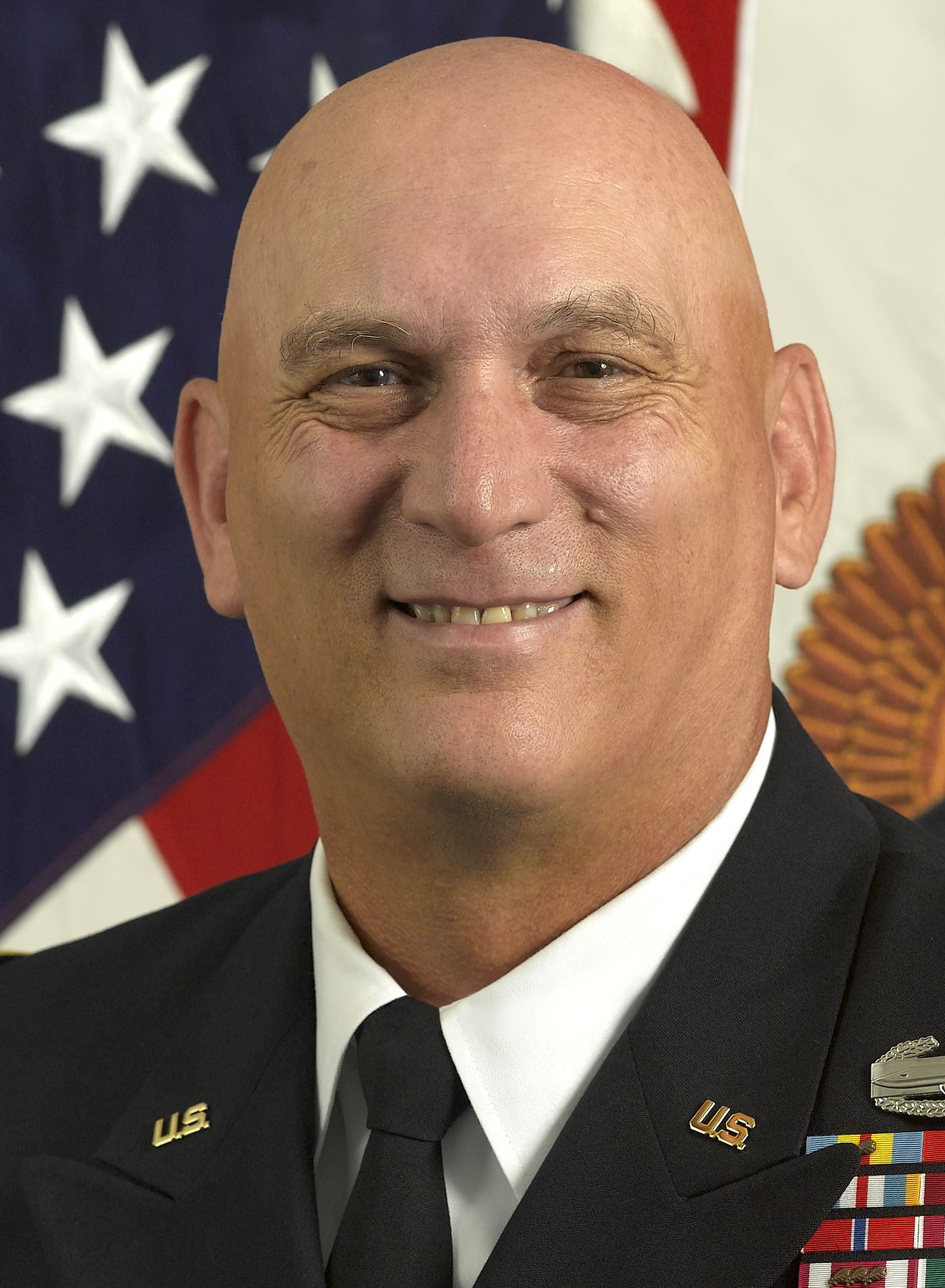
Please note Army Chief of Staff General Raymond T. Odierno‘s updated strategic priorities for the US Army, arranged in five (5) categories. PDF Slide Show: CSA Strategic Priorities vFinal 16Oct13

From those, here is an extract .

EXTRACTS:

[DOWNSIZED ARMY; EXPEDITIONARY]

– Downsize, transition, and then sustain a smaller, but ready and capable Total Army that provides Joint and Combined forces with expeditionary and enduring landpower for the range of military operations and features unique competencies such as operational leadership, mobility, command and control, and theater logistics at all echelons.
Raymond T. Odierno
Raymond T. Odierno

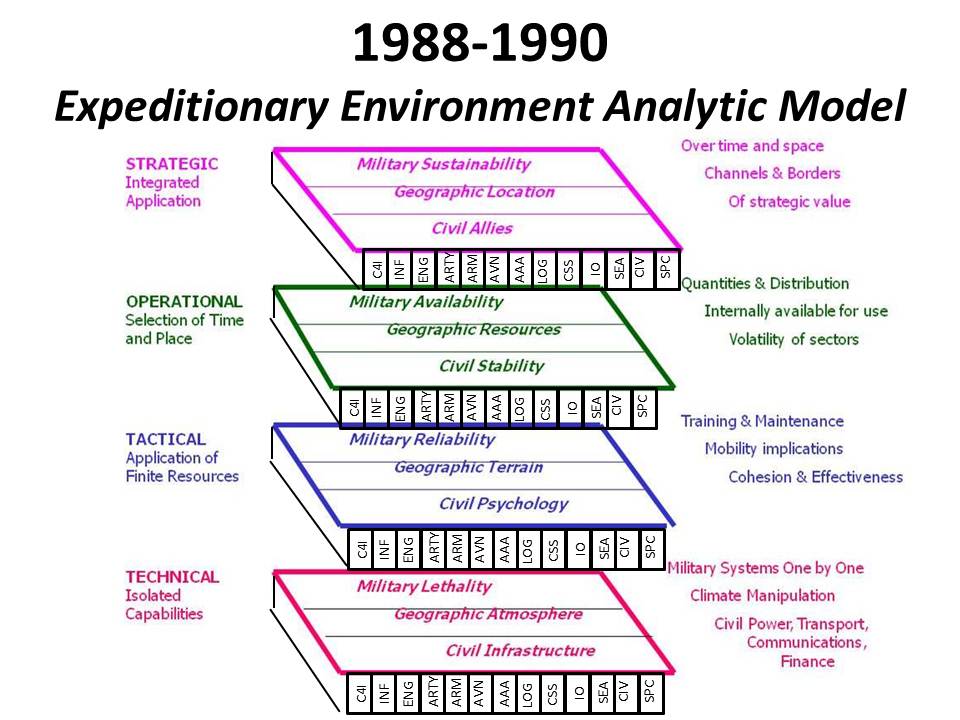
Phi Beta Iota: To downsize effectively you have to have ethical evidence-based decision-support immediately applicable to strategy, policy, acquisitions, and operations.  This does not exist.  NGIC once upon a time had Tim Hendrickson and GRAND VIEW but they never made the leap to holistic analytics and true cost economics. Army flags — including the very best of them — simply do not know what they need to know to demand of the intelligence “professionals” what the latter have no clue how to produce.  We have not seen a single useful strategic, policy, or acquisition document come out of DIA in the past twenty years…nor CIA.  All these people are still in the cut and paste fluff mode that Col Mike Pheneger, USA (SOF) blew the whistle on in 1988.  Nothing has changed in substance — just more people, more money, more (retarded) technology, and much less useful thinking.
Click on Image to Enlarge

[ENABLERS; EXPEDITIONARY; UNIFIED ACTION PARTNERS (UAPs)] – Support the Joint Force with critical enablers such as aviation, intelligence, engineers, logistics, medical, signal, and special operations, both while enroute to, and operating within, expeditionary environments alongside Unified Action Partners.

Phi Beta Iota: The Marine Corps led the way with Planning and Programming Factors for Expeditionary Operations in the Third World, and then lost its integrity and started chasing money instead of producing ethical evidence-based decision-support relevant to what General Al Gray wanted in the first place, compelling support for honest light-footprint low-cost acquisition (something the other four services need but refuse) along with strategic and operational support to what he called “peaceful preventive measures.”  The Navy has imploded — as many Admirals as ships, and the whole lot of them are not worth anything in terms of rapid precision response, this leaves the Marine Corps both 4-6 days away from anywhere, and totally exposed (e.g. no Naval Gunfire, rotten CAP) once they get there.  Army cannot do what it wants to do without an honest long-haul Air Force and a complete make-over of close air support (to include transfer of CAS to the Army) as well as reconnecting to reality at the geospatial, cyber, and cultural levels.

Continue reading “LtCol X: CSA Sends – Strategic Priorities for the Army – with Phi Beta Iota Comments”

David Sabow: Did CIA Order Murder of DEA Agent?

Corruption, Ethics, Government, Law Enforcement
David Sabow
David Sabow

Kiki Camerena Killed on CIA Orders?
Borderland Beat Reporter un vato

El Diario de Coahuila (10-13-13) Proceso (10-12-13)

By Luis Chaparro and J. Jesus Esquivel
Translated by un vato for Borderland Beat

A story that sounds like it was taken from a complex espionage novel has just exploded on U.S. television. Enrique Kiki Camarena, the DEA law enforcement officer murdered in Mexico in February, 1985, was apparently not the victim of the Mexican capo Rafael Caro Quintero, but rather,, of a dark member of the CIA. This individual was the one charged with silencing the antinarcotics agent for one serious reason: he had discovered that Washington was associated with the drug trafficker and was using the profits from the drug trafficking to finance the activities of the counterrevolution.

WASHINGTON (Proceso)(apro).– Three former U.S. federal agents decided to end a 28-year silence and simultaneously entrusted this journal and the U.S. Fox news services with an information “bomb”: Enrique Kiki Camarena was not murdered by Rafael Caro Quintero — the capo that served a sentence for that crime — but by an agent of the CIA. The reason: the DEA agent discovered that his own government was collaborating with the Mexican narco in his illegal business. In interviews with Proceso, Phil Jordan, former director of the El Paso Intelligence Center (EPIC); Hector Berrellez, former DEA agent, and Tosh Plumlee, a former CIA pilot, claim that they have evidence that the U.S. government itself ordered the murder of Kiki Camarena in 1985. In addition, they point to a sinister Cuban character, Felix Ismael Rodriguez, as the murderer.

Continue reading “David Sabow: Did CIA Order Murder of DEA Agent?”

John Robb: In the National Interest? Probably Not.

Cultural Intelligence, Ethics, Government, Peace Intelligence
John Robb
John Robb

Is making a policy decision in the “National Interest” smart anymore? Probably not.

Here's something I've been thinking about.

I've been grappling with a simple question.  Is the use of national interest, as the basis of security and foreign policy, a dumb idea in the present context?

National interest is a construct from the realism school of policy.  Realism is simply a case by case analysis of the costs and benefits of actions relative to the interests of the state, without reference to ideology or ideals (capitalism, communism, religion, etc.).

Realism assumes that the world is an anarchic, in a Hobbsian dog eat dog way, and that nation-states need to be selfish in order to survive.

Of course, things have changed since that formulation was developed.  In particular, we're now living in a world that is:

Continue reading “John Robb: In the National Interest? Probably Not.”

John Steiner: The World Community Must Take Charge at Fukushima

07 Health, 07 Other Atrocities, 08 Proliferation, 08 Wild Cards, 11 Society, Ethics, Government, Officers Call
John Steiner
John Steiner

The World Community Must Take Charge at Fukushima

By Harvey Wasserman (Contact)

To be delivered to: Ban Ki-Moon, Secretary-General, United Nations and Barack Obama, President, United States of America

Petition Statement
At Fukushima Unit 4, the impending removal of hugely radioactive spent fuel rods from a pool 100 feet in the air presents unparalleled scientific and engineering challenges. With the potential for 15,000 times more fallout than was released at Hiroshima, we ask the world community, through the United Nations, to take control of this uniquely perilous task.
Petition Background

The danger of huge radiation releases from Fukushima 4 has taken on a new dimension; the world community must step in!

There are currently 73,056 signatures

NEW goal – We need 75,000 signatures

Berto Jongman: US Fails on Counterterrorism

Ethics
Berto Jongman
Berto Jongman

US intelligence so big that counterterrorism is failing? ‘Yes' say insiders

By

ComputerWorld, October 07, 2013

When might you consider quitting your job to be a “win”? When you work for the CIA and “the Company” tries to block the publication of your dissertation about the National Counterterrorism Center.

Bridget Rose Nolan, a sociology PhD at the University of Pennsylvania, worked as a counterterrorism analyst at the National Counterterrorism Center (NCTC) from 2010 – 2011. Basically she worked as an analyst while also conducting “ethnographic observations” by interviewing 16 female and seven male analysts for her doctoral dissertation at the University of Pennsylvania. The Philadelphia Inquirer explained, “She set out to explore the culture of the terrorism center and how it, and its counterparts, share information – or fail to.” After three years of “fighting” the CIA over the right to publish, she won, but the “win” meant she had to resign.

Instead of too big to fail, in essence, counterterrorism may be failing in some areas because it is too big, because counterterrorism analysts suffer from so much information overload that they are not effective in stopping terrorism. “Fewer people in the system could help to streamline the bureaucracy and reduce the number of emails and documents that make the analysts feel overwhelmed with information.” Other contributing factors that make terrorism harder to fight include sabotage among co-workers, stove-piping, confusion, bureaucracy that might make your head explode, and agencies that don’t play well together. Several people working in counterterrorism suggested that the solutions to be more effective include cutting out the bloat and making the intelligence community smaller, much smaller.

Continue reading “Berto Jongman: US Fails on Counterterrorism”

Robin Good: Show Your Work – Avoid Plagarism

Ethics
Robin Good
Robin Good

“Plagiarism is a firing offense. Don't: a) lift passages from other sources without attribution and link…” This is what read the first slide of a presentation deck published a few days back by Steve Buttry which goes on to list all of the situations where it's possible to run the risk of being accused of plagiarism,. The presentation is an outline of tips for online journalists who have to deal daily with adding link references, providing credit and attribution and avoiding being accused of plagiarism. Good advice not to be taken lightly. Useful. 8/10 Original slide deck: http://www.slideshare.net/stevebuttry/attribution-workshop

Attribution, Linking and Plagiarism Prevention Tips for Online Journalists

NATO Watch: NATO and Russia to Cooperate on Syria?

08 Proliferation, Ethics, Government, Military

nato watchNATO and Russia to Cooperate on Syrian Chemical Weapon Disarmament?

By Ian Davis, NATO Watch

5 October 2013

www.natowatch.org Promoting a more transparent and accountable NATO

It is not often that we get to blow our own trumpet. But breaking news reported in the Journal of Turkish Weekly suggests that NATO and Russia have agreed to cooperate to facilitate Syria chemical disarmament. This is exactly what NATO Watch Director Ian Davis and Andreas Persbo Executive Director of VERTIC called for in an opinion piece published on 13 September. As far we can ascertain, no one else was calling for such a strategic alignment and our efforts to place the op ed in both The Guardian and New York Times fell on deaf ears. However, a senior NATO official did read it and responded favourably in a private email on 17 September.

And now it is being reported that Russia and NATO have agreed to fund and provide technical assistance to the chemical weapon disarmament process in Syria being conducted by the Organization for the Prohibition of Chemical Weapons (OPCW). Emerging from an Ambassador-level session of the NATO-Russia Council in Brussels on Friday, Russian Ambassador Alexander Grushko said “the sides have agreed to pull off the task in strict keeping with Resolution 2118 of the UN Security Council and the subsequent resolution of the OPCW”. They had also agreed that the Syrian crisis can only be settled politically, through an all-embracing second Geneva conference on Syria, which should bring the Syrian government together with all rebel groups.

Disarmament personnel are expected to begin travelling to chemical-weapon facilities to disable equipment next week, according to an OPCW press release. The exact timing largely depends on developments within three OPCW subgroups charged with confirming chemical-arms declarations by Damascus, protecting auditors in the field and making ‘practical arrangements’ to inventory and dismantle the Syrian government's full chemical-warfare stockpile by the middle of next year. It is not yet clear what specific role the NATO-Russian cooperation will play in this process. The OPCW group faces an initial Nov. 1 deadline to eliminate the Assad regime's chemical-weapon production capacity.

As we said in our earlier op ed, this cooperation could be a potential game changer. Not only does this agreement offer a tentative route map out of the mess in Syria but also a broader strategic, normative and political rapprochement between NATO and Russia, as well as a re-invigorated United Nations. We await further details of the NATO-Russia agreement with interest.