David Swanson: Lies, Lies, and More Lies…

Civil Society, Commerce, Corruption, Cultural Intelligence, Government, IO Impotency, Media, Peace Intelligence
David Swanson

Nine Years Later: More Shocked, Less Awed

When I lived in New York 20 years ago, the United States was beginning a 20-year war on Iraq. We protested at the United Nations. The Miami Herald depicted Saddam Hussein as a giant fanged spider attacking the United States. Hussein was frequently compared to Adolf Hitler. On October 9, 1990, a 15-year-old Kuwaiti girl told a U.S. congressional committee that she’d seen Iraqi soldiers take 15 babies out of an incubator in a Kuwaiti hospital and leave them on the cold floor to die. Some congress members, including the late Tom Lantos (D., Calif.), knew but did not tell the U.S. public that the girl was the daughter of the Kuwaiti ambassador to the United States, that she’d been coached by a major U.S. public relations company paid by the Kuwaiti government, and that there was no other evidence for the story. President George H. W. Bush used the dead babies story 10 times in the next 40 days, and seven senators used it in the Senate debate on whether to approve military action. The Kuwaiti disinformation campaign for the Gulf War would be successfully reprised by Iraqi groups favoring the overthrow of the Iraqi government twelve years later.

Read full article.

Elections: What Are They Good For?

I think two opposing trends have been at work in U.S. history. One is that of allowing more people to vote. This is an ongoing struggle, of course, but in some significant sense we've allowed poor people and women and non-white people and young people to vote. The other trend, which has really developed more recently, is that we've made voting less and less meaningful. Of course it was never as meaningful as many people imagine. But we've legalized bribery, we've banished third parties and independents, we've gerrymandered most Congressional districts into meaningless general elections and left one party or the other to exercise great influence over any primary. Rarely does any incumbent lose, and rarely does a candidate without the most money win. Extremely rare is a winning candidate who lacks some major financial backing. Rarer still is a candidate who even promises to pursue majority positions on most major issues, or who convincingly commits to following the will of the public over the will of the party. Most Congress members are pawns in a government with two partisan voices, not the voices of 535 individual representatives and senators. Rare, as well, is any possibility in a close primary or general election of verifying the accuracy of a vote count.

There appears to many observers little, sometimes even nothing, to be gained by voting. A lack of decent education and news media, combined with negative campaign ads that make the whole process seem filthy are probably a turn off. Yet roughly 55% of voting age people in the U.S. continue to vote in presidential elections and roughly 35% in off-year elections. And those numbers would probably go up if we didn't take people's right to vote away when we convict them of crimes, if we didn't deny citizenship to so many immigrants, or if we made voter registration automatic, stopped trying to intimidate people out of voting or forcing them to vote on second-class provisional ballots, made election day a holiday, etc.

We've also created a dominant media cartel that can — without any exaggeration — instruct large numbers of people whom to vote for — a situation that outrages some of us, but by definition is deemed acceptable by many others. Or, rather, it's not deemed acceptable, but it's either unnoticed or it's viewed as a tragedy of the commons that cannot be countered by any individual alone. On the Kucinich 04 presidential campaign, he would win the most applause, but then people would say “I'd vote for him if he were serious,” because their televisions had told them he wasn't one of the real, serious, viable choices, and either they believed that or they believed that everyone else believed it which left them powerless to single-handedly do anything about it.


Read full article.

Michel Bauwens: The Future of Cities, Information & Inclusion

IO Impotency
Michel Bauwens

Dated but relevant.

The Future of Cities, Information, and Inclusion

Over the next decade, cities will continue to grow larger and more rapidly. At the same time, new technologies will unlock massive streams of data about cities and their residents. As these forces collide, they will turn every city into a unique civic laboratory—a place where technology is adapted in novel ways to meet local needs. This ten-year forecast map, The Future of Cities, Information, and Inclusion, charts the important intersections between urbanization and digitalization that will shape this global urban experiment, and the key tensions that will arise.

The explosive growth of cities is an economic opportunity with the potential to lift billions out of poverty. Yet the speed of change and lack of pro-poor foresight has led to a swarm of urban problems—poor housing conditions, inadequate education and health care, and racial and ethnic inequalities. The coming decade holds an opportunity to harness information to improve government services, alleviate poverty and inequality, and empower the poor. Key uncertainties are coming into view:

  • What economic opportunities will urban information provide to excluded groups?
  • What new exclusions might arise from new kinds of data about the city and its citizens?
  • How will communities leverage urban information to improve service delivery, transparency, and citizen engagement?

As information technology spreads beyond the desktop into every corner of citizens' lives, it will provide a new set of tools for poor and excluded groups to re-engineer their relationship with government, the built environment, and each other.

Funded by a grant from the Rockefeller Foundation, IFTF has identified this challenge—harnessing data for development and inclusion—as a critical cross-sectoral urban issue for the next decade and beyond.

Phi Beta Iota:  We do not believe that cities will get larger and thrive.  The supply lines and legacy infrastructure are not sustainable.  The Rockefeller reference is an excellent example of ostensibly reputable “research” that lacks a strategic analytic model, any semblance of “true cost” understanding, or any commitment to actually doing comprehensive architecture or whole design.

Berto Jongman: Big Data Big Deal — But Humans Still Dumb

IO Impotency
Berto Jongman

Why Big Data is now such a big deal

Computers are spewing forth data at astronomical rates about everything from astrophysics to internet shopping. And it could be hugely valuable

John Naughton

The Observer, 17 March 2012

One of the most famous quotes in the history of the computing industry is the assertion that “640KB ought to be enough for anybody“, allegedly made by Bill Gates at a computer trade show in 1981 just after the launch of the IBM PC. The context was that the Intel 8088 processor that powered the original PC could only handle 640 kilobytes of Random Access Memory (RAM) and people were questioning whether that limit wasn't a mite restrictive.

Gates has always denied making the statement and I believe him; he's much too smart to make a mistake like that. He would have known that just as you can never be too rich or too thin, you can also never have too much RAM. The computer on which I'm writing this has four gigabytes (GB) of it, which is roughly 6,000 times the working memory of the original PC, but even then it sometimes struggles with the software it has to run.

But even Gates could not have foreseen the amount of data computers would be called upon to handle within three decades. We've had to coin a whole new set of multiples to describe the explosion – from megabytes to gigabytes to terabytes to petabytes, exabytes, zettabytes and yottabytes (which is two to the power of 80, or 10 followed by 23 noughts).

This escalating numerology has been necessitated by an explosion in the volume of data surging round our digital ecosystem from developments in science, technology, networking, government and business. From science, we have sources such as astronomy, particle physics and genonomics. The Sloan Digital Sky Survey, for example, began amassing data in 2000 and collected more in its first few weeks than all the data collected before that in the history of astronomy. It's now up to 140 terabytes and counting, and when its successor comes online in 2016 it will collect that amount of data every five days. Then there's the Large Hadron Collider, (LHC) which in 2010 alone spewed out 13 petabytes – that's 13m gigabytes – of data .

Continue reading “Berto Jongman: Big Data Big Deal — But Humans Still Dumb”

DefDog: China Tries Real Name Registration Online

02 China, 11 Society, Government, IO Impotency
DefDog

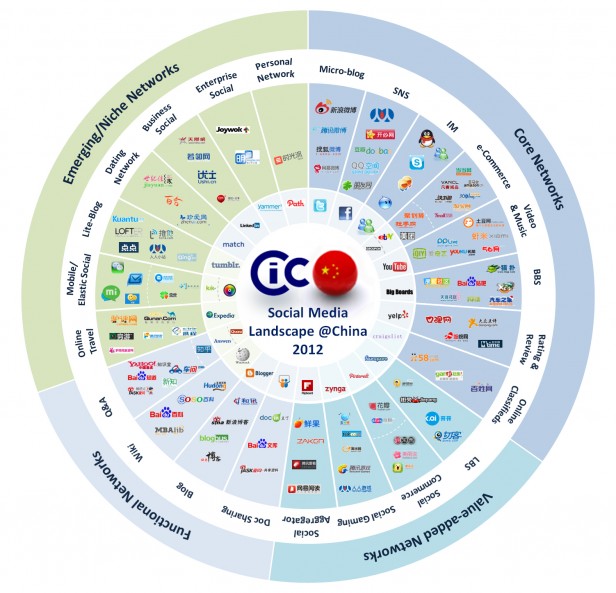
Real-Name Registration Threatens the Lively World of China’s Microblogs

WIRED.com, 15 March 2012

The timeline on Sina Weibo, China’s popular Twitter-like service, is filled with pithy comments about “Beijing Fashion Week,” chronicling the comings and goings and sartorial choices of the elite.

But the commenters aren’t fashionistas, and they aren’t talking about supermodels or design stars. They are referring, in not-so-secret code, to Communist Party officials.

“Beijing Fashion Week” is a thinly veiled, sarcastic commentary on the Communist Party’s annual summit, now under way in the nation’s capital. And many of the assembled are making it easy to be ridiculed by showing up in luxury garb — a far cry from the staid image they aspire to project.

Click on Image to Enlarge

. . . . . .

And all this may change in the face of a new, more stringent policy designed to clamp down on free expression where other methods have been less successful. In a move to exert greater control on citizen speech online, the government is requiring that Sina Weibo and China’s other microblogs register the real names and identification cards of users in several cities. Those who do not register this week in many major cities like Beijing will not be allowed to share or forward posts; after a period of testing, the policy will go into effect nationwide.

Read full article.

Graphic Source (separate posting)

Chuck Spinney: Syria Case Study of Mass Mind Numbing

IO Deeds of War, IO Impotency
Chuck Spinney

One of the ironies of the rise of the so-called information age is that the information content of the mainstream media has plummeted, while its practice of yellow journalism in the interest of warmongering has skyrocketed.  From the Arab-Israeli conflict to the non coverage of the murderous effects of sanctions in Iraq in the 1990s, to the distorted coverage of the Balkan wars culminating in Kosovo, to the hysteria fueling of the second Iraq war, Aghanistan, Libya, Iran, and now Syria, with a few exceptions, the mainstream press has been complicit in hyping conflicts — usually in Islamic regions — via oversimplified reporting and reliance on biased sources as opposed to making searching inquiries into the nuances shaping these conflicts.  These sound bytes of convenience and yellow journalism have overloaded and anesthetized critical faculties of the voting publics to such an extent that, today, the masses in the US and Europe (especially the UK) have become sheeplike in their passive acquiescence to perpetual war conducted in their name for alleged humanitarian reasons. [1]  

The attached report in Counterpunch by Professor Afshin Mehrpouya explores how shoddy reporting is now fomenting the Syrian crisis, and in so doing, he places the murderous implications of twin phenomena of overload and anesthetization into sharp relief.

——————

[1] One wonders if the governments of the West, especially in the US and UK, are now dependent on information overload, anesthetization of the mass mind, and perpetual war to distract their people from the crisis in capitalism that destroying the middle classes and increasing the income gap between a wealthy oligarchy and the other 99 percent.
Chuck Spinney
Barcelona


How One-Sided Reporting is Facilitating Escalation

Six Ways the Media Has Misreported Syria

by AFSHIN MEHRPOUYA, Counterpunch, 14 March 2012

As in the case of Libya, from NY Times to Fox News, from Guardian to National Post and from Le Monde to Le Figaro, the Western mainstream media’s coverage of the Syrian conflict has been mostly simplistic and black & white with a Hollywoodian good (opposition) and evil (Syrian government) story. The basic storyline reported is: “The dictatorial Syrian government is torturing and killing Syrian protestors and civilians including women and children and that the Western counties and the Arab League want to protect these Syrian civilians”. These outlets use any information that supports their stance regardless of its source and quality, and dismiss or ignore any information that brings it to question.

The bloody suppression of protestors by the Syrian government and also instability resulting from the armed insurgency aggravated by a complex set of foreign forces, each with its own set  of vested interests, have resulted in significant suffering for the people of Syria. Western media’s unquestioning, consensual, biased and melodramatic coverage of the Syrian events risks moving this conflict to a full blown war with grave consequences for the Syrian people and the region.

Here are the six ways that the Western media, across the board, have been uncritical and misleading in their coverage of the Syrian conflict:

1. What do the majority of Syrians want?

2. Is the Syrian National Council (SNC) and the militarized insurgency representative of the Syrian opposition?

3. How many casualties and killed by whom?

4. Are the information sources unbiased and credible?

5. What are the interests of countries pushing for regime change and foreign intervention?

6.    What are the “democratic credentials of the countries who want to take democracy to Syria?

Read full article (expands on all of the above).

Reference: Flooding of the USA Coasts — Where, When?

03 Environmental Degradation, Articles & Chapters, Earth Intelligence, IO Impotency
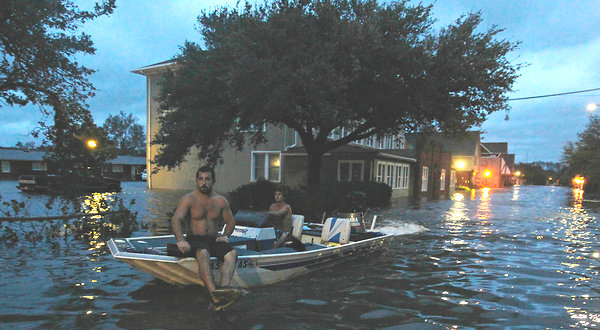
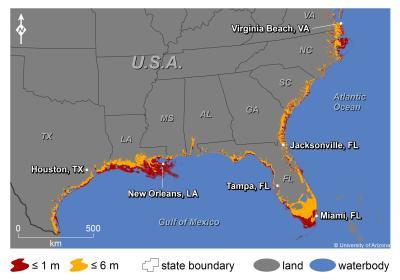
Click on Image to Enlarge

2012 Rising Sea Levels Seen as Threat to Coastal U.S. (New York Times, 13 March 2012)

About 3.7 million Americans live within a few feet of high tide and risk being hit by more frequent coastal flooding in coming decades because of the sea level rise caused by global warming, according to new research.

By far the most vulnerable state is Florida, the new analysis found, with roughly half of the nation’s at-risk population living near the coast on the porous, low-lying limestone shelf that constitutes much of that state. But Louisiana, California, New York and New Jersey are also particularly vulnerable, researchers found, and virtually the entire American coastline is at some degree of risk.

Click on Image to Enlarge

2011 Rising Seas Will Affect Major US Coastal Cities by 2100, New Research Finds

2007 Nation Under Siege: Sea Level Rise at Our Doorstep [2030 Impact Study Best Use of Google in Color to Depict 1 Meter, 3 Meter, and 5 Meter Rise in Sea Level]

2003 (est) Does Sea Level Rise Matter to Transportation Along the Atlantic Coast?

2000  Maps of Lands Vulnerable to Sea Level Rise Modeled [Best for close-up vulnerability maps]

1989 The Effects of Sea Leavel Rise on U.S. Coastal Wetlands

Phi Beta Iota:  There are multiple bottom lines on this continuing saga.

Continue reading “Reference: Flooding of the USA Coasts — Where, When?”

Steven Aftergood: NSA Has Failed, Since 1976, to Protect US Commercial Communications

03 Economy, Commerce, Corruption, Government, IO Impotency, Military
Steven Aftergood

IN 1976, NSA WAS TASKED TO HELP SECURE PRIVATE COMMS

As long ago as the Gerald Ford Administration, the National Security Agency was directed to help secure non-governmental communications networks against intrusion and interception by foreign — or domestic — entities, according to a recently declassified presidential directive.

“The President is concerned about possible damage to the national security and the economy from continuing Soviet intercept of critical non-government communications, including government defense contractors and certain other key institutions in the private sector,” wrote National Security Advisor Gen. Brent Scowcroft in National Security Decision Memorandum (NSDM) 338 of September 1, 1976.

“The President further recognizes that U.S. citizens and institutions should have a reasonable expectation of privacy from foreign or domestic intercept when using the public telephone system. The President has therefore decided that communication security should be extended to government defense contractors dealing in classified or sensitive information at the earliest possible time. He has also directed that planning be undertaken to meet the longer-term need to protect other key institutions in the private sector, and, ultimately, to provide a reasonable expectation of privacy for all users of public telecommunications.”

The directive ordered that “in confirmed threat areas,” existing communications networks involving classified information should be transitioned from microwave circuits to secure cable “as soon as possible.”  A broader plan to protect non-governmental communications was also to be prepared.

“The President further directs the Director of the Office of Telecommunications Policy, with the participation and assistance of DOD and NSA, to prepare a detailed Action Plan setting forth the actions and schedule milestones necessary to achieve a wide degree of protection for private sector microwave communications. The Plan should identify needed policy and regulatory decisions, describe in detail the roles of industry and government, including management and funding considerations, and integrate the schedule for these actions with the technical development milestones.”

“The Action Plan should be based on the fundamental objective of protecting the privacy of all users of public telecommunications, as well as satisfying specific needs of the government,” the directive stated.

The 1976 directive was originally marked TOP SECRET / SENSITIVE (XGDS), where XGDS stood for “exempt from general declassification schedule.”  It was declassified on September 13, 2011.  The document had been requested through the mandatory declassification review process by Dr. John Laprise of Northwestern University.

The directive prefigures an ongoing controversy over the proper role, and the actual extent, of National Security Agency involvement in securing public communications.

In response to a FOIA lawsuit brought by the Electronic Privacy Information Center, the NSA said (and a court affirmed) that it could “neither confirm or deny” a relationship between the Agency and Google.  NSA has also refused to release the 2008 National Security Presidential Directive 54, which reportedly tasks the Agency with certain cybersecurity functions.

Phi Beta Iota:  This would be an excellent case study for the retrospective court martial, conviction, and demotion by two grades in retirement (affects pension) of every NSA director since then, with special attention to those serving after the alarm was sounded again in 1994.  NSA today does not have the public interest in mind and could care less about presidential directives.  It exists to create millionaires among NSA senior executives jumping to sweetheart “soft landings.”  NSA and the Cyber-Command are an ideal candidate for the first joint GSA-OMB deep audit of secret spending since 2001.

noble gold