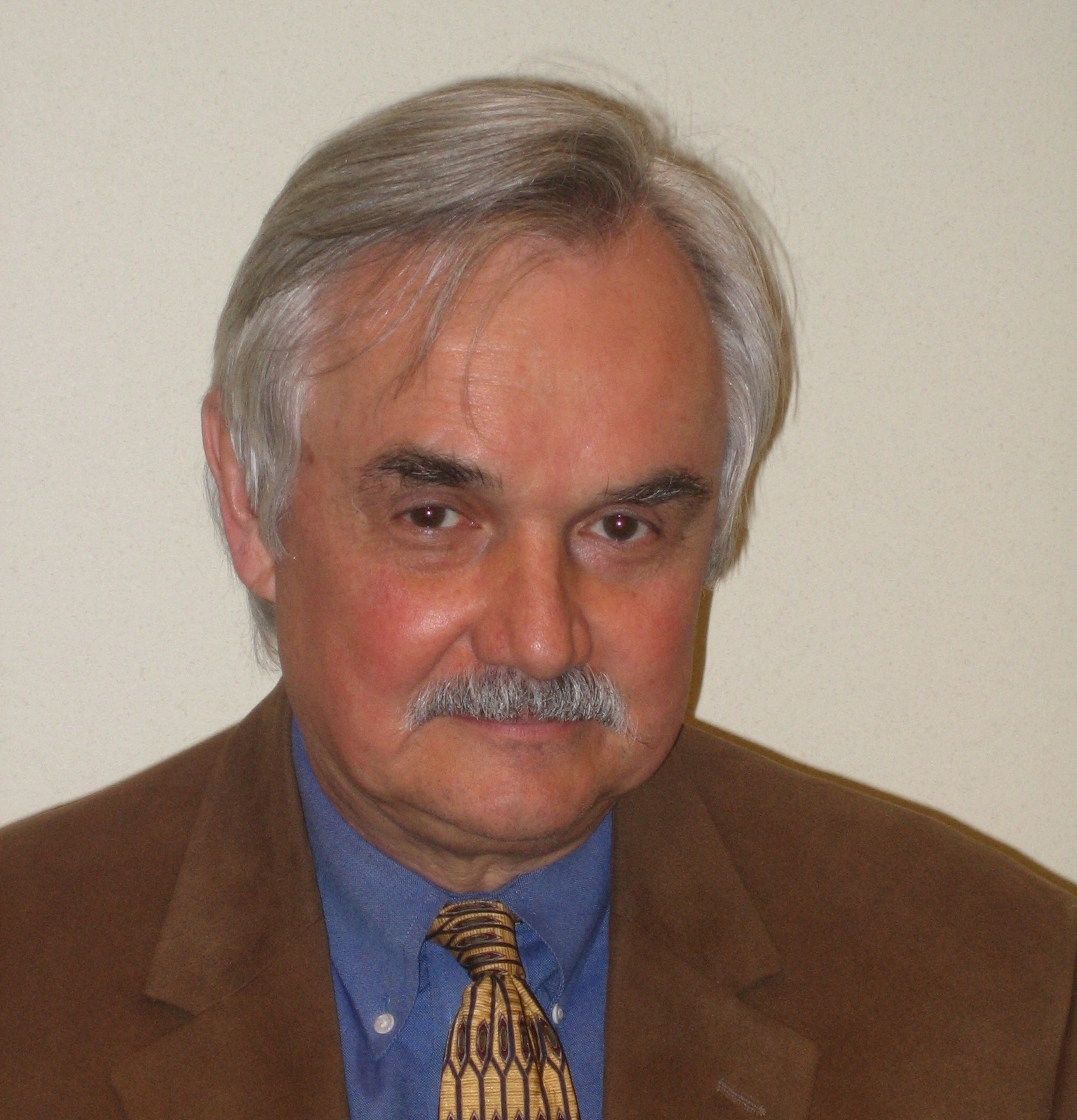
Berto Jongman: How We Lost Yemen….

Government, Ineptitude, Military
Berto Jongman
Berto Jongman

How We Lost Yemen

The United States used the Pakistan playbook on Yemen's terrorists. It didn't work.

For much of the past four years the United States has been firing missiles into Yemen. Drones, ships, and planes have all taken part in the bombardment, carrying out at least 75 strikes — including an alleged drone attack that killed five on the night of Monday, Aug. 5, bringing the death toll to a minimum of 600 souls, according to the best estimates.

But for all that, for all the strikes and all the dead, al Qaeda in the Arabian Peninsula (AQAP) continues to attract more members, growing from 300 in 2009 to well over a thousand today. U.S. officials almost invariably refer to it as the most dangerous branch of al Qaeda's network, a designation that has remained constant since the United States started bombing Yemen in 2009. And the group, as the ongoing terrorism alert that has closed U.S. embassies has shown in dramatic fashion, remains capable of paralyzing U.S. diplomatic efforts across an entire region.

All this raises a rather simple question: Why? Why, if the U.S. counterterrorism approach is working in Yemen, as Barack Obama's administration claims, is AQAP still growing? Why, after nearly four years of bombing raids, is the group capable of putting together the type of plot that leads to the United States shuttering embassies and missions from North Africa to the Persian Gulf?

The answer is simple, if rather disheartening: Faulty assumptions and a mistaken focus paired with a resilient, adaptive enemy have created a serious problem for the United States.

Read full article.

Berto Jongman: Computer Language Imitates Human Brain?

Advanced Cyber/IO
Berto Jongman
Berto Jongman

New Computer Programming Language Imitates The Human Brain

As we pointed out earlier this week, we’re still far from being able to replicate the awesome power of the human brain. So rather than use traditional models of computing, IBM has decided to design an entirely new computer architecture — one that’s taking inspiration from nature.

For nearly 70 years, computer scientists have depended upon the Von Neumann architecture. The computer that you’re working on right now still uses this paradigm — an electronic digital system driven by processors and consisting of various processing units, including an arithmetic logic unit, a control unit, memory, and input/output mechanisms. These separate units store and process information sequentially, and they use programming languages designed specifically for those architectures.

Continue reading “Berto Jongman: Computer Language Imitates Human Brain?”

4th Media: Did The US Banks Really Steal Half of the German Government’s Gold and Get Away With It?

10 Transnational Crime, Commerce, Corruption, Government

4th media croppedMystery about Germany´s Gold in US: Consequence Would Be Inevitable Collapse of Global Trade & Civilization

Nobody wants to admit it openly. The German Gold Reserves in the United States are gone, used for financing the United States war chest and bet for “Global Full Spectrum Dominance”. So why is even the German Federal Bank trying to avoid further speculation by referring to a non-existent “full transparency” ? The answer is quite simple. Nobody wants the current backwardation of the gold market to turn into a permanent backwardation of the gold market. The consequence would be the inevitable collapse of global trade and civilization as we know it.

Read full article with many links and quotes.

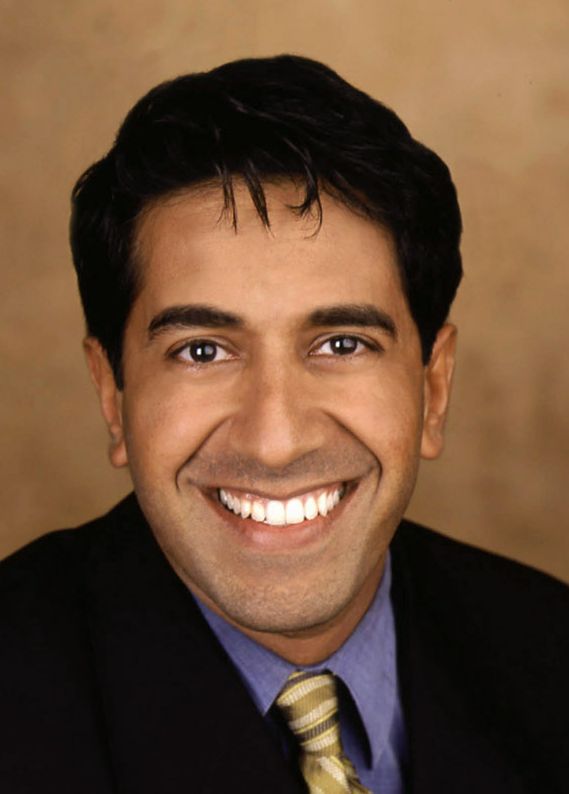
Sanjay Gupta: Legalize Marijuana — and Question Authority

07 Health, Government, Ineptitude
Sanjay Gupta
Sanjay Gupta

Why I changed my mind on weed

By Dr. Sanjay Gupta, CNN Chief Medical Correspondent

Watch Dr. Sanjay Gupta's groundbreaking documentary “WEED” at 8 p.m. ET August 11 on CNN.

(CNN) — Over the last year, I have been working on a new documentary called “Weed.” The title “Weed” may sound cavalier, but the content is not.

I traveled around the world to interview medical leaders, experts, growers and patients. I spoke candidly to them, asking tough questions. What I found was stunning.

Long before I began this project, I had steadily reviewed the scientific literature on medical marijuana from the United States and thought it was fairly unimpressive. Reading these papers five years ago, it was hard to make a case for medicinal marijuana. I even wrote about this in a TIME magazine article, back in 2009, titled “Why I would Vote No on Pot.”

Well, I am here to apologize.

Continue reading “Sanjay Gupta: Legalize Marijuana — and Question Authority”

Winslow Wheeler: Purge the Generals to Fix the Army + Flag Corruption and Ineptitude RECAP

Corruption, Military
Winslow Wheeler
Winslow Wheeler

There is a devastating review of the quality of Army leadership at the new issue of Armed Forces Journal.  At Armed Forces Journal, it is an article by Army Lt. Col. Daniel Davis (“Purge the Generals”), and it merits the attention of anyone following military affairs, I believe.  If you think Army leadership is an island of competence and ethics in the miasma of Washington politics, I urge you to read LtC Davis' up close and personal assessment.  Note his important and dramatic recommendations.

Moreover, if you think these problems are unique to the Army and do not pertain, for example, the the Marine Corps, see here.

LtC Davis' article is at the Armed Forces Journal website at http://armedforcesjournal.com/, and it is below.

Purge the generals:What it will take to fix the Army

Armed Forces Journal, 7 August 2013

BY DANIEL L. DAVIS

The U.S. Army's generals, as a group, have lost the ability to effectively function at the high level required of those upon whom we place the responsibility for safeguarding our nation. Over the past 20 years, our senior leaders have amassed a record of failure in major organizational, acquisition and strategic efforts. These failures have been accompanied by the hallmarks of an organization unable and unwilling to fix itself: aggressive resistance to the reporting of problems, suppression of failed test results, public declarations of success where none was justified, and the absence of accountability.

Continue reading “Winslow Wheeler: Purge the Generals to Fix the Army + Flag Corruption and Ineptitude RECAP”

Stephen E. Arnold: What Jeff Bezos Will NOT Do with the Washington Post…

IO Impotency, Media
Stephen E. Arnold
Stephen E. Arnold

The Price of News: The Post Deal

I have been following the flood of information about Jeff Bezos’ apparent purchase of the The Washington Post. I use the word “apparent” because it is not clear if Mr. Bezos or Nash Holdings LLC bought the newspaper. For the purpose of this Beyond Search item, let’s assume that a Bezos-controlled entity has the keys to the Lego kit with millions of blocks that the Washington Post represents. Building a profitable newspapers may be like taking the brightly colored blocks and assembling them in just the right way to build a cash machine.

Click on Image to Enlarge

The obvious point is that Mr. Bezos, an Internet business superstar, sees riches where others see union hassles, declining advertising revenues, and “real” journalism about the most exciting place in the swampy area bordering on the Potomac.

Reuters’ take on the deal was interesting. The story “Amazon’s Bezos Pays Hefty Price for Washington Post.” Thomson Reuters rarely overpays for its acquisitions, so I interpreted the headline as a suggestion that Mr. Bezos’ financial skills are not up to Thomson Reuters’ standards. Both Thomson Reuters and Amazon have cost control challenges, and it is not clear which organization is better positioned for the economic storms which are forming on the horizon.

Continue reading “Stephen E. Arnold: What Jeff Bezos Will NOT Do with the Washington Post…”

noble gold