Steve Arnold: Government IT Professionals Not Ready for Big Data + Meta-RECAP

Government, IO Impotency

Stephen E. Arnold
Stephen E. Arnold

Government IT Professionals Not Ready for Big Data

Posted: 10 May 2013 05:29 AM PDT

It is not a surprise that 97 percent of state and local IT professional expect their data to grow by more than 50 percent over the next two years. However, more than 75 percent of them are only somewhat or not very familiar with the term big data. These findings are found in a recent report by MeriTalk and GCN did a nice write up on the implications of the study in, “Is Big Data Big Trouble for State, Local Governments?

A survey of 150 state and local government CIOs and IT managers taken in November and December 2012 comprise the respondents in “The State and Local Big Data Gap.”

The article lists more of the statistics gleaned from the study:

“Seventy-nine percent of responding agencies said it will be at least three years before they are able to take full advantage of big data, even though they see it improving overall efficiency (57 percent); increasing the speed and accuracy of the decision-making process (54 percent); and providing a greater understanding of citizens’ needs (37 percent). And although 79 percent said they were just somewhat or not very familiar with the term, they do report having the kind of problems that big data techniques are intended to solve.”

Are state and local governments able to tap the alleged power of big data? Maybe not yet? That is certainly the conclusions that the numbers speak to.

Megan Feil, May 18, 2013

Sponsored by ArnoldIT.com, developer of Beyond Search

See Also:

Continue reading “Steve Arnold: Government IT Professionals Not Ready for Big Data + Meta-RECAP”

Jean Lievens: Sharing to Learn, Learning to Share

04 Education
Jean Lievens
Jean Lievens

Sharing to Learn, Learning to Share: Sharing Economy Education Sites

By Tricia Edgar

Kalev.com, Undated

My father was the original internet. Stuck on a question for a class project, I could either go to the library or go to him. I chose the shorter commute.

From its beginnings, the internet has been a place to share what’s in your brain. First, there were bulletin boards and chat rooms. Remember those? Very groovy. News moved online, and people began to blog, sharing their thoughts with…well, everyone who cared to listen. Sharing became more social, and with the advent of MySpace, Facebook, Twitter, and many other social networking sites, social sharing of tidbits of information or thoughts gleaned from our day has become mainstream.

These days, the web is bringing people together to share what they know in a different way. Fusing expertise, education, and social networking, sharing economy sites are creating venues for formal and informal education in everything from web design to homesteading skills. These sharing sites are all about the human connection, digitally arranged, and they break down some of the barriers to learning that make it a challenge to grow your skills.

Specific recommended sites below the line.

Continue reading “Jean Lievens: Sharing to Learn, Learning to Share”

Sepp Hasslberger: Energy-Producing Shell Covered with Hairs Extracts Wind Energy

05 Energy
Sepp Hasslberger
Sepp Hasslberger

Energy-producing shell covered with hairs that can extract wind energy

A visionary idea called STRAWSCRAPER, the first project to come out of the business called Belatchew Labs. STRAWSCRAPER is an extension of the south tower on Södermalm in Stockholm with a new energy-producing shell covered with hairs that can extract wind energy.

Belatchew Architects want to give South tower its original proportions and at the same time explore new technologies to create the future of urban wind farming.

By using piezoelectric technology a large number of thin ribs produce electricity only through the small movements generated by the wind. The result opens up possibilities for how buildings can produce energy in the future. Surfaces on both existing and new buildings can suddenly be converted into energy producing units.

Read full article with graphics.

SchwartzReport: Army Goes Green (20 Years After It Was Told To…)

03 Economy, 03 Environmental Degradation, 05 Energy, 07 Health, 11 Society, DoD, Earth Intelligence, Ethics, Military, Officers Call

schwartz reportThis is good news. The military, perhaps because it is a centralized command structure, often adopts progressive positions before general society. The military integrated long before the rest of America. It became a gender, race, and religion neutral meritocracy — an evolution in which I played a role — well before this was the norm. So the military's adaptation of noncarbon energy is the latest in a line of accomplishments.

The Army Goes Off the Grid
Jim Hightower – Nation of Change

Continue reading “SchwartzReport: Army Goes Green (20 Years After It Was Told To…)”

NIGHTWATCH: Iraq, Destabilized Further by Syria, Update

04 Inter-State Conflict, 05 Civil War, 07 Other Atrocities, 08 Wild Cards
Click on Image to Enlarge

Iraq: Bombs exploded in Sunni neighborhoods in Baghdad and in surrounding towns on Friday, killing at least 76 people.

Two staggered explosions were used in the deadliest attack which targeted Muslims as they were leaving the main Sunni mosque in Baqubah, 35 miles north-east of Baghdad. The second explosion targeted people who gathered to help the wounded, leaving 41 dead and 56 wounded, according to police and hospital officials.

A roadside bomb exploded later on Friday during a Sunni funeral procession in Madain, about 12 miles south of Baghdad, killing eight mourners and wounding 11, police said. .

Another blast struck a cafe in Fallujah, 40 miles west of Baghdad, killing two people and wounding nine, according to police and hospital officials.

In Baghdad, a bomb exploded near a shopping center during the evening rush hour in the mainly Sunni neighborhood of Amariyah, killing 21 people and wounding 32. That was followed by another bomb in a commercial district in Dora, another Sunni neighborhood, which killed four people and wounded 22, according to officials.

Comment: The series of bombings against Sunni targets on Friday apparently were in retaliation for two days of bombings earlier in the week against Shiite targets. Authorities reported 130 people died in attacks since Wednesday.

The momentum towards sectarian war in Iraq might have been stopped by political reforms that provided for more equitable power sharing with the Sunni political parties. The al Maliki government, instead, treated Sunni political protestors as terrorists and Baathists.

Now the time for compromise appears to have passed. One ripple effect of the fighting in Syria is that Sunni groups in Iraq have become emboldened to fight the Shiite-dominated government in Baghdad.

Former prime minister Allawi warned this week that the bombings will continue until al Maliki resigns and new elections are held. But neither is likely.

Continue reading “NIGHTWATCH: Iraq, Destabilized Further by Syria, Update”

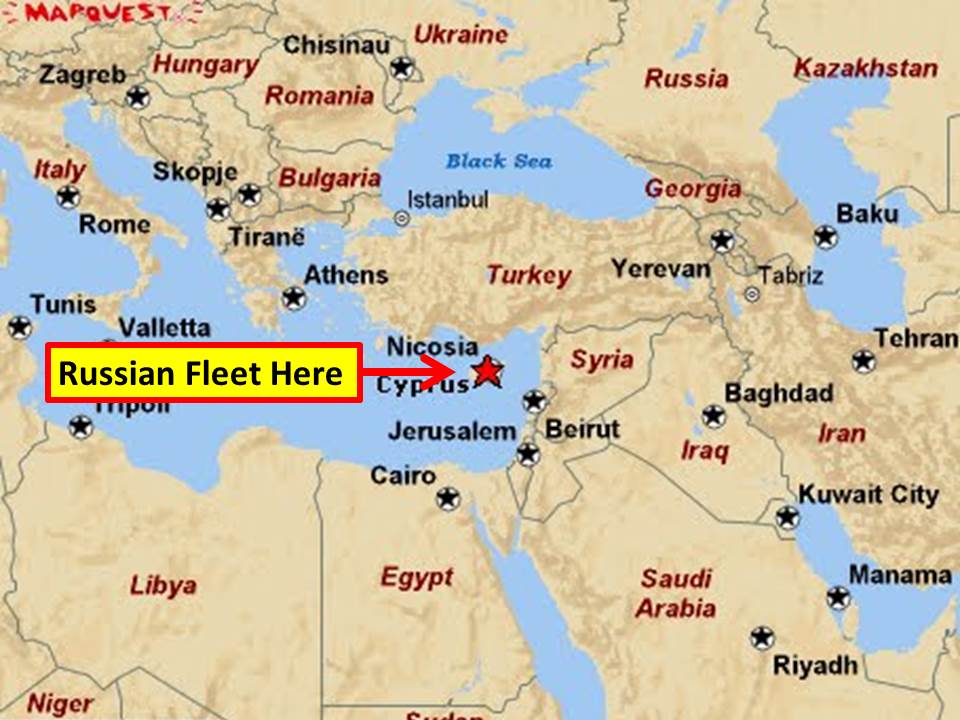
NIGHTWATCH: Syria-Russia Update

06 Russia, 08 Wild Cards, Ethics, Government, IO Deeds of Peace, Military
Click on Image to Enlarge

Syria-Russia: Update. This week, the New York Times reported that Russia is delivering not only the S-300 advanced air defense missile systems to Syria, but also Yakhont “ship killer” missiles, which would make it a lot more painful for any foreign navies trying to intervene in Syria or provide supplies to the rebels by sea

In 2007, the two countries signed a contract for 72 Yakhont missiles which are supersonic and have a range of about 200 miles. Some missiles were delivered in 2011 but the Russians have not said how many remain to be provided. They are among the most deadly anti-ship missiles in the world.

Comment: Details about the S-300 system delivery remain undisclosed, including whether Russians will install and operate it. A member of the Russian parliament confirmed the Russians consider the Yakhont delivery a part of a longstanding weapons contract. The effect of these deliveries is to deter a UN resolution approving creation of a no-fly zone in Syria, as occurred in Libya which evolved into a NATO air combat campaign with limited ground intervention.

Russia: Russian navy ships from the Pacific Fleet entered the Mediterranean Sea for the first time in decades this week. The task group includes the destroyer Admiral Panteleyev, two amphibious warfare ships Peresvet and Admiral Nevelskoi, as well as a tanker and a tugboat.

Continue reading “NIGHTWATCH: Syria-Russia Update”

noble gold