SchwartzReport: State of the Media — Quite Dead….

Corruption, Ineptitude, Media

schwartz reportThis is the latest on the major trend concerning the American media. Not a happy story. A democracy requires a healthy functional objective media to be healthy itself. The trend seems to be moving against this.

Click through to see the excellent clarifying graphs.

The State of the News Media 2013

Pew Research Center

EXTRACT

This adds up to a news industry that is more undermanned and unprepared to uncover stories, dig deep into emerging ones or to question information put into its hands. And findings from our new public opinion survey released in this report reveal that the public is taking notice. Nearly one-third of the respondents (31%) have deserted a news outlet because it no longer provides the news and information they had grown accustomed to.

Read full article (long and fact-filled).

NIGHTWATCH: Cyprus Shows Three Threats – Fall of Government, Widespread Rioting, Spread of Rioting to Mainland Europe

Commerce, Corruption, Government, Ineptitude

Cyprus: Comment. International press outlets have provided detailed reporting on the so-called tax Cypriot leaders have proposed imposing on bank deposits to help pay for an international bailout. Cyprus is the fifth European Union country to request a bailout. The issues are complex and not relevant to this brief discussion.

NightWatch sees three threats in the situation. First is the breakdown of public confidence in the government and public financial institutions. That is already manifest in the run on ATMs. Banks on Cyprus were closed on the 18th, but the run on the banks should continue when they open on the 19th. There will not be enough cash to service the customers. Civil disorders should be expected.

The breakdown in confidence feeds the second threat which is the breakdown in respect for law and order. Cyprus is one step away from widespread rioting and a serious breakdown in public order. Rioting is likely when ordinary citizens conclude that they are powerless to protect what they have earned and no amount of effort on their part ensures their property rights.

The third threat is that the fear of losing everything will spread to other countries.

NIGHTWATCH KGS Home

John Robb: How Drones Can Recharge from Power Lines and Remain Active for Years

Drones & UAVs

John Robb
John Robb

How Drones Can Live off the Land for Years

Cyberweapons and synthetic biological weapons (GMOs) can self provision.

They have the ability to live off the land (hosts, like human bodies and PCs) once they are unleashed.

NOTE:  In many cases, they can also make perfect copies of themselves (copies in the trillions).

But what about drones?

Aren't they limited by quantity of energy in their batteries?

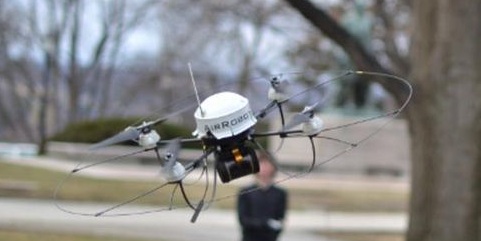
Yes, drones do have the capacity to self provision too.  One of the more elegent ways is for a drone to use power lines to “induct” the energy it needs.

drone forever croppedA drone that can recharge itself from a power line has the potential to operate for years — monitoring, relaying, etc. — without returning to base.

If the decision making software is good enough it could source its energy and target data for years without referencing any command system.

In fact, with wireless access to the Internet (including RSS feeds), GPS, and other easily accessible data sources… it decision making can be very dynamic.

Here's a video showing some US DoD contractors working on making that a reality, right now:

Anthony Judge: Psychosocial Implication in Gamma Animation Epimemetics for a Brave New World

Cultural Intelligence
Anthony Judge
Anthony Judge

Psychosocial Implication in Gamma Animation
Epimemetics for a Brave New World

Introduction
Current genetic concerns as a metaphor for current memetic realities
Divisive caricatures of complex psychosocial processes
Fourfold generic visual pattern of psychosocial dynamics
Reframing the scope for creative gamma animation
Genetic patterns as an indicative template for memetic patterns
Requisite confusion to engender an elusive functional literacy?
Epimemetics, biomimetics, epimimetics and biomemetics
Fruitful gamma resonance within a pattern of mnemonic associations?
Gamma as change in the rate of change of value
Unsustained awareness implied by gamma inversion
Relational insight dynamics in terms of a “gamma” perspective
Extending the alphabet and its representation?
Conclusion
References

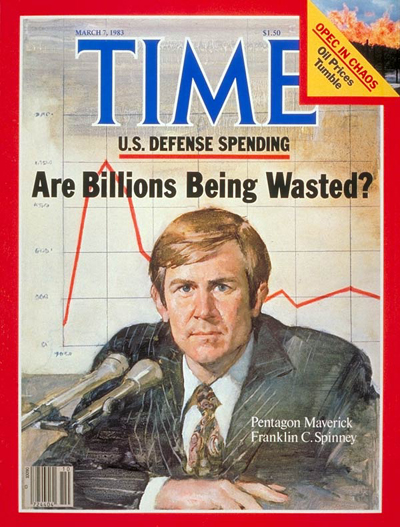
Chuck Spinney: The Truth About the Cuban Missile Crisis

Corruption, Government, IO Impotency, Peace Intelligence
Chuck Spinney
Chuck Spinney

The below article, which appeared in the Atlantic last January, is a very important illustration of how domestic politics determine foreign policy.  Bear in mind, the behaviour described below occurred when there was (and still is) a consensus among the pol-mil intellectuals that domestic politics stops at the water's edge and that foreign policy was and should be bi-partisan — the conclusion is a good analysis of where this kind of romantic intellectualization leads.

The Real Cuban Missile Crisis

EVERYTHING YOU THINK YOU KNOW ABOUT THOSE 13 DAYS IS WRONG.

By Benjamin Schwarz, The Atlantic, 11 January 1913

EXTRACT

On that very first day of the ExComm meetings, McNamara provided a wider perspective on the missiles’ significance: “I’ll be quite frank. I don’t think there is a military problem here … This is a domestic, political problem.” In a 1987 interview, McNamara explained: “You have to remember that, right from the beginning, it was President Kennedy who said that it was politically unacceptable for us to leave those missile sites alone. He didn’t say militarily, he said politically.” What largely made the missiles politically unacceptable was Kennedy’s conspicuous and fervent hostility toward the Castro regime—a stance, Kennedy admitted at an ExComm meeting, that America’s European allies thought was “a fixation” and “slightly demented.”

Read full article.


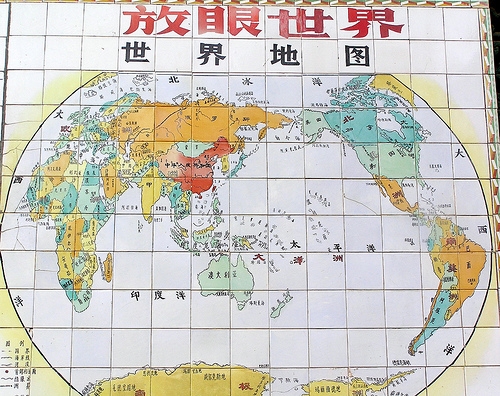
NIGHTWATCH: China Declares Peace with US, Taiwan, and the Region — The Chinese Dream is About Retrenchment & Revitalization

02 China, Cultural Intelligence, Earth Intelligence, Government, Peace Intelligence
Click on Image to Enlarge

China: The National People's Congress ended on the 17th with a press conference by Premier Li Keqiang. Before the closing, however, President Xi Jinping delivered his first address to the Congress. The central theme was The Chinese Dream.

Eight of the 17 paragraphs of the text were devoted to, or carried forward the application of, the dream. One of them reiterated the guidance Xi gave to the People's Liberation Army delegates on the 11th: obey the party, win wars and behave well.

Xi introduced the dream immediately after four paragraphs of thanks and preamble. The concluding, sentence of the second paragraph of the introduction is significant.

“Today, our people's republic is standing on the East of the world with a spirited posture.”

Comment: The point is that Xi did not describe China's posture as rising, but as standing. The period of rising has ended.

After the fourth paragraph of introduction, Xi began the discussion and for the Chinese dream.

Continue reading “NIGHTWATCH: China Declares Peace with US, Taiwan, and the Region — The Chinese Dream is About Retrenchment & Revitalization”

Reference: US IC Global Water Security Study

12 Water
Click for Source
Click for Source

2012 Global Water Security, US IC 2 February

Assumptions: We assume that water management technologies will mature along present rates andthat no far-reaching improvements will develop and be deployed over the next 30 years. In addition, for several states, we assume that present water policies—pricing and investments in infrastructure—are unlikely to change significantly. Cultural norms often drive water policies and will continue to do so despite recent political upheavals. Finally, we assume that states with a large and growing economic capacity continue to make infrastructure investments and apply technologies to address their water challenges.

Our Bottom Line: During the next 10 years, many countries important to the United States will experience water problems—shortages, poor water quality, or floods—that will risk instability and state failure, increase regional tensions, and distract them from working with the United States on important US policy objectives. Between now and 2040, fresh water availability will not keep up with demand absent more effective management of water resources. Water problems will hinder the ability of key countries to produce food and generate energy, posing a risk to global food markets and hobbling economic growth. As a result of demographic and economic development pressures, North Africa, the Middle East, and South Asia will face major challenges coping with water problems.

Continue reading “Reference: US IC Global Water Security Study”

noble gold