Mongoose: Understanding How “Loss of Jurisdiction” Can Kill Your Clearances — Vital to Those Departing Government Service

Government, Military
Mongoose
Mongoose

Security Clearance “Loss of Jurisdiction”

William Henderson

Few things cause more frustration than being rejected by a prospective employer because of a “Loss of Jurisdiction” and an “Incident Report.”

When you’re terminated from a job where you held a Department of Defense (DoD) security clearance, your former employer “separates” you in the Joint Personnel Adjudication System (JPAS—the DoD security clearance database). If you were terminated from your job for cause, the employer often concurrently submits an Incident Report via JPAS describing the reason for termination. This occurs when the termination is related to one of the thirteen Adjudicative Guidelines for Determining Eligibility for Access to Classified Information.

Normally when an employer submits an Incident Report to the DoD Central Adjudication Facility (CAF) responsible for your clearance, the CAF reviews the report to decide what action is necessary. If the report doesn’t contain any disqualifying information, the CAF closes the Incident Report simply by updating the JPAS record. Alternatively the CAF can request additional information, including a new Questionnaire for National Security Positions (Standard Form 86—SF86), and/or a limited investigation. Once sufficient information is received, the CAF can decide whether to favorably adjudicate the Incident Report and “continue” your clearance or begin the process of clearance revocation.

When the Incident Report occurs at the same time you’re “separated” in JPAS, the CAF cannot review the Incident Report or take any other action, and a Loss of Jurisdiction is entered into your JPAS record. The Loss of Jurisdiction and the unresolved Incident Report remain in your JPAS record, and your name is flagged in red letters. Getting the red out can be a problem.


Continue reading “Mongoose: Understanding How “Loss of Jurisdiction” Can Kill Your Clearances — Vital to Those Departing Government Service”

SchwartzReport: White House Pigs versus Public Ducks

Corruption, Government, Ineptitude

schwartz reportThe Right's fact free economic theories, and its hate for Obama, combine to drive us back into recession. This really does need to be understood by the American middle class. Here is a very good take on what the Sequester would do.

WHITE HOUSE WEB SITE

Fact Sheet: Examples of How the Sequester Would Impact Middle Class Families, Jobs and Economic Security

Unless Congress acts by March 1st, a series of automatic cuts—called a sequester—that threaten thousands of jobs and the economic security of the middle class will take effect.  There is no question that we need to cut the deficit, but the President believes it should be done in a balanced way that protects investments that the middle class relies on.  Already, the President has worked with Congress to reduce the deficit by more than $2.5 trillion, but there’s more to do.  The President believes we can not only avoid the harmful effects of a sequester but also reduce the deficit by $4 trillion total by cutting even more wasteful spending and eliminating tax loopholes for the wealthy.

Unfortunately, many Republicans in Congress refuse to ask the wealthy to pay a little more by closing tax loopholes so that we can protect investments that are helping grow our economy and keep our country safe.  Our economy is poised to take off but we cannot afford a self-inflicted wound from Washington.  We cannot simply cut our way to prosperity, and if Republicans continue to insist on an unreasonable cuts-only approach, the middle class risks paying the price.  The most damaging effects of a sequester on the middle class are:

Read full list of alleged harm to public of sequester cuts.

Continue reading “SchwartzReport: White House Pigs versus Public Ducks”

NIGHTWATCH: Democracy and Its Enemies — Comment by Robert Steele

Academia, Civil Society, Commerce, Corruption, Government, Idiocy, Ineptitude, Law Enforcement, Media, Military

tunesia motherTunisia: Media sources reported an agreement is imminent on a new national unity government for Tunisia to settle the political crisis following the murder of a prominent opposition politician last week. Rachid Ghannouchi, leader of the Islamist Ennahda Movement, said that a new government is expected to be announced in two or three days.

Comment: Democracy should have come more easily to Tunisia than to almost all other Arab states because of its tradition of secular, cosmopolitan tolerance. The Islamists, even so-called moderates, have overreached here as in Egypt. Tunisian cities do not seem as unstable as Egyptian cities, but Islamist governments in both states have shown no ability to improve economic conditions.

Continue reading “NIGHTWATCH: Democracy and Its Enemies — Comment by Robert Steele”

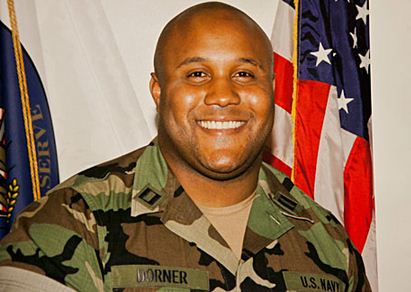
Chris Dorner: My Uncensored Manifesto

Corruption, Law Enforcement
Lt Chris Dorner, USNR

Dorner’s Uncensored Manifesto

Via: Pastebin:

From: Christopher Jordan Dorner /7648

To: America

Subj: Last resort

Regarding CF# 07-004281
Christopher Dorner w/ Chief William Bratton

I know most of you who personally know me are in disbelief to hear from media reports that I am suspected of committing such horrendous murders and have taken drastic and shocking actions in the last couple of days. You are saying to yourself that this is completely out of character of the man you knew who always wore a smile wherever he was seen. I know I will be villified by the LAPD and the media.

Unfortunately, this is a necessary evil that I do not enjoy but must partake and complete for substantial change to occur within the LAPD and reclaim my name. The department has not changed since the Rampart and Rodney King days. It has gotten worse. The consent decree should never have been lifted. The only thing that has evolved from the consent decree is those officers involved in the Rampart scandal and Rodney King incidents have since promoted to supervisor, commanders, and command staff, and executive positions.

The question is, what would you do to clear your name?

Continue reading “Chris Dorner: My Uncensored Manifesto”

Yoda: Early History of the Internet

IO History
Got Crowd? BE the Force!

Goodness, it is.

Imagining the Internet's

Quick Look at the Early History of the Internet

President Dwight D. Eisenhower initiated the Advanced Research Projects Agency (ARPA) after the Soviet launch of Sputnik I in 1957. Eisenhower believed in the great value of science, and formed ARPA in 1958 in a quest for “the scientific improvement” of U.S. defense. This project employed, at one time or another, some of the finest engineers and scientists of the late 20th century. The early emphasis was on missile-defense systems and the detection of nuclear bomb tests. It wasn't until 1962, when J.C.R. Licklider arrived on the management team, that ARPA began investigating the idea of networked computers.

In the early 1960s, Licklider, Leonard Kleinrock, Paul Baran, Lawrence Roberts and other research scientists came up with the ideas that allowed them to individually dream of and eventually come together to create a globally interconnected set of computers through which everyone could quickly and easily access data and programs from any site. Licklider jokingly called it an “Intergalactic Computer Network,” but he and his team began to seriously build the ideas and the technology that turned out to be the Internet. By 1964, some researchers had begun using their enormous mainframe computers to occasionally trade information by an early, informal form of e-mail – but the purpose wasn't to formulate a research network; they were just trying to get their work done efficiently. In the early 1960s, Baran and British scientist Donald Davies both proposed the idea of sending blocks of data – packets – through a digital network. Roberts and many others got down to the serious business of taking this concept, combining it with other researchers' proposals and building a real network in 1967, 1968 and 1969.

1969– Critical work on the first real network was being completed, and information had to be shared between far-flung research groups. Steve Crocker, a young computer scientist, wrote a long memo – the first of what came to be called a Request for Comments (RFCs). These are, to this day, the accepted way in which computer networking engineers and scientists suggest, review and adopt new technical standards. Since the day Crocker wrote the first Request for Comments, thousands more have followed. RFCs are a rich source of history about the development of the internet. The researchers also established a name for themselves at this time – the Network Working Group. The democratic way in which decisions were made by these pioneers became a basis for the free-speech, free-exchange format of the internet. ARPANET went online in an extremely basic format in late 1969, connecting four major universities: the University of California at Los Angeles, SRI at Stanford University, the University of California at Santa Barbara and the University of Utah. This rough system gave computer scientists and engineers the opportunity to begin refining ideas for a more efficient, reliable communications network. They had a lot of work to do in the years to come to get the “bugs” out, brainstorming, trying and failing, exchanging RFCs and improving the system.

Read full article.

DefDog: Was Petraus Bombed By a Zionist Bimbo Honey Trap? + Broadwell RECAP

Corruption, Idiocy, Ineptitude, Media, Military
DefDog
DefDog

The article reads as if JSOG and CIA were having a fight and JSOG wanted Petraeus gone.  That is not consistent with other reports that suggest that JSOG is not happy with CIA at the operational and analytic levels, and it also does not fully address the much higher probability that Broadwell, who is Jewish, was a straight-up honey trap from the Zionists/Mossad.  Has anyone tracked the money that put Broadwell on scholarship into JFK for her “chance encounter” with Petraeus that she artfully managed to turn into both a bankable affair and direct access to Arab private meetings with Petraeus?

Was General David Petraeus Targeted for Take-down by the Military?

New documents reveal that there's far more to the Petraeus sex scandal than meets the eye.

Douglas Lucas and Russ Baker

WhoWhatWhy, 5 February 2013

Paul Broadwell Before Going Under Covers
Paul Broadwell Before Going Under Cover

EXTRACT:

Among other revelations the documents show that:

-Petraeus was suspected of having an extramarital affair nearly two years earlier than previously known.

-Petraeus’s affair was known to foreign interests with a stake in a raging policy and turf battle in which Petraeus was an active party.

-Those providing the “official” narrative of the affair—and an analysis of why it led to the unprecedented removal of America’s top spymaster— have been less than candid with the American people.

. . . . . . . .

General David Petraeus’s headlong fall from grace cannot be dismissed as the denouement of yet another peccadillo in an unforgiving moral climate. The plot is thicker than that—perhaps as thick as the often-unnamed heart of the story: oil.

Continue reading “DefDog: Was Petraus Bombed By a Zionist Bimbo Honey Trap? + Broadwell RECAP”

Chuck Spinney: Panetta’s Phony Doomsday Scenario

Corruption, Government, Ineptitude, Military
Chuck Spinney
Chuck Spinney

Panetta’s Phony Doomsday Scenario

Two Questions for the Next Secretary of Defense

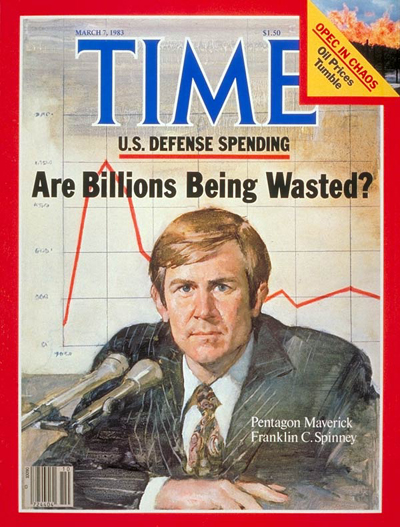
by FRANKLIN C. SPINNEY

CounterPunch, 11 February 2013

EXTRACT

Figure 1 places Mr. Panetta’s claim into the context of past defense budgets.  I have aggregated these budgets into the four year totals corresponding to each presidential term since Harry Truman’s second term began 64 years ago in 1949 (FY1950).  Bear in mind, the effects of inflation have been removed and these four-year totals are presented in trillions of FY13 constant dollars.

Click on Image to Enlarge

Continue reading “Chuck Spinney: Panetta's Phony Doomsday Scenario”

noble gold