The US government has paid at least £100m to the UK spy agency GCHQ over the last three years to secure access to and influence over Britain's intelligence gathering programmes.
The top secret payments are set out in documents which make clear that the Americans expect a return on the investment, and that GCHQ has to work hard to meet their demands. “GCHQ must pull its weight and be seen to pull its weight,” a GCHQ strategy briefing said.
China: Xinhua reported today that at a study session with members of the Political Bureau of the Communist Party of China (CPC) Central Committee on Tuesday, President Xi Jinping called for efforts to learn more about and further manage maritime development.
Here in America it’s somewhat notable to meet up with someone who can identify all fifty of our states if presented with a national map that doesn’t have a legend. European weapons and European diseases made quick work of the native population and there are only a few areas where there is any political friction from the survivors, mostly remote places like Pine Ridge, South Dakota.
Click on Image to Enlarge
The ethnic, sectarian, and historical divisions of the Mideast are obscure and puzzling to us in general, and they remain puzzling to our policy makers. This is about expectations – the U.S. civil war was an anomaly. We had defined nation states, uniformed armies, a clear cut beginning, a fairly clean end, and while the meme has never died there hasn’t been any large scale violence since the cessation of the conflict, nearly 150 years ago. The Mideast is full and there are always tensions the likes of which we never experience here.
This being said, I am now going to put up a bunch of maps and engage in a bit of wild speculation about some things that aren’t all that likely to happen, but if they did … well … game changers.
When I wrote Mali Is Neither Afghanistan Nor Somalia in mid-January I was coming from a place of common sense. Mali does not have anything like Afghanistan’s opium poppy crop or Somalia’s piracy opportunities. The only shady business that goes on there is the keeping of western captives. It’s reported that half of all kidnap victims in all of Africa are kept somewhere in Azawad – the rebellious part of Mali north of the Niger river.
Economic Causes of Civil Conflict and their Implications for Policy, a 2006 paper on the analysis of 47 civil wars, provided a serious academic confirmation of what I had suspected – insurgencies without funding sources simply don’t last. What does this mean for Syria?
Coming back to work topics after a weekend of covering Twitter's endless nerdwars I am pretty horrified by the news coming out of Syria.
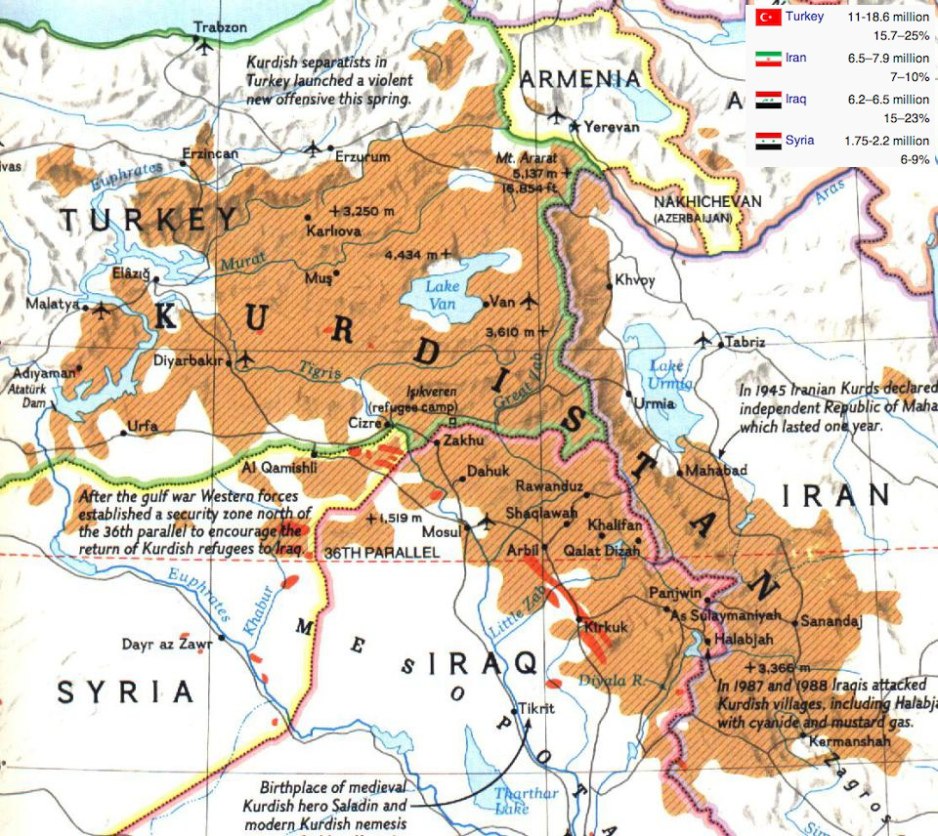
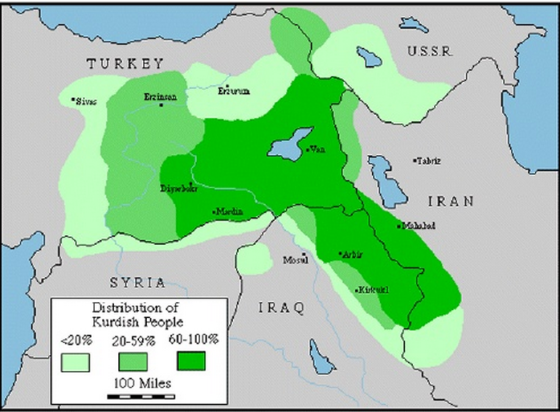
Ethnic Kurds are the largest group of stateless people in the world. Their population straddles the meeting point for Turkey, Syria, Iraq, and Iran. I read a few weeks ago that the Assad regime had recognized early on that Kurdish disinterest was in their best efforts and they left the far northeast provinces alone. That is apparently changing.
The new round of fighting broke out in Tel Abyad, a border town near Turkey in the rebel-held Raqqa province. The Syrian Observatory for Human Rights said clashes began after Kurdish militias in the area discovered fighters from an al Qaeda-linked rebel group trying to rig one of their bases with explosives.
Sounds like the equivalent of the US “coke can” nuke. Unverified information. Eight hours highly suspect unless pre-positioned in their embassies. Since US still cannot detect proliferation devices based on content rather than containers, and HUMINT is non-existent, we will just have to wait and see.
TERMINAL X SPECIAL REPORT – 001
Dated: July 20, 2013
SOURCE REPORT
Over the past few years, Pakistan’s strategic forces, responsible for the country’s primary deterrence program, have been doing extensive research into the design and development of smart weapons i.e. nuclear weapons that have a dynamic and compact form, and which can easily be transported from one location to another.
Ernesto J. Sanchez, The National Interest, July 12, 2013
As they consider further intervention in Syria, Washington policymakers should be aware of the history of previous U.S. involvement there. During the Cold War’s early years, the United States tried to overthrow the Syrian government in one of the most sustained covert-operations campaigns ever conducted.
Lee Kuan Yew has observed that “it is the collective memory of a people, the composite learning from past events which led to successes or disasters that makes a people welcome or fear new events, because they recognize parts in new events which have similarities with past experience.” And in a region of the world where memories are long and history matters, past events indicate that overtly arming the Syrian rebels could amount to an even bigger kiss of death.
Things were not always so bad between the United States and Syria. Robert Kaplan’s 1995 book The Arabists[3] describes an Ottoman-ruled Syria where American Protestant missionaries arrived in 1820, fifteen years before Washington opened a consulate in Aleppo[4]. These missionaries did not succeed in converting many individuals to Christianity, but were nonetheless loved for many other contributions, like the medical treatment they brought to poor remote villages and their 1866 founding of what is now the American University of Beirut[5] (modern Lebanon was then considered part of Syria). In the spirit of the American Revolution, many of these missionaries supported the movement for Arab independence from Ottoman rule. Woodrow Wilson’s Fourteen Points[6] followed suit by calling for “nationalities which are now under Turkish rule [to] be assured an undoubted security of life and an absolutely unmolested opportunity of autonomous development.”