Berto Jongman: War on Drugs a Failure — Could This Be Government Policy and the Desired Outcome?

04 Education, 07 Health, 09 Justice, 11 Society
Berto Jongman
Berto Jongman

War on illegal drugs failing, medical researchers warn

Illegal drugs are now cheaper and purer globally than at any time over the last 20 years, a report has warned.

The International Centre for Science in Drug Policy said its report suggested the war on drugs had failed.

The report, published in the British Medical Journal Open, looked at data from seven international government-funded drug surveillance systems.

Its researchers said it was time to consider drug use a public health issue rather than a criminal justice issue.

Read full article.

Continue reading “Berto Jongman: War on Drugs a Failure — Could This Be Government Policy and the Desired Outcome?”

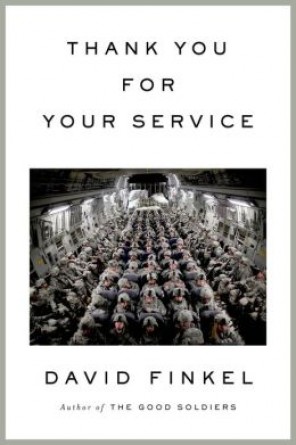
Penguin: Book Review by Andrew Bacevich — Thank You For Your Service [The Unraveling]

07 Health, 11 Society, Civil Society, Corruption, Cultural Intelligence, Director of National Intelligence et al (IC), DoD, Government, Idiocy, Ineptitude, IO Deeds of War, Military, Officers Call, Peace Intelligence, Threats
Who, Me?
Who, Me?

Book review: ‘Thank You for Your Service’ by David Finkel

By Andrew Bacevich

Andrew J. Bacevich teaches at Boston University. His new book is “Breach of Trust: How Americans Failed Their Soldiers and Their Country.”

Nominally a sequel to The Good Soldiers, his 2009 account of an American infantry battalion at war in Iraq, David Finkel’s new book actually serves as a perfect companion to George Packer’s recent bestseller, The Unwinding. Like Packer, Finkel examines the human detritus left in the wake of fraudulent promises and collapsed illusions. In The Unwinding, Packer contemplates the fate of those victimized by cataclysmic economic change. In Thank You for Your Service, Finkel looks at those victimized by egregious military malpractice.

The post-industrial, high-tech, information-age economy unveiled near the end of the 20th century supposedly offered a template for permanent prosperity. The Great Recession upended such expectations. Although some Americans have gotten very rich indeed, far larger numbers of ordinary citizens find themselves unemployed and unemployable. With impressive sensitivity, Packer tells their story.

Amazon Page
Amazon Page

Concocted at about the same time, a post-industrial, high-tech, information-age approach to waging war supposedly offered a template for assured victory. Iraq and Afghanistan have shredded such pretensions. Although some high-ranking military and civilian officials found ways to cash in, far larger numbers of ordinary soldiers (and their families) suffered, many of them grievously. In painful, intimate and at times almost voyeuristic detail, Finkel tells their story.

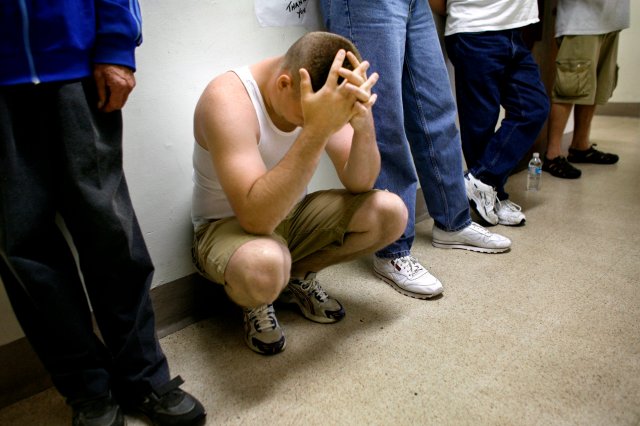
More specifically, Finkel, a reporter with The Washington Post, attends to what he calls the “after war.” His concern is with the soldiers who return from the war zone bearing wounds — and with the loved ones on whom those wounds also become imprinted. Above all, he is concerned with wounds that may not be fully visible: the post-traumatic stress disorder (PTSD), traumatic brain injury and related conditions that affect roughly a half-million younger veterans. Make that a half-million and counting.

To translate this disturbing statistic into flesh and blood, Finkel checks in on some of the soldiers featured in his previous book. What he finds is anger, anxiety, shame, depression, guilt, sleeplessness, self-abuse, spousal abuse, child abuse, alcohol abuse, drug abuse and suicidal tendencies, sometimes acted on, sometimes not. Shouting matches, crying jags and bizarre behavior along with guns and two-pack-a-day smoking habits abound, but not much in the way of useful therapy. Of one soldier, Finkel writes: “He began to take sleeping pills to fall asleep and another kind of pill to get back to sleep when he woke up. He took other pills, too, some for pain, others for anxiety. He began to drink so much vodka that his skin smelled of it, and then he started mentioning suicide.”

Continue reading “Penguin: Book Review by Andrew Bacevich — Thank You For Your Service [The Unraveling]”

Penguin: VA Pushing Pills and Getting Vets Hooked on Opiates

04 Inter-State Conflict, 07 Health, 07 Other Atrocities, 11 Society, Corruption, Government, Idiocy, Ineptitude, Military, Officers Call
Who, Me?
Who, Me?

VA Pushing Pills and Getting Vets Hooked on Opiates

The VA is prescribing 270 percent more opiates to veterans than it was 12 years ago, sometimes pushing the drugs to known addicts who later overdose, writes Aaron Glantz.

This story aired on Reveal, a new public radio show from The Center for Investigative Reporting and PRX.

Before dawn, a government van picked up paratrooper Jeffrey Waggoner for the five-hour drive to a Department of Veterans Affairs hospital in southern Oregon. His orders: detox from a brutal addiction to painkillers.

He had only the clothes on his back, his watch, an MP3 player, and a two-page pain contract the army made him sign, a promise to get clean.

Click on Image to Enlarge

But instead of keeping Waggoner away from his vice, medical records show the VA hospital in Roseburg kept him so doped up that he could barely stay awake. Then, inexplicably, the VA released him for the weekend with a cocktail of 19 prescription medications, including 12 tablets of highly addictive oxycodone.

Three hours later, Waggoner, 32, was dead of a drug overdose, slumped in a heap in front of his room at the Sleep Inn motel.

Continue reading “Penguin: VA Pushing Pills and Getting Vets Hooked on Opiates”

4th Media: 80 Percent of U.S. Adults Face Near-Poverty, Unemployment

01 Poverty, 03 Economy, 11 Society, Commerce, Corruption, Cultural Intelligence, Government

4th media cropped80 Percent of U.S. Adults Face Near-Poverty, Unemployment

Four out of 5 U.S. adults struggle with joblessness, near-poverty or reliance on welfare for at least parts of their lives, a sign of deteriorating economic security and an elusive American dream.

Survey data exclusive to The Associated Press points to an increasingly globalized U.S. economy, the widening gap between rich and poor, and the loss of good-paying manufacturing jobs as reasons for the trend.

Read full article.

Paul Craig Roberts: The War on the Poor

01 Poverty, 03 Economy, 07 Other Atrocities, 11 Society, Commerce, Corruption, Government
Paul Craig Roberts
Paul Craig Roberts

Guest Column — The War On The Poor — Jeffrey St. Clair & Alexander Cockburn

The American poor are being driven into the ground. Not only is owning a home out of the question, but also the poor can’t even afford to rent. They lack the money for a damage deposit, and they lack the cash for the large deposits that utility companies require in order to have utilities connected.

The declining ability of the poor to rent is adversely affecting those who provide rental shelter to the poor.

For the dispossessed middle class, foreclosure on a home is often just the beginning of trouble. If, for example, a bank forecloses on a home with a $200,000 mortgage and sells the house for $100,000, under some circumstances the IRS treats the $100,000 difference as income to the foreclosed homeowner and requires the bank to issue a 1099 form to the homeowner showing taxable income of $100,000. http://www.irs.gov/uac/Home-Foreclosure-and-Debt-Cancellation

Alternatively, if the sale does not cover the mortgage, the bank can come after other property that the foreclosed homeowner might possess, such as a second home, car, work equipment, checking account balance. For example, a construction subcontractor who loses his home and moves his family into the office or construction trailer on the lot where he keeps the backhoe loader and work truck can find himself dispossessed of these assets in order to apply the proceeds to the difference between his mortgage and the price at which the bank sells his foreclosed home.

Americans who have not been personally affected by foreclosure have little idea how the system is rigged in favor of the banks that caused the problem and against the victims of financial deregulation.

In the article below, Jeffrey St. Clair and Alexander Cockburn show that the assault on the poor began with the Clinton administration.


Continue reading “Paul Craig Roberts: The War on the Poor”

Eagle: Charles Hugh Smith on Why the Higher Education System is Doomed

04 Education, 11 Society
300 Million Talons...
300 Million Talons…

Why the Higher Education System Is Unsustainable (i.e. Doomed) 

Higher education is a self-serving cartel that is failing students, the economy and the nation.

That which is unaffordable is unsustainable and will go away. The current system of higher education is profoundly unaffordable: it exists on an immoral foundation of student debt–$560 billion of which is Federal. Enormous expansions of student debt are required to keep the current system of higher education afloat. This chart shows the insane trajectory of Federal student debt:


Read full article with graphic.

See Also:


SwartzReport: 46.5 Millions US Citizens Living in Poverty

01 Poverty, 03 Economy, 06 Family, 07 Health, 11 Society

15% of Americans Living in Poverty

STEVE HARGREAVES – CNN Money This is not sustainable, it is creating a permanent underclass. Social unrest and the corruption of democracy must follow inevitably.

Years after the Great Recession ended, 46.5 million Americans are still living in poverty, according to a Census Bureau report released Tuesday.Meanwhile, median household income fell slightly to $51,017 a year in 2012, down from $51,100 in 2011 — a change the Census Bureau does not consider statistically significant.

But taking a wider view reveals a larger problem: income has tumbled since the recession hit, and is still 8.3% below where it was in 2007.

“We've had [economic] growth, but it hasn't really reached everyday Americans,” said Elise Gould, an economist at the left-leaning Economic Policy Institute. “It's a lost decade, maybe more.”

This long-term decline in income is troubling to economists, especially as the middle and lower classes have fared considerably worse than the rich. Since 1967, Americans right in the middle of the income curve have seen their earnings rise 19%, while those in the top 5% have seen a 67% gain. Rising inequality is seldom a sign of good social stability.

Americans were the richest in 1999, when median household income was $56,080, adjusted for inflation.

Who is earning the most: Young people continued to struggle last year, with those under the age of 35 seeing slight drops in income while those 35 and made some gains.

Women made 77% of what men made, unchanged from the year before but up from 61% in 1960. Over one million men found full time work last year, as the economy recovered. Some have dubbed the most recent recession the “mancession,” as large numbers of men have left the workforce.

Asians had the highest household income ($68,600), followed by whites ($57,000), Hispanics ($39,000) and blacks ($33,300).

How the poorest are faring: The recession also pushed many more people into poverty. In 2010, the poverty rate peaked at 15.1%, and has barely fallen since then. This is the first time the poverty rate has remained at or above 15% three years running since 1965.

Those making $23,492 a year for a family of four, or $11,720 for an individual were considered to be living in poverty.

While the ranks of the poor are still elevated from the recession, overall poverty is remains far below the 22.4% it was at in 1959 when the Census first began tracking the data. Over the last 25 years, the poverty rate has averaged just over 13%.

Why is the U.S.A. so unequal?

The official poverty rate reported Tuesday does not include things like government benefits and the effects of medical and work expenses on the cost of living. It is also not adjusted for regional differences in housing costs.

The Census Bureau puts out another poverty index later this year that takes those things into account and is considered a more accurate measure. Last year, that separate measure put the poverty rate at 16.1%.


 

noble gold