It gives me great personal pleasure to extend congratulations as you assume your responsibilities as Prime Minister of Israel. You have our friendship and best wishes in your new tasks. It is on one of these that I am writing you at this time.
You are aware, I am sure, of the exchange which I had with Prime Minister Ben-Gurion concerning American visits to Israel’s nuclear facility at Dimona. Most recently, the Prime Minister wrote to me on May 27. His words reflected a most intense personal consideration of a problem that I know is not easy for your Government, as it is not for mine. We welcomed the former Prime Minister’s strong reaffirmation that Dimona will be devoted exclusively to peaceful purposes and the reaffirmation also of Israel’s willingness to permit periodic visits to Dimona.
“These things go far beyond what most are even aware of”
Paul Joseph Watson
Infowars.com
June 24, 2013
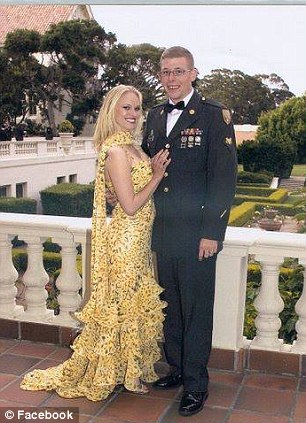
Iraq war veteran Daniel Somers committed suicide following an arduous battle with post traumatic stress disorder (PTSD) that was caused by his role in committing “crimes against humanity,” according to the soldier’s suicide note.
Somers was assigned to a Tactical Human-Intelligence Team (THT) in Baghdad which saw him involved in more than 400 combat missions as a machine gunner in the turret of a Humvee, in addition to his role in conducting interrogations.
Somers’ suicide note is a powerful indictment of the invasion of Iraq and how it ruined the lives of both countless millions of Iraqis as well as innumerable US troops sent in to do the dirty work of the military-industrial complex.
“The simple truth is this: During my first deployment, I was made to participate in things, the enormity of which is hard to describe. War crimes, crimes against humanity,” wrote Somers. “Though I did not participate willingly, and made what I thought was my best effort to stop these events, there are some things that a person simply can not come back from. I take some pride in that, actually, as to move on in life after being part of such a thing would be the mark of a sociopath in my mind. These things go far beyond what most are even aware of.”
Somers also complains about how he was forced to “participate in the ensuing coverup” of such crimes.
Besides Senators Ron Wyden and Mark Udall, most Democrats abandoned their civil liberty positions during the age of Obama. With a new leak investigation looming, the Democrat leadership are now being forced to confront all the secrets they’ve tried to hide.For most bigwig Democrats in Washington, D.C., the last 48 hours has delivered news of the worst kind — a flood of new information that has washed away any lingering doubts about where President Obama and his party stand on civil liberties, full stop.
Glenn Greenwald’s exposure of the NSA’s massive domestic spy program has revealed the entire caste of current Democratic leaders as a gang of civil liberty opportunists, whose true passion, it seems, was in trolling George W. Bush for eight years on matters of national security.
“Everyone should just calm down,” Senator Harry Reid said yesterday, inhaling slowly.
That’s right: don’t panic.
The very topic of Democratic two-facedness on civil liberties is one of the most important issues that Greenwald has covered. Many of those Dems — including the sitting President Barack Obama, Senator Carl Levin, and Sec. State John Kerry — have now become the stewards and enhancers of programs that appear to dwarf any of the spying scandals that broke during the Bush years, the very same scandals they used as wedge issues to win elections in the Congressional elections 2006 and the presidential primary of 2007-2008.
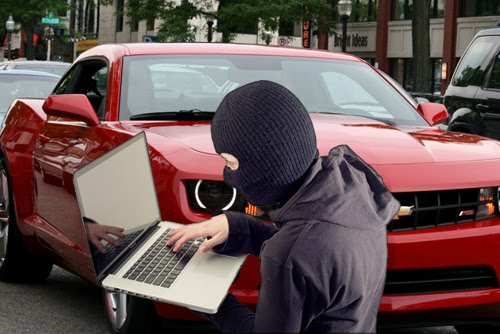
With a modest amount of expertise, computer hackers could gain remote access to someone’s car — just as they do to people’s personal computers — and take over the vehicle’s basic functions, including control of its engine, according to a report by computer scientists from the University of California, San Diego and the University of Washington.
Hijacking a car has been around forever, but with advanced technology your car is slightly safer or is it? Researchers at the University of California and Washington have been testing vehicles vulnerabilities to see just how safe a vehicles electronic controls really are. In one test they added some code to an MP3 and played it in the radio. When it was played the embedded code was capable of altering the vehicles firmware. This can give a hacker access to things such as: unlocking the doors, tracking your vehicles location, and they can even disable your breaks. Pretty crazy don't you think?
It's not time for full-on panic, but researchers have already successfully applied brakes remotely, listened into conversations and more.
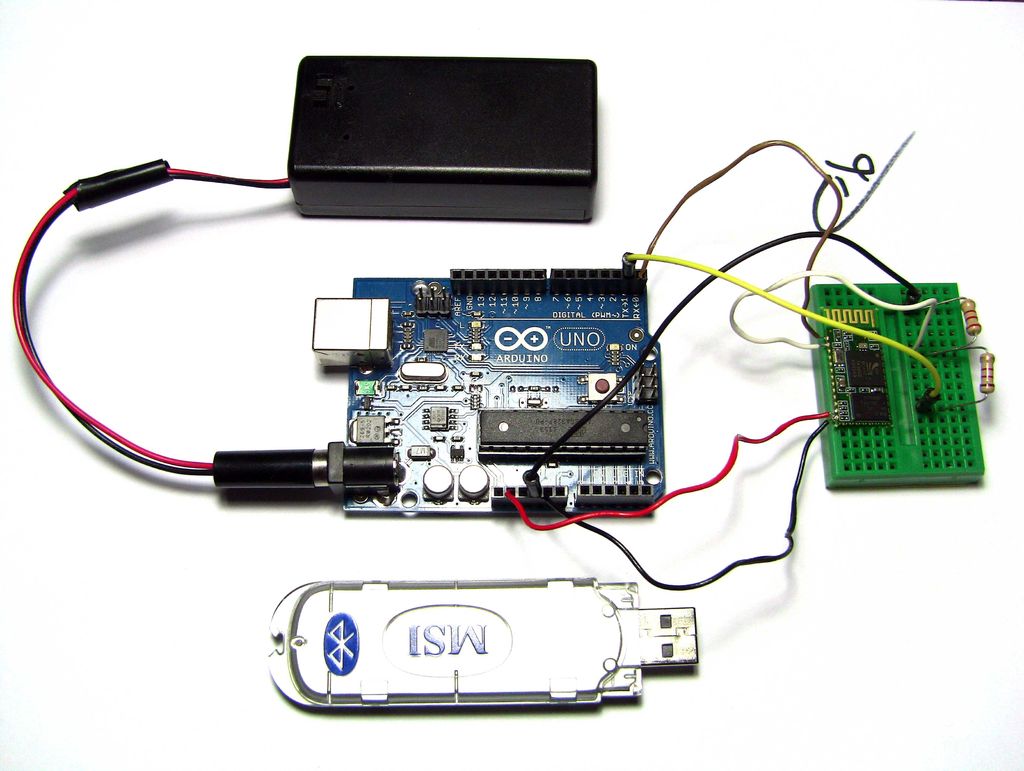
A 2011 report (PDF) by researchers at the University of California, San Diego and others site numerous “attack vectors,” including mechanics' tools, CD players, Bluetooth and cellular radio as among the potential problems in today's computerized cars.
Imagine a new “E Class” Mercedes exploding in flames, burning to a cinder. 220 km/hr crashes on the Autobahn are often survived, certainly without a fire.
There is a reason to own a Mercedes, in normal circumstances the chances of dying in one are quite remote unless you are Lady Di or heir to the presidency of Syria or, just perhaps, wrote a scathing expose that dismembered part of one of the greatest drug empires of all time.
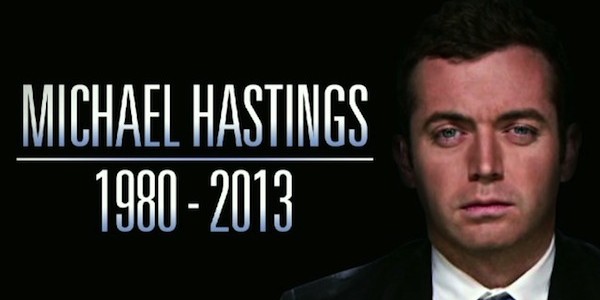
“Yes, you got Michael Hastings. We are warned. Lots of journalists are killed each year. Veterans Today loses its share, perhaps a bit more. ”
For those who didn’t watch the entire video, go back. Catch the last few seconds. I was flabbergasted.
Those of us who have “been there and done that,” and come back with more than the T Shirt say goodbye to one of ours.
Patrick Cockburn has written a very important essay on Syria in the London Review of Books (attached below). The essay is aptly titled but has only a few oblique, albeit important, references to Sykes – Picot Agreement, a document some readers may not familiar with. Let's begin with a little background.
The Sykes-Picot agreement (it was a secret agreement concocted by two bureaucrats) is one of the most cynical documents in the creation of the modern Middle East.
The Encylopaedia Britannica describes it accurately as follows:
It was a … “secret convention made during World War I (1916) between Great Britain and France, with the assent of imperial Russia, for the dismemberment of the Ottoman Empire. The agreement led to the division of Turkish-held Syria, Iraq, Lebanon, and Palestine into various French- and British-administered areas. The agreement took its name from its negotiators, Sir Mark Sykes
This is the first article of our Spy Without Borders series. This article has been co-authored byTamir Israel, Staff Lawyer at CIPPIC and Katitza Rodriguez, EFF International Rights Director. The Spy Without Borders series are looking into how the information disclosed in the NSA leaks affect the international community and how they highlight one part of an international system of surveillance that dissolves what national privacy protections any of us have, whereever we live. You can follow theSpy Without Bordershere.
Introduction
Much of the U.S. media coverage of last week’s NSA revelations has concentrated on its impact on the constitutional rights of U.S.-based Internet users. But what about the billions of Internet users around the world whose private information is stored on U.S. servers, or whose data travels across U.S. networks or is otherwise accessible through them?
While the details are still emerging, what is clear is that many of the newly exposed surveillance activities have been shaped by U.S. foreign intelligence surveillance laws. The secret court that rubberstamped the collection of phone records from Verizon came from the Foreign Intelligence Surveillance Court (FISC), a secret court established under the Foreign Intelligence Surveillance Act (FISA); the PRISM requests, the U.S. government has said, were FISA orders intended to target non-American persons outside of the United States.
As U.S. officials have repeated, FISA is designed to protect the rights of “U.S. persons” (citizens, permanent residents, and others on U.S. soil) in the face of operations targeting foreigners. But regardless of their effectiveness (or lack thereof) in achieving this objective, these slim protections offer nothing to the vast majority of Internet users around the world. Privacy expert, Caspar Bowden, has gone so far as to say that U.S. foreign intelligence powers “offer[] zero protection to foreigners’ data in U.S. Clouds.”
In this article, we will look into how the NSA leaks may affect the rest of the world, and how they highlight one part of an international system of surveillance that dissolves what national privacy protections any of us have, where ever we live.
Global Communications Networks & Trans-border Surveillance