“Program or Be Programmed,” Remaking Our World

04 Education, Civil Society, Technologies

http://shareable.net/blog/program-or-be-programmed

Shareable presents an excerpt from Program or be Programmed: Ten Commands for a Digital Age, Rushkoff’s introduction to his bold-yet-accessible work. On Tuesday, October 12, Shareable will run an exclusive interview with Rushkoff, followed with an online discussion on October 13 and 14 between Rushkoff and the entire Shareable community. We invite you to take part in the discussion of these provocative and compelling ideas.

When human beings acquired language, we learned not just how to listen but how to speak. When we gained literacy, we learned not just how to read but how to write. And as we move into an increasingly digital reality, we must learn not just how to use programs but how to make them.

In the emerging, highly programmed landscape ahead, you will either create the software or you will be the software. It’s really that simple: Program, or be programmed. Choose the former, and you gain access to the control panel of civilization. Choose the latter, and it could be the last real choice you get to make.

For while digital technologies are in many ways a natural outgrowth of what went before, they are also markedly different. Computers and networks are more than mere tools: They are like living things, themselves. Unlike a rake, a pen, or even a jackhammer, a digital technology is programmed. This means it comes with instructions not just for its use, but also for itself. And as such technologies come to characterize the future of the way we live and work, the people programming them take on an increasingly important role in shaping our world and how it works. After that, it’s the digital technologies themselves that will be shaping our world, both with and without our explicit cooperation.

Event: 30 Oct Restoring Sanity Rally with Jon Stewart, Keep Fear Alive Rally with Stephen Colbert

11 Society, Civil Society, Reform, Worth A Look

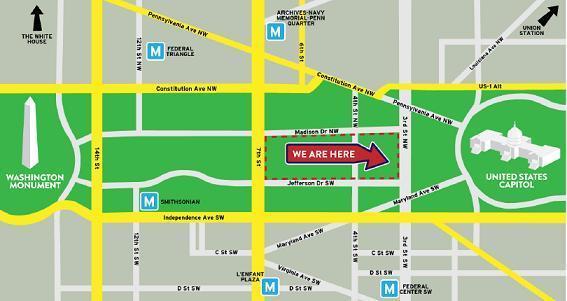
UPDATE:  7 Oct 10 Rally Point Identified for 30 Oct Sanity Rally

Sanity Rally (Inside the Red Dotted Lines)
Jon Stewart Full Story Online

Jon Stewart Plans ‘Restoring Sanity' Rally to Counter Glenn Beck Event–October 30

“We're looking for the people who think shouting is annoying, counterproductive, and terrible for your throat, who feel that the loudest voices shouldn't be the only ones that get heard, and who believe that the only time it's appropriate to draw a Hitler mustache on some is when that person is actually Hitler,” Stewart says on his Daily Show website.

The date, Oct. 30, “has no significance whatsoever,” Stewart says gleefully. “Ours is a rally for the people who've been too busy to go to rallies, who actually have lives and families and jobs (or are looking for jobs) — not so much the Silent Majority as the Busy Majority. If we had to sum up the political view of our participants in a single sentence . . . we couldn't. That's sort of the point.”

. . . . . . .

And lest anyone think it's just about answering Tea Party conservatives and the Beck-a-palooza last Aug. 28, Comedy Central's other wild and crazy news satirist, Stephen Colbert of the Colbert Report, says he'll hold a competing rally the same day, called “The March to Keep Fear Alive” to combat “creeping reasonableness.” Stewart's people “want to replace our fear with reason,” Colbert wrote. “But never forget ‘reason,' is just one letter away form ‘treason.'”

Short Review

Phi Beta Iota: These two individuals are making a huge contribution.   The is no underestimating the common sense of the American people BUT they have to be engaged, their voices heard, and integrity maintained in the three branches of government.

See Also:

DuckDuckGo Results for Coffee Party
DuckDuckGo Results for Restoring Sanity
Review: A Power Governments Cannot Suppress
Review: Wave Rider: Leadership for High Performance in a Self-Organizing World
Review: Getting a Grip–Clarity, Creativity, and Courage in a World Gone Mad
Review: Spoiling for a Fight–Third-Party Politics in America
Review: State of the Unions–How Labor Can Strengthen the Middle Class, Improve Our Economy, and Regain Political Influence
Review: Glenn Beck’s Common Sense–The Case Against an Out-of-Control Government, Inspired by Thomas Paine

Journal: MoveOn, Neighborhoods, & Democracy

11 Society, Civil Society, Collective Intelligence, Cultural Intelligence, InfoOps (IO), Methods & Process, Open Government

Foglio's Field Notes

Leif Utne's random rants, musings and meditations

Why MoveOn Should Introduce Me to My Neighbors

with 4 comments

Recently, my dad proposed in his back-page column in the May/June Utne Reader, titled “An Open Letter to MoveOn,” that the nation’s premier progressive organization should go beyond issue-driven campaigns and “lead a community organizing movement across America.” (Yes, in case you’re wondering, my dad founded Utne Reader, and I worked there as a writer and editor for eight years.)

I couldn’t agree more. I especially like his suggestion that MoveOn stage a series of large revival-style cultural events designed to introduce members to each other:

MoveOn could kick off the movement by hosting stadium-sized events, harking back to 19th-century chautauquas and tent shows. Attendees would sit together according to particular affinities: parents of young children, schoolteachers, health care workers, clergy, small-business owners, elders. Like-minded participants could share their ideas about particular issues, like clean, green energy and single-payer health care. Or, if seating were assigned based on zip code and postal route, people would meet their neighbors in a positively charged environment.

Read rest of blog….

Phi Beta Iota: We are hugely impressed by the combined convergence and emergence we see all around us.  The Internet is moving into phase 3, where it optimizes human collaboration including face to face encounters.  We will begin to follow Leif Utne.

Journal: Oregon First “Smart State?” Learn More…

Civil Society, Collective Intelligence, Cultural Intelligence, Methods & Process, Non-Governmental
Tom Atlee

Dear friends,

Do you live in Oregon?  Do you have friends, associations, networks in Oregon?  If you do, I'm urging you to spread the word on one of the most important developments toward a wiser democracy in the US.

Although most Oregonians don't know it — and you and I are going to change that — Oregon just held the first citizen deliberative councils ever to be officially authorized by a government in the US.  Oregonians live in the first state to officially bring the “voice of the whole” — a legitimate, deliberative voice of We the People, above and beyond partisan debate — into public discourse, into the homes of voters, and into the official business of government.

Here's what happened:  Two “Citizen Initiative Reviews” — panels of randomly selected ordinary Oregonian voters — have passed “informed public judgment” on two ballot initiatives Oregonians will be voting on this November.  Authorized by the state legislature and the governor, their thorough study, expert interviews, and deliberations have clarified the issues and facts so Oregon's voters can more intelligently decide how to vote, to reflect their highest values.  These ordinary citizens have cut right through the partisan noise and TV ads that muddy up the initiative process.

More Photos of Oregon

This innovation could revolutionize elections.  The initiative form of direct democracy could once again become a tool of the popular will.  Broader use of the Citizen Initiative Review process could overcome special interests bent on turning popular will against the common good.

The only thing needed now to turn this budding breakthrough into a full-fledged transformation is for Oregonians to read, think about, and talk about the Citizen Initiative Review statements in Oregon's Voter Information Booklets (see the links below).   So we need to tell all our friends and associates in Oregon to do that.  If enough people see these statements — and realize how incredibly valuable they are compared to the repetitive, manipulative partisan spin and mudslinging that usually fill the airwaves and Voter Information Booklets — they will demand more of this kind of We the People voice in more aspects of our political life and governance.

I want to stress how important this is:  This initiative goes beyond surveys, because it is deliberative and it reveals common understandings, not just individual opinions.  If this spreads, we'll find ourselves on a really different political playing field, with new rules of play.  This is a potential game changer.  We have a chance to make a difference with it RIGHT NOW, during this one month before elections.

Please do what you can.

Below is a message I received from Healthy Democracy Oregon who spearheaded this remarkable innovation:

Continue reading “Journal: Oregon First “Smart State?” Learn More…”

Journal: Third Parties “Crashing” Debates with IT

11 Society, Civil Society, Counter-Oppression/Counter-Dictatorship Practices, Cultural Intelligence, InfoOps (IO), IO Sense-Making, Methods & Process
Home Page

John Mertens to Use Multimedia Technology to Debate Candidates Despite Exclusion from the Official Debate, October 4th.

NEW HAVEN, Conn. — Despite earning a ballot line in the 2010 U.S. Senate Race in Connecticut, Dr. John Mertens is not invited to participate in the first post-primary U.S. Senate debate, in New Haven, Conn., Monday, October 04, 2010 from 6:30 – 9:00 p.m., but Mertens has found a way around this roadblock.

Using multimedia technologies to show the televised debate and candidates Blumenthal and McMahon’s answers (live), Mertens and his team will pause to allow candidate Mertens to answer each question before resuming the televised broadcast, giving equal voice to all three candidates. Olwen Logan, publisher of three online local news publications, writer and PR consultant, will be moderating the event.

“John Mertens’ broadcast is a brilliantly creative way of using technology to push back against the duopoly which continues to exclude him and other alternative voices from being heard,” said Christina Tobin, founder and chair of The Free and Equal Elections Foundation. “Voters everywhere deserve to hear from all candidates for public office so they can make educated decisions at the polls.”

“We’re inviting the audience to be citizen journalists during the debate through twitter, and to stay after to connect and discuss issues,” Mertens said.

Read More…

NIGHTWATCH Extract: On Warnings Good and Bad

09 Terrorism, Misinformation & Propaganda, Officers Call

Special comment on warning: In the past few days the US media has bombarded viewers and listeners with the latest State Department warning about an al Qaida threat in public places in European cities. The warning instructs travelers to not change their travel plans, but to be alert in public places, transportation hubs and gathering places.

It goes without saying that governments must disseminate such warnings, though reporting from Germany and France disputes the threat as stated in the US warning. However, there are some well established precepts of warning that the recent US warning ignores, at least as reported by radio and television.

The main purpose of any warning message, obviously, is to help keep people, companies, countries safe. Warnings do this by raising vigilance in order to generate appropriate reflexive responses. An appropriate reflexive response is a human behavior that is reasonable under the circumstances, that is, appropriate to the information about the threat. (See the writings of Irving Janis, Alexander George and many others for detailed explanations.)

Vigilance is fragile because it is a fear response that is difficult to sustain if the threat fails to materialize as damage.

The appropriateness of a vigilance response is related to the amount of fear-generating information in the warning plus the amount of reassurance it contains. For example, long experience has shown that blanket reassurance always negates vigilance. In practice, reassurance and vigilance cannot co-exist. Reassurance always trumps vigilance.

In attempting to raise vigilance, the latest warning messages advised travelers of potentially mortal danger, but then instructed them to make no changes in plans, which is a blanket reassurance message. The advice to be alert, but make no travel changes is almost certain to erode vigilance, except in the most skittish. It also makes little sense.

Another lesson form the history of warning concerns the content: how much information must a warning contain. Researchers in the 1960s compiled lessons for use by civil defense authorities in responding to natural disaster, such as hurricanes, as well as civil threats, including air raids.

They found that too much history and explanation negates vigilance. Familiarity breeds reassurance and thus, disregard of the warning. On the other hand, too little information breeds disregard because the audience does not know what to do or to avoid.

A problem with the weekend warnings as publicized is they contain no guidance about what to do or avoid. Everyone does something to protect themselves in the face of potentially mortal danger. The warning message advised travelers to not do those things, just be alert.

The US warning also includes a presumption that precautions are universal. Consider, during a recent trip to Europe, travelers could find that Charles de Gaulle airport in Paris had no visible security, but at Schipol airport in Amsterdam, commandos patrolled with slung sub-machineguns.

What constitutes reasonable precautions differs by country and by culture. Plus, what are the reasonable precautions travelers can take against Mumbai-style machine gun and grenade attacks at hotels and synagogues?

Good warnings – meaning, useful in keeping people safe — require careful crafting and drafting. The weekend warnings seem to be aimed at exonerating the government and placing on travelers the responsibility for being safe from terrorist attacks. Thus, if some US citizens were to die, the government could and would claim it had warned them to be careful, for whatever good that does.

NIGHTWATCH KGS Home

See Also:

Journal: US Travel Alert–Political and Fraudulent?

Definitions: “Self-Radicalized Militants”

noble gold