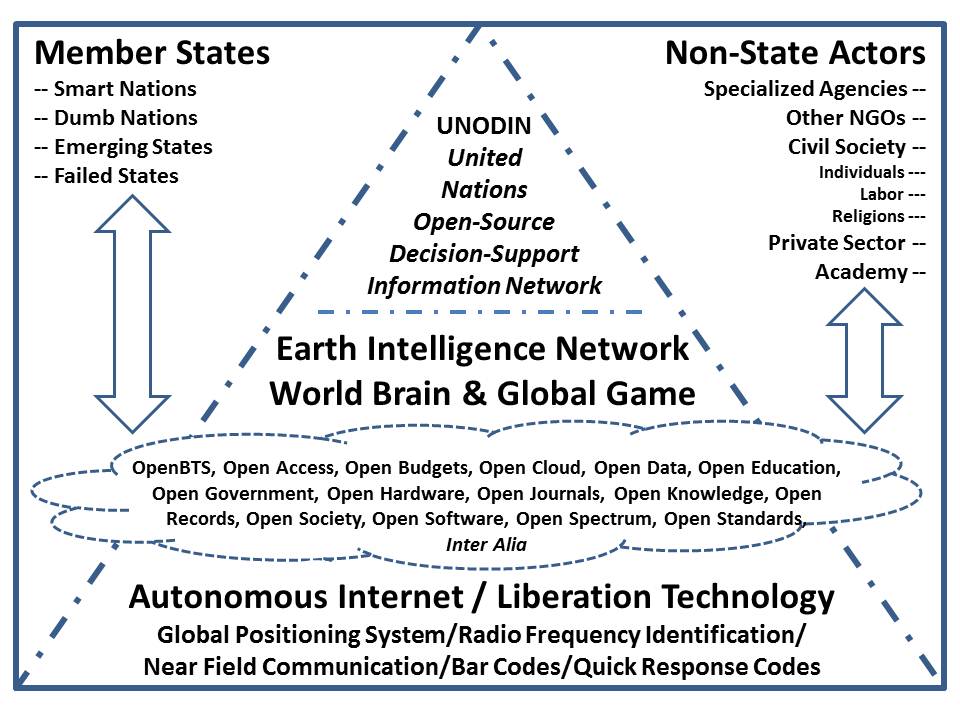
Source Figure 14

The truth at any cost lowers all other costs — curated by former US spy Robert David Steele.
Source Figure 14

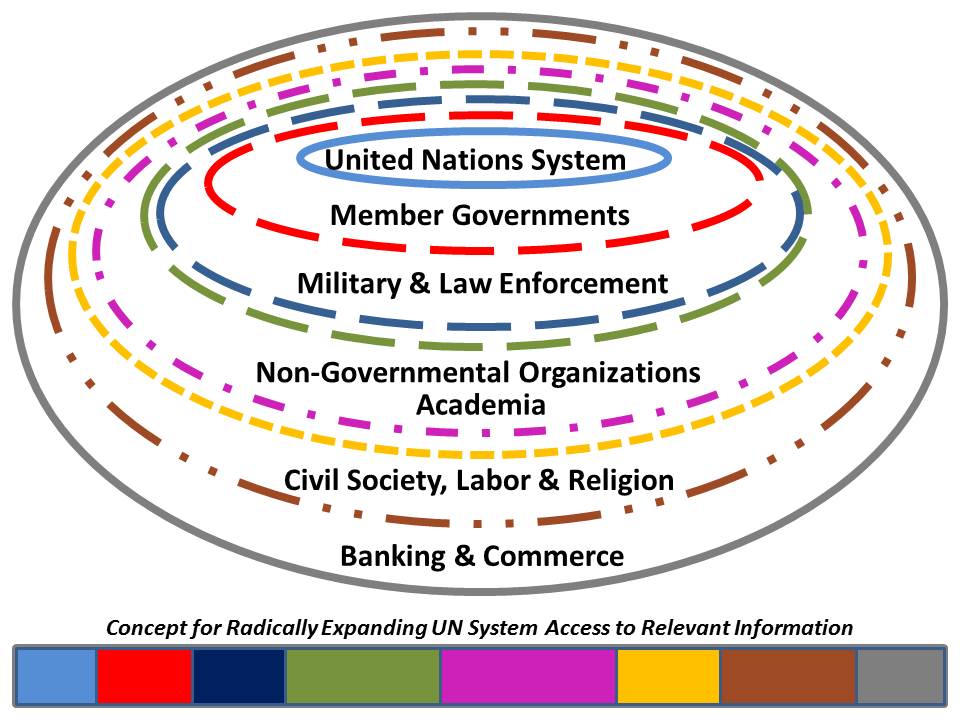
Source Figure 15

Google's ambitious book-scanning program is foundering in the courts. Now a Harvard-led group is launching its own sweeping effort to put our literary heritage online. Will the Ivy League succeed where Silicon Valley failed?
By Nicholas Carr on
MIT Tecnology Review, April 25, 2012
In his 1938 book World Brain, H.G. Wells imagined a time—not very distant, he believed—when every person on the planet would have easy access to “all that is thought or known.”
The 1930s were a decade of rapid advances in microphotography, and Wells assumed that microfilm would be the technology to make the corpus of human knowledge universally available. “The time is close at hand,” he wrote, “when any student, in any part of the world, will be able to sit with his projector in his own study at his or her convenience to examine any book, any document, in an exact replica.”
Brazil Squanders Chance At Geopolitical Influence; Kills Internet Rights Bill In Political Fiasco
Infopolicy: Yesterday, the Brazilian parliament effectively killed the much-heralded Internet Bill of Rights, the Marco Civil, that had been praised by entrepreneurs and free-speech activists worldwide. This follows a ridiculous watering-down and dumbing-down of the bill, at the request of obsolete industry lobbies. Having been permanently shelved, this means that Brazil has practically killed its chance of leapfrogging other nations’ economies – BRICS is now just RICS.
The Internet Rights bill in Brazil, the Marco Civil, was a marvel. It would have enabled Brazil to leapfrog most other economies today, skipping a whole generation of industries.
The Marco Civil would have established that;
Really, it was that good. Read it for yourself (in English).
Continue reading “Rickard Falkvinge: Brasil Kills Internet Bill, Loses Way”

Solar group to World Bank: Give us gas and oil’s $12B, and we’ll cool planet
Siemens: 880m euros’ worth of wind power orders since July
Phi Beta Iota: The current approach to solar and wind is mis-directed toward the traditional centralized capture and downstream distribution. Those costs are waste. Micro-girds, neighborhoods combining solar, wind, biogas, ambient, and all other forms of non-fossil fuel energy — including human bicycle power — is the lowest cost, smallest footprint, most sustainable approach to powering humanity.
Too many people consider secession bad, and do not understand the original right of independence. Here is a YouTube in Spanish with English sub-titles is relevant to Groeland, Scotland, Quebec, and Catalunya.
This documentar [y directed by Dolors Genovès and broadcasted by Televisió de Catalunya compares the reality of Greenland, Scotland and Quebec with Catalonia, and reflects about the following questions: Is independence/secession democratic? Would these new states be economically viable? How would EU react?
English subtitles. More information : http://www.tv3.cat/adeuespanya
