Review DVD: Humanity Ascending Series Part 1: OUR STORY featuring Barbara Marx Hubbard

5 Star, Consciousness & Social IQ, Intelligence (Collective & Quantum), Reviews (DVD Only)

DVD ConsciousnessCommon Sense and Clear Vision at its Very Best, June 4, 2009

Barbara Marx Hubbard

I met Barbara Marx Hubbard recently, and after reading and reviewing her book Conscious Evolution: Awakening Our Social Potential bouight everything else she has done and am working my way through it.

This DVD is truly great in multiple ways, including the imagery provided as the changing backdrop for the speaker, her own presentation, and the selection of very short clips interspersed throughout. This is not a very long DVD, but it is priceless and *very* easy to watch. Certainly something to share with friends before or after a dinner.

Three key points that stayed with me:

1) Women are coming into the own again. The top down patriarchal control model is not working. The matriarchal nurturing and circle mode is needed. Many do not know that in the beginning of human society we mere matriarchal because birth was a miracle and the blood connection from mother to child was indisputable.

2) The psycho-social development of individuals is vastly outpacing the much slower “organizational” societal evolution, and this gives rise to both conflict and alternative solutions that are still on the fringes.

3) Our values and minds have not evolved fast enough to control and contain the weapons and other capabilities we have been building, and this is a major threat. Today, some years after this was made, we face super-empowered individual with off-the-shelf access to nuclear and other weapons of mass destruction including explosives and poisons that can be manufactured at home.

The speaker was the “alternative” vice presidential candidate to Geraldine Ferraro at the Democratic Convention in 1984, and that in itself is a remarkable contrast: Ferraro was the “man's woman” seeking to compete on male terms; Hubbard was the woman's woman, seeking to compete on alternative terms.

All fascinating. I hope millions more hear her message, there is not a single negative note, all positive, all common sense, all vital.

Other books that I recommend:
Human Scale
Communitas: Means of Livelihood and Ways of Life
The Cultural Creatives: How 50 Million People Are Changing the World
Imagine: What America Could be in the 21st century
The Tao of Democracy: Using Co-Intelligence to Create a World That Works for All
Society's Breakthrough!: Releasing Essential Wisdom and Virtue in All the People
All Rise: Somebodies, Nobodies, and the Politics of Dignity (BK Currents (Hardcover))

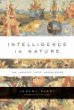
Review: Intelligence in Nature

5 Star, Nature, Diet, Memetics, Design

IntelNature5Extraordinary in Every Possible Way, June 4, 2009

Jeremy Narby

I read this book some time ago, but my fly-leaf notes are forever (one reason I don't borrow books), and I am catching up.

This book is extraordinary in every way possible, from well-developed presentation to eye-opening examples to a truly amazing bibliography that I enjoyed item by item.

Here are my notes, sorted to provide some coherence and appreciation.

1. The bottom line is that we have wasted 50 years since WWII when we could have been studying animal and plant cognition while also cultivating collective human intelligence. Instead we have been destroying nature, indigenous populations, and the very foundations of our complex Earth system of systems.

2. Although humans have the largest brains among the living species, and hence the most *potential*, we are NOT competitive with all others when it comes to sensing, sensibility, and harmonization with nature (both animal and plant.

3. Across the book I have notes on the excellence of the author's discussion of both the human brain's form and function, and the nature of plants and other animals as sensing, communication, foraging, fighting thinking beings.

4. Invertebrates *do* learn, the author discusses how science has erected false walls, to which I would add, one cannot understand what one cannot see [see 1491 for a fantastic description of how shaman's first saw the ships of Christopher Columbus).

5. Animals learn by wathching, bees have a very short lifespan adn are very fast learners, and I have a note: all this applies to how we might innovate in educating the five billion poor without needing to stuff them into classrooms (see Earth Intelligence Network for one concept, free cell phones and call centers that educate one cell call at a time).

6. The author, who has studied shamans in relation to nature in the past, places emphasis on the importance of indigenous knowledge, especially as articulated by shamans, and especially in relation to nature, pointing out that indigenous knowledge is ultimately validated by natural sciences.

7. Humans are a very young species with only 7,000 biological gneerations in comparison to other living things, but with a language skill that is the key to adaptation. The author is persuasive in his discussion of how animals and plants *do* communicate, and suggests that we should as a species be seeking to teach language skills to other species [as some have done so well with the gorilla community].

8. The author discusses the definition of intelligence, and what stays with me is that the root of the word is about choice, about making decisions, and that many other cultures define intelligence in ways that are distinct from our own, for example, emphasizing the ability to listen, to hear, to tell stories, to havea strong sense of ethics, etc. Further on in the book he refers to the 1974 definition by New Zealand philosopher and psychologist David Stenhouse, “adaptively variable behavior within the lifetime of the indivdiual.”

9. Bees understanding abstract concepts and slime solving a maze both stay with me. Although I have enjoyed Howard Bloom's work, including his chapter on Group IQ in an edited work, this book goes a long way toward deepening my appreciation for non-human intelligence in the senses of sensing, sense-making, and social action.

10. Birds in the Amazon are documented as knowing the difference between natives working with scientists and natives working with hunters.

11. I note “Wisdom is intelligence in harmonization with the past and the present, collective intelligence.” This is one of the books that has persuaded me that individuals can be smart, but only groups in the aggregate can be wise.

12. I have notes on rocks having souls, on sand beaches in the aggregate having a soul. That's a bit hard for me, but worth noting.

13. Killing nature also kills spirits and communications among distinct beings and communities, and I am reminded of Buckminster Fuller and his emphasis on being able to seek out all feedback loops, seeking to assure the integrity of each.

14. The Japanese get a great deal of credit in this book for pioneering the study of animals as inherently social and intelligence, and the author notes that the differences between Western and Eastern religions appear to faciliate Eastern science and retard (my word) Western science in this regard.

I have a final note: Integrity is where you start, intention is where you end. Integrity. Intention.

This is a SUPER book for anyone interested in exploring life.

Other books that I recommend in relation to this one:
1491: New Revelations of the Americas Before Columbus
Voltaire's Bastards: The Dictatorship of Reason in the West
Story of Philosophy: The Lives and Opinions of the World's Greatest Philosophers
The Lessons of History
The Fifty-Year Wound: How America's Cold War Victory Has Shaped Our World
Collective Intelligence: Creating a Prosperous World at Peace
Global Brain: The Evolution of Mass Mind from the Big Bang to the 21st Century
Conscious Evolution: Awakening Our Social Potential
Ecological Economics: Principles And Applications
Blessed Unrest: How the Largest Social Movement in History Is Restoring Grace, Justice, and Beauty to the World

Review: Anthropological Intelligence–The Deployment and Neglect of American Anthropology in the Second World War

5 Star, Intelligence (Government/Secret), Intelligence (Public), Values, Ethics, Sustainable Evolution

anthrointelIntersection of Humanity, Intelligence (Spy Type), and Ethics, June 4, 2009

David H.Price (ed)

I stumbled across this at a time when I was trying to understand the problems associated with the Human Terrain Teams (HTT) that according to their sponsor (a training and doctrine command without real-world ties),

[Human Terrain System] HTS is a new proof-of-concept program, run by the U.S. Army Training and Doctrine Command (TRADOC), and serving the joint community. The near-term focus of the HTS program is to improve the military's ability to understand the highly complex local socio-cultural environment in the areas where they are deployed; however, in the long-term, HTS hopes to assist the US government in understanding foreign countries and regions prior to an engagement within that region.

There are many flaws in the above official statement, not least of which that there is nothing new in this idea, and–as the book I am reviewing puts forward so well–the ethics of the method merits–demands–thoughtful discussion.

This book–and the modern anthropologists who are acutely–and righteously–aggrieved by the mis-direction of their craft–are a blessing. The USA in particular is so far removed from ground truth realities that as one World Bank executive put it to me (describing CIA analysts seeking explanations of an African failed state) as to be “breathtaking in their ignorance.” We *need* deep and broad anthropological understanding, but we must not pervert that craft in the process of engaging it.

I appreciated this book very much. We need more like it, addressing each of the social and scientific disciplines and the manner in which they might serve (or mis-serve) the public interest.

Here are some of my notes from this excellent work:

1. Professionally developed, a useful glossary.

2. Seeks to reconcile humanism with patriotism, the latter to be subordinated (in blunt terms, this means that rendition and torture are never okay, even when Presidents and General lie to you and say it is necessary).

3. The book provides an excellent tour of the past in which anthropologists and their craft have been used not to understand, but to manipulate and deceive.

4. I acquired an insight: we have failed to lead the social sciences toward educating our publics and our leaders so as to adapt to the globalized world. We persist in treating academia as a means to get what we want, regardless of whether or not it is righteous.

5. One learns in this book that the Japanese in the 1930's and the 1940's fully explored Islamic alliances against the West.

6. On multiple fronts across varied contributors the book suggests that we have made a mistake in subordinating education to nationalistic versions of history and nationalistic version of rights, and we have failed to raise generations of *humans* [and I can more or less self-certify we have also failed to raise generations of educated engaged citizens].

7. I come away from the book with a very strong feeling of respect for anthropologists–properly led and listened to–as the first line of expertise on all foreign affairs. [I wonder in passing how many anthropologists are serving in the Department of State today, or if the Secretary of State has ever asked for an anthropological study–and I do not mean the simple guides to local customs.]

8. As the Department of Defense declares that “stabilization & reconstruction” are co-equal to waging war (my own General Al Gray, then Commandant of the Marine Corps, called in 1988 for open source intelligence to justify peaceful preventive measures) it is not only clear that the social sciences must be applied to assure the development of healthy human relationships at all levels, but that anthropologists must be marshaled in the most constructive way possible–as many of them as possible, as soon as possible, and NOT wearing uniforms, body armor, and sunglasses.

9. I am persuaded by the book that British anthropologists are more nuanced and sophisticated than Americans (and probably spend more time in their countries of study, are more fluent in the language, and more patient in the observation).

10. As I seek to summarize what anthropology does I come up with two phrases: a) at its best, and b) the theory and practice of intra-cultural and inter-cultural exchanges, both positive and negative.

11. I put the book down realizing that there are millions and millions of displaced peoples that we have failed to study, assist, and resettle, and that in the end, this is anthropologies greatest failure.

Other notes from the margins:

a. “Justifiably disgruntled” domestic minorities are not being heard

b. Cultural cohesion is an antidote to propaganda

c. Rockefeller pioneered the use of anthropology to catalog Latin American resources, including cheap foreign labor, and then started foundations to carry on the work in the guise of charitable efforts.

d. Quotes to ponder: “our memory gaps have political consequences” and “socially-disengaged science is blind science”

e. Social formations are as important as scientific formations.

f. Anthropology will love have to live down its service to colonialism, militarism, and predatory immoral capitalism (as opposed to moral capitalism that does well by doing good)

g. Eugenics is anthropology in the devil's hands.

Sensational quote on the effects of secrecy on academic study:

“One of the side effects of secret programs like the M Project was that, as secrecy disengaged the normative, potentially self-correcting features of the open academic scientific process, members of research groups who became mired in fallacious thinking labored unchecked under increasingly questionable assumptions and flawed logic.” Page 141

We come full circle to the Army's Human Terrain Teams of today.

Other books I recommend:
Anthropologists in the Public Sphere: Speaking Out on War, Peace, and American Power
Strategic Intelligence & Statecraft: Selected Essays (Brassey's Intelligence and National Security Library)
The Health of Nations: Society and Law beyond the State
Consilience: The Unity of Knowledge
Statecraft as Soulcraft
Confessions of an Economic Hit Man
1491: New Revelations of the Americas Before Columbus
The Rise of Global Civil Society: Building Communities and Nations from the Bottom Up
A More Secure World: Our Shared Responsibility–Report of the Secretary-General's High-level Panel on Threats, Challenges and Change
High Noon 20 Global Problems, 20 Years to Solve Them

Review: Global Values 101–A Short Course

5 Star, Values, Ethics, Sustainable Evolution

Global ValuesDeep Insights into Values as the Core of Being Human, May 30, 2009

Kate Holbrook et al

This is the book that forced me to realize I was a radical, not a moderate. As Howard Zinn defines it, a radical is someone of any political persuasion who realizes that government is the problem, not the solution. I've always been a small government fiscal conservative with socially liberal tendencies, but as I watch Obama emulate Bush, I realize that it does not matter who is President–the existing two-party crime system and the existing bureaucracy married to entrenched special interests have no interest at all in “the public interest.”

The best thing I can say about this book is that it forced me to think, it gave me several “aha” experiences, and it gave me hope at the same time that if affirmed the roots of my anger at how badly we are governed….because we have failed to self-govern and abdicated to those who would profit from the public rather than help the public profit.

Among my many flyleaf notes:

1) Voices not heard; need to reinvent the wheel of stakeholders

2) 40 million at the bottom in the USA–make it possible for them to vote without losing work time and the pendulum with swing.

3) Education of the young must begin now. We must break the paradigm of rote education (indoctrination) in which we beat the creativity out of our kids by the fourth grade.

4) RETURN women to the executive ranks with appreciation for their skills and mindsets (among which I count smaller egos and more insight)

5) CREATE the online national ballot and use it whether or not the two criminal parties now dominated by their extremists accept it or not. It will achieve a public momentum of its own.

6) CONSIDER a tax revolt (this was written long before tea parties today, and I am still waiting for Grover Norquist to actually ask for a tax revolt, but we are getting there).

7) DEMAND line item votes by the public, at the DISTRICT level.

8) Robert Reich calls for a return to grass roots democracy, I think of a Sunshine Cabinet and Jim Rough's Citizen Wisdom Councils.

9) Juliet Schor of the Center for the New American Dream is especially inspiring, focusing on quality of life that is full of connections (leaps in connectivity are what power leaps in civizilational advances).

10) Consumer culture reduces health of society and the mental health of individuals.

11) Need to restore local manufacturing bases and regional approaches [to the twelve core polices that we define at Earth Intelligence Network.]

12) CAMPAIGN for bringing your money home, NOT spending $1 trillion a year to wage war “over there” and “in our name”

13) Focus on making government corruption and corporate crime NOT pay.

14) Lani Guinier for Attorney General!

15) Create Artists Network [for each of the twelve policy domains]. This book finally persuaded me that art is an absolutely essential part of cultural communications of substance.

16) Follow the money, illuminate the money. [I believe we need to get to “true costs” being available at any cell phone by looking at the bar code.]

17) Prisons down, schools up. [There is growing demand for the legalization of marijuana, and I personally believe all those serving sentences on marijuana should have their terms commuted).

18) Need a Minister for Families and Gender. Swanee Hunt is memorable; I see the need to mandate the presence of women in all negotiations and strategic forums. The men are not doing well.

19) Martha Minow on truth and reconciliation grabs me. I have notes on contrition and forgiveness training, on transcending boundaries.

20) Jennifer Leaning for Surgeon General.

21) Paul Farmer is gripping as well, 21st Century is a whole new ballgame, our children will shape the future, we are the last of the destroyers.

22) Peter Singer is great on ethics. Amy Goodman inspires (as do all the authors, these are the ones that made it into my notes), Democracy Now. I have a note; we need a Truth News Network (TNN). I actually offered that idea to Ted Turner years ago, never head back. CNN is no where near reality or coherence, nor are any of the other networks.

I have a lot of other notes to myself; I will end with some other book recommendations that accentuate the positive, and the observation that this book is fundamental to our future. We all need to absorb the wisdom of the authors that came together under the four editors.

See also:
Radical Man
The Cultural Creatives: How 50 Million People Are Changing the World
Imagine: What America Could be in the 21st century
On the Meaning of Life
The Lessons of History
The Tao of Democracy: Using Co-Intelligence to Create a World That Works for All
Society's Breakthrough!: Releasing Essential Wisdom and Virtue in All the People
Collective Intelligence: Creating a Prosperous World at Peace
The Radical Center: The Future of American Politics
Radical Middle: The Politics We Need Now

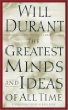
Review: The Greatest Minds and Ideas of All Time

5 Star, Philosophy

Greatest MindsAccurate Title, Wonderful Book, May 30, 2009

Will Durant

Some will obviously quibble over Will Durant's selections, but I will not. I got hooked on Durant after reading his 1916 doctoral disseration (a full thirty years after I acquired the multi-volume History of Civilization), and have been working my way through various “short books” in the past six months.

Here are my fly-leaf notes.

Slams H. G. Wells early on. Durant seems to be the anti-thesis to Marx.

He opens by pointing out that the greatest minds of history were those of philosphy and science, not captains of war, priests, or artists.

As is my tendency, I praise the book by summarizing it. Below are his lists.

Ten greatest thinkers:
01 Confucius as a moral philosopher
02 Plato for first university, philosophy as means of remolding world
03 Aristotle as philosopher and scientists, creating new science
04 St. Thomas Aquinas for bridging between knowledge and belief
05 Copernicus (Poland) for astronomy and mathematics, shifting attention from man to the cosmos
06 Sir Francis Bacon, for knowledge as remodeling power, opened eyes to nature (see my review of Intelligence in Nature, forthcoming).
07 Sir Isaac Newton, for scientific mastery of modern thought
08 Voltaire for ending despotism and starting the enlightenment, but see my review of Voltaire's Bastards: The Dictatorship of Reason in the West
09 Immanuel Kant for mind over materialism, restored faith to co-equal status with science
10 Charles Darwin for state of nature, life as conflict, natural selection

Ten greatest poets:
01 Homer
02 “David”
03 Garupedes
04 Lucretius
05 Li Po
06 Dante
07 Shakespeare
08 Keats
09 Shelly
10 Whitman

Ten “Peaks” for Humanity
01 Speech
02 Fire
03 Conquest of Animals
04 Agriculture
05 Social Organization
06 Morality [see my review of The Lessons of History)
07 Tools
08 Science
09 Education
10 Writing & Print

I have a note to myself in which I iclude the Internet in #10, and see #11 as being “True Cost” accounting, see my reviews of, among others:
Blessed Unrest: How the Largest Movement in the World Came into Being and Why No One Saw It Coming
Ecological Economics: Principles And Applications
The Shock Doctrine: The Rise of Disaster Capitalism

Twelve Major Dates in Human History
01 4241 BC Egyptian Calendar
02 543 BC Death of Buddha
03 478 BC Death of Confucius
04 199 BC Death of Socrates
05 44 BC Death of Caesar
06 BC-AD Birth of Christ
07 AD 632 Death of Mohammed
08 AD 1294 Death of Roger Bacon, birth of gunpowder
09 AD 1455 Gutenberg Press
10 AD 1492 Columbus discovers America (see 1491: New Revelations of the Americas Before Columbus
11 AD 1769 James Watt and the Steam Engine
12 AD 1789 French Revolution

One can only speculate at what he might have picked in the past century or two, that alone would make a marvelous semester-long course.

The book has a lovely index of all names, both those considered and those considered but not selected.

I consider this a classic gift item, along with Ralph Nader's The Seventeen Traditions and Durant's Lessons of History linked above as well as his edited work drawing out others On the Meaning of Life

For my own contribution, a work marvelously edited by Canadian PhD candidate Mark Tovey, see Collective Intelligence: Creating a Prosperous World at Peace. All of the work I have sponsored or produced can be found for free at OSS.Net.

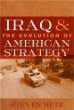
Review: Iraq and the Evolution of American Strategy

5 Star, Iraq, Strategy

Iraq MetzSerious Strategy–Serious Whole of Government Strategy, May 29, 2009

Steven Metz

I am disappointed to find so few reader reviews of this work. I read it in galley, and provided the following as it appears on the back jacket:

“Steven Mets is considered by many to be one of America's greatest strategists. It is no wonder, therefore, that this elegant book provided a balanced overview of the numerous ways in which America fails to devise strategy that can effectively guide inter-agency planning, capabilities development, and operations.”

I've known the author for over fifteen years now, and consider him along with Colin Gray (UK) to be among a tiny handful of strategists that have displaced the Cold War self-proclaimed strategists who totally hosed the planet in a 50-year spree of unilateral militarism–all brawn and no brains.

This book is as a graceful, elegant, diplomatic–all the stuff I don't do–a “reading” on where our flag officers failed to question illegal orders, down-right idiotic orders, all of which have led to an elective war that we won only because the Iraqi Army under Sadaam Hussein was totally incompetent, and we used up every air weapon in the inventory, a great many of which did not hit the target as advertised, and a disconcerting number of which did not explode at all.

Metz is the tip of the iceberg that lies quietly at Carlisle, Pennsylvania. The Strategic Studies Institute is a jewel waiting to be noticed by the new National Security Advisor, who would do well to ask them to connect him with all those now being shut out by the “closed circle” that has captured President Obama and is feeding him pap–dangeously uninformed unintegrated pap.

See also, among the many books that I include in the annotated bibliography for the first book listed:
Election 2008: Lipstick on the Pig (Substance of Governance; Legitimate Grievances; Candidates on the Issues; Balanced Budget 101; Call to Arms: Fund We Not Them; Annotated Bibliography)
Modern Strategy
The Fifty-Year Wound: How America's Cold War Victory Has Shaped Our World
The Unconquerable World: Power, Nonviolence and the Will of the People
War is a Racket: The Antiwar Classic by America's Most Decorated Soldier
Why We Fight
The Battle for Peace: A Frontline Vision of America's Power and Purpose
Fiasco: The American Military Adventure in Iraq
Vice: Dick Cheney and the Hijacking of the American Presidency

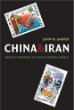
Review: China and Iran–Ancient Partners in a Post-Imperial World

5 Star, Country/Regional, Diplomacy
China Iran
Amazon Page

Foundation Stone for Serious Global Understanding,

May 30, 2009

John W. Garver

This is a sensational book, dry as only a serious academic can be, but so absolutely original and fundamental as to make me smile and cheer. This is what a book should be–original, properly sourced, wonderful appendix that is a chronology of Chinese and Iranian substantive state-level contacts, and so on.

Although the author cannot cover it all, the length of the book and the totality of this work move the book from four stars to five. This is a VERY important book for anyone who wants to move beyond the failed analytic frameworks and corrupt policy frameworks of the past and into reality in the 21st Century.

The bottom line up front: when it gets down to “either or” China will favor its desire for US comity over its respect for Iranian anti-hegemonism, but over time, China has executed a very skillful balancing act that has helped Iran restore its role as the central power in the Persian-Middle East region.

For me the huge eye-opener–I actually have goosebumps and am posting a variation of the map on page 292 of this book to share my appreciation–was the role that Pakistan and Iran play in giving China access to the sea and Middle Eastern energy as well as African natural resources.

Although India is not discussed in this book, I learn that the author has written Protracted Contest: Sino-Indian Rivalry in the Twentieth Century and that will be in my stack for my next long trip. This book is vitally important and as I reflect on all the books that I have absorbed over the years, this one stands out as “the way it should be done.” This is a perfect book at the strategic level. It could be complemented by others writing companion books, for example, I would love to see a book studying both Chinese and Iranian inroads into Africa and Latin America, illuminating both the processes and the cross-overs. The kind of thing CIA should be doing but does not, for at least four reasons: children as analysts; security obstacles to outreach; lack of a holistic analytic model; and lack of access to open sources that are not online, in English, and easily processed.

There are chapters on Iran and China in relation to Xinjiang Muslims; Chinese support to the Iranian nuclear program both directly and via Pakistan (siginficantly, China stood down on support related to weaponizing nuclear and also stopped Iranian use of Silkworm missiles from China against shipping). The three page chronology on this aspect is fine detail. The chapter on Chinese-Iranian military exchanges draws heavily on the Stockholm International Peace Research Institute and I am reminded of that organization's priceless contributions. The last three chapters cover US-Taiwan in relation to China-Iran; economy, and energy.

The 1000 word limit is a good one for reviewers, so I will be concise in the sharing of my other flyleaf notes:

1. PRIMAL FACTORS. The Chinese-Iranian relationship can be traced back and has been active since centuries before Christ. At the same time, China and Iran represent the apex of regional powers who have not been co-opted or corrupted by Western colonial hegemony backed by unilateral militarism. I can only anticipate they will be the “last man standing” on their home ground.

2. Iranian Constancy. Both Shah and Post-Shah have played US and Russians consistently, and both have been concerned about US and Russian incursions into the Indian Ocean.

3. Pakistan. Both China and Iran have convergent interests in Pakistan, and Pakistan is a key player on many fronts–a book by this author on Pakistan in relation to China, Iran India, Central Asia would be phenomenal.

4. China Core Concept. The strategic core concept that China pursues is “Unified Front.” The author elaborates. I note the contrast with US core concept of “American exceptionalism” and unilateralism (Obama is Empire as usual, I have sponsored a new meme, “Free Obama.” Between the two corrupt parties working for Wall Street, and the persistent special interests and Versailles bureaucracy, nothing has changed). At the operational level, the author discusses Chinese “Realistic Prudence.”

5. China-Iran Geopolitical. The map with embedded text on page 46 is so very good I am uploading that at well. This book is well illustrated, well-documented–a pure pleasure.

6. Civilizational Rhetoric. The author opens with this, and I love it. The author makes it clear that this matters [for decades I have called for historical intelligence, i.e. show me every Chinese, Vietnamese, Philippine, and Malaysian statement on the Spratley Islands going back 200 years, but to no avail–CIA does not do history or culture in any meaningful sense of the word, partly because they cannot read in the original languages and do not access ofline original books.]

7. Concerns About Iran. The author enumerates Chinese concerns about Iran, one wonders if any US policy bubbas have pursued this aspect of US-Chinese relations. See page 28.

8. End of the Shah. The author documents how China missed the rise of the Khomeini regime as did the USA. The clerics did not know China had 20 million Muslims, and this ultimately helped the dialog.

9. Stage Two. The author provides a lovely review of how China ramped up its relations with Iran in the aftermath of negative global opinion over its repression of demonstrations, the collapse of the USSR, and the unilateral aggressiveness of the USA in the Middle East.

10. Iranian Roadmap. The author outlines how Iran's strategic plan began with Lebanon, then moved over to Afghanistan, and next plans to focus on Central Asia and Xinjiang in China, the latter in the face of Chinese resistance. Pakistan needs its own book.

11. Gulf I and Gulf II. The public record available to the author suggests that both Iran and China opposed both US invasions (Gulf I and Gulf II) because they put a US armed presence or footprint in the area. My personal view is that Iran played the US for a sucker with Chalabi as an agent of influence, and got the US to knock of Hussein and displace the Taliban.

I have to stop here. This is a wonderful book, a deep serious contribution, a real original, absolutely essential for both undergraduate and graduate students as well as policy and business adults.

Other strategic books I admire that are top down in nature (this is a bottom up strategic book. You have to search for my summary reviews, Amazon buries serious reviews with any negative votes:
The Lessons of History
The Fifty-Year Wound: How America's Cold War Victory Has Shaped Our World
The Unconquerable World: Power, Nonviolence and the Will of the People
A More Secure World: Our Shared Responsibility–Report of the Secretary-General's High-level Panel on Threats, Challenges and Change
High Noon 20 Global Problems, 20 Years to Solve Them
Anthropological Intelligence: The Deployment and Neglect of American Anthropology in the Second World War
Global Values 101: A Short Course
Modern Strategy

Vote and/or Comment on Review
noble gold