Review: The Fifty Dollar and Up Underground House Book

5 Star, Environment (Solutions), Intelligence (Collective & Quantum), Values, Ethics, Sustainable Evolution

50 DollarBeyond 5 Stars–Inspirational, Valuable, Practical, September 27, 2008

Mike Oehler

This book is phenomenally wise, useful, easy to read, and plain inspiring. I picked it up this morning intending to get back to it tonight and ended up not putting it down at all.

I have bought and read a number of underground building books as well as log cabin books, and would sort them into three categories:

A Expensive log homes for the really rich

B Moderate earth-covered (not quite underground) homes for the middle

C This book, for those who truly want to integrate innovation and low cost with deep Earth comfort and resilience and all the good stuff that goes with it.

This book, in short, is in a class of its own. Most will notice that it was first offered in 1978. As the USA goes through a major financial crisis that proves nothing has changed–Wall Street and the two “parties” it has bought down to their lost souls are still here, still looting the commonwealth–this book proves that it is timeless.

There is indeed a great deal of land across this great country where one can still afford to “dig in,” and this could not be a better time to be thinking about renting what you have now in the close in fragile areas, and setting up alternative housing with adjacent land for a basic Life Garden.

As I went through each chapter I found the list of materials, the prices, the diagrams, and the text all coherent, concise, and totally “on target.” Black and white photographs throughout, and a handful of color photographs in the middle, round the book out.

The book ends by discreetly recommending a tape series on design as the key element for success, and one that professional architects generally overlook (as we are all learning, the “experts” in finance and other areas are really “credentialed” but NOT experts).

I LIKE THIS BOOK. As an afterthought, it is recommended by just about every major alternative living, green energy, and sanity outpost (Vermont, Oregon, Washington State) reviewer. This book is a “good deal” and inspiring to boot.

Review: The Secret War with Iran–The 30-Year Clandestine Struggle Against the World’s Most Dangerous Terrorist Power

3 Star, Country/Regional, Threats (Emerging & Perennial), War & Face of Battle

Secret WarFour on one side as useful propaganda, three in larger context, September 27, 2008

Ronen Bergman Ph.D.

I was torn between three stars (the book is terribly flawed in the larger scheme of things) and four stars for the very interesting and well-presented details that while they are strictly from an Israeli perspective and the book is almost certainly an Israeli propaganda operation against the US public in general and US Congress and generals more specificially, are in and of themselves correct.

The author focuses exclusively on painting the Iranians in the worst possible light, while ignoring the Saudi Arabian and Egyptian misdeeds, and never mentioning the 42 of the 44 dictators that the US Government regards as its best pals because they pretend to support the Global War on Terror (GWOT) which is the ninth high level threat to mankind.

I settled for three because this book is completely out of context, grossly exaggerates the Iranian threat, and fails to demonstrate any semblance of the relative costs and benefits of waging peace. Just prior to sitting down with this book for a few hours I read a much shorter monograph (free online), “U.S. Counterterrorism in Sub-Saharan Africa: Understanding Costs, Cultures, and Conflicts” by Donovan C. Chau. His top-level premises are instructive, and condemn the book on Iran to three stars: Dr. Chau suggests that our three priorities for defeating sub-saharan terrorism must be:

1. Seizing and holding the moral high ground

2. Winning the stuggle for perceived legitimacy

3. Pursuing restrained counterterrorism responses

I will not belabor the point further–it is flat out NUTS for the USA to be spending $60 billion a year on the 4% it can steal with largely worthless technology and largely incompetent human spies; and $600-900 billion a year on a heavy metal military that is next to useless in 90% of the situations we face into the future.

Israel, the US neocons that were party to the 935 lies that led America to war in Iraq, now an occupation, and both of the political parties in the USA that share the spoils while looting the US taxpayers, have become cancers on humanity. In no way does this condone terrorism or excuse the terrible depravity and dereliction of the Arab regimes, but in the larger context, I see very clearly that the US and Israel are pursuing their own terrorist tactics “in our name,” while completely abandoning the much more sensible and much more likely to succeed grand strategy (neither country has a strategy, only campaigns of tactics) of striving for a prosperous world at peace.

For the single stupidest book ever created by US Generals that totally agrees with this book:
Endgame: The Blueprint for Victory in the War on Terror

For additional information helpful to those who wish to be fully informed and not be held hostage to one point of view:
A More Secure World: Our Shared Responsibility–Report of the Secretary-General's High-level Panel on Threats, Challenges and Change [this book is free online search for title]
Election 2008: Lipstick on the Pig (Substance of Governance; Legitimate Grievances; Candidates on the Issues; Balanced Budget 101; Call to Arms: Fund We Not Them; Annotated Bibliography) [This book is free online search for title.]
The Search for Security: A U.S. Grand Strategy for the Twenty-First Century
The Lessons of History
Web of Deceit: The History of Western Complicity in Iraq, from Churchill to Kennedy to George W. Bush
Legacy of Ashes: The History of the CIA
The Looming Tower: Al Qaeda and the Road to 9/11 (Vintage)
The Lucifer Principle: A Scientific Expedition into the Forces of History
Sleeping with the Devil: How Washington Sold Our Soul for Saudi Crude

2008 IJIC 21/3 The Open Source Program: Missing in Action

Articles & Chapters, History of Opposition, Intelligence (Government/Secret), Intelligence (Public)
21.3 Fall 2008 DNI OSINT MIA
21/3 Fall 2008 DNI OSINT MIA

“The Open Source Program: Missing in Action”

Responds to Hamilton Bean's “The DNI's Open Source Center” in IJIC Summer 2007, a copy of which is available on this web site under References.  Click on Frog to go there.

Bean on OSC
Bean on OSC

Click Here to Subscribe To or Buy Articles From IJIC

Review: McCain–The Essential Guide to the Republican Nominee

3 Star, Biography & Memoirs, Politics

McCainNOT a Guide–A Coffee Table Book, Lots of Photos, No Stats, September 3, 2008

Mark Silva

This book is on sale in supermarkets, and I spent time with both this book and its counterpart for Barack Obama.

I recommend both books as coffee table books, lots of great photos and general information about the individuals, but this book is NOT a guide.

There are no statistics, no tables, no comparisons, no meaningful GUIDE to who the candidate is and what they really stand for based on their actual behavior, votes, known acquaintances, etcetera.

What would be extraordinarlily valuable, if the publishers want to do a fast make-over, is a SINGLE book that compares all four candidates On the Issues and on their Values and what it all means for the federal government's future, the budget's future, and the country's future.

For an idea of what I am talking about, look online for “On the Isuses,”
and see especially the way they plot on a map relative differences.

See also the book below:

The Political Junkie Handbook (The Definitive Reference Book on Politics)

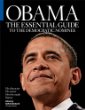
Review: Obama–The Essential Guide to the Democratic Nominee

3 Star, Biography & Memoirs, Politics

Obama 1NOT a Guide–A Coffee Table Book, Lots of Photos, No Stats, September 3, 2008

Michael Tackett

This book is on sale in supermarkets, and I spent time with both this book and its counterpart for John McCain.

I recommend both books as coffee table books, lots of great photos and general information about the individuals, but this book is NOT a guide.

There are no statistics, no tables, no comparisons, no meaningful GUIDE to who the candidate is and what they really stand for based on their actual behavior, votes, known acquaintances, etcetera.

What would be extraordinarlily valuable, if the publishers want to do a fast make-over, is a SINGLE book that compares all four candidates On the Issues and on their Values and what it all means for the federal government's future, the budget's future, and the country's future.

For an idea of what I am talking about, look online for “On the Isuses,”
and see especially the way they plot on a map relative differences.

See also the book below:

The Political Junkie Handbook (The Definitive Reference Book on Politics)

Review: Getting to Zero Waste

5 Star, Environment (Solutions)
Amazon Page

First to Market, More to Come

September 3, 2008

Paul Palmer

The concept discussed by this book has been recently featured The Necessary Revolution: How Individuals And Organizations Are Working Together to Create a Sustainable World, and I therefore anticipate a flood of books on this topic, but hopefully helping each specific industry get to its own understanding.

Other books I recommend include:
Pandora's Poison: Chlorine, Health, and a New Environmental Strategy
High Tech Trash: Digital Devices, Hidden Toxics, and Human Health
The Blue Death: Disease, Disaster, and the Water We Drink
Cradle to Cradle: Remaking the Way We Make Things
Green to Gold: How Smart Companies Use Environmental Strategy to Innovate, Create Value, and Build Competitive Advantage
Green Chemistry and the Ten Commandments of Sustainability, 2nd ed
Natural Capitalism: Creating the Next Industrial Revolution
High Noon 20 Global Problems, 20 Years to Solve Them
The Future of Life

Vote and/or Comment on Review

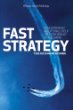
Review: Fast Strategy–How strategic agility will help you stay ahead of the game

4 Star, Change & Innovation, Strategy

Fsst StrategySuperb, Needed by the 90% of Leaders Who Don't Read, August 26, 2008

Yves Doz

Minus one star for publisher being lazy about using Amazon tools to help readers see the table of contents and otherwise “look inside the book,” and for lack of deeper reference to externalities that deeply impact on emerging business models, including natural capitalism, moral capitalism, and transcendent capitalism.

I found the content engrossing, while on every page I realized that with every word, the authors are describing precisely what 90% of the “successful” leaders refuse to do–and especially those in the secret intelligence community that I know so well.

The authors blend deep strategic experience with Nokia and at INSEAD among many other qualifications, and I recommend this book be read together with two others that I recently reviewed:

The New Age of Innovation: Driving Cocreated Value Through Global Networks
Execution Premium

Book's bottom line: leaders must create and nurture counterintuitive blending–sustained constant blending, of the following:
+ Strategic sensitivity
+ Collective commitment
+ Resource fluidity
+ Management depoliticization

They summarize the challenge early on: “interdependent opportunities in the world of convergence and fuzzy enterprise boundaries and of rapid emergent systemic change in environment.”

Before summarizing the really compelling points made by the authors, I want to skip ahead to their appendices and list the thirteen toxicities that define most successful businesses today, as well as government agencies and most especially secret government agencies that are, in the words of one Defense Intelligence Senior Leader (DISL) cited in Still Broken: A Recruit's Inside Account of Intelligence Failures, from Baghdad to the Pentagon: “institutionalized lunacy.”

The thirteen toxicities (buy the book for these pages alone):
– Tunnel vision
– Tyranny of core business
– Strategic myopia
– Dominance mindset
– Snap judgment and intellectual laziness
– Imprisoned resources
– Business system rigidity
– Ties that bind
– Management mediocrity and competence gaps
– Management divergence
– Heady charm of fame and power (or in secret world, lack of accountability for failing to deliver anything truly valuable)
– Expert management (making operational decisions instead of strategic)
– Emotional apathy

In the book in you are looking at it in a bookstore, pages 124-126 are a priceless inventory of the drivers, consequences, and toxicities that undermine strategic sensibility, collective commitment, and resource flexibility. Any CEO or Board of Directors can use these three pages alone to fail just about any company, right now, across the board.

Now here are the gems I pulled from this worthy offering:

STRATEGIC SENSITIVITY
+ Casting a wide net (as I suggested to AGSI in 1994)
+ Multiple levels of analysis (see image–threat and opportunity change depending on the level of analysis)
+ Including understanding of one's creeping and binding “lock ins”

COLLECTIVE COMMITMENT
+ Keep the top level meetings focused on strategy
+ Create culture of holistic accountability instead of silos
+ Make time for full information sharing and interaction
+ Treat personal objectives and concerns as critical inputs
+ Have a FAIR process that allows for needed UNEQUAL resource allocation

RESOURCE FLUIDITY
+ Some resources are more fluid (money, brand) than others (key people, fixed inputs, special relationships with clients)
+ Challenge is cognitive and political rather than procedural or financial
+ Generative growth (on the edges) is key–one reason I hate tethered devices like the X-Box or the iPhone
+ Must MAXIMIZE knowledge SHARING with OUTSIDE parties
+ Experiment

MANAGEMENT DEPOLITICIZATION
+ “Most top teams are, for natural reasons, collections of independent individuals with strong opinions rather than inspiring and innovative teams.” Page 79 citing Teams At the Top. In my own experience and that of Ben Gilad, author of Business Blindspots (order from UK Infonortics), the INFORMATION reaching most managers is biased, late, incomplete, filtered, and poorly focused–thus making opinions even more dangerous.
+ Authors feel strongly that teams need to be organized for mutual interdependencies, with incentives to match.
+ “Cognitive diversity is a key precondition to high-quality internal dialogs.”
+ Use young rising leaders as a shadow management team focused on the future
+ Have an OPEN strategy process
+ Leaders must learn to ASK and ADAPT rather than to DECIDE and TELL.

Other key points that grabbed me and are memorable:
+ Strategy now is continuous
+ Strategy now is less about foresight (still important), more about insight across every domain
+ Agility is the key ingredient, means being able to think and act differently (so much for most leadership teams)
+ Emotions matter–people not products innovate, learn to use this

I put the book down (at the beach, in Rohoboth) with three ideas bringing this encounter to a close:

1) Mature *successful* businesses die of strategic paralysis and the thirteen toxins

2) Three core values the authors use to conclude are

+ Dedication to EVERY client

+ Innovation that matters to both the company and the world

+ Trust and personal responsibility in ALL relationships.

3) Strike three for the US Intelligence Community and the US Government.

Here are some other books I consider to be, as with this one and the ones cited above, worthy of top minds seriously interested in doing the right thing for country, company, and customers:
Collective Intelligence: Creating a Prosperous World at Peace Battle for the Soul of Capitalism]]
One from Many: VISA and the Rise of Chaordic Organization
The Fortune at the Bottom of the Pyramid: Eradicating Poverty Through Profits (Wharton School Publishing Paperbacks)
Natural Capitalism: Creating the Next Industrial Revolution
The Wealth of Networks: How Social Production Transforms Markets and Freedom
THE SMART NATION ACT: Public Intelligence in the Public Interest

I had something to do with the last two and hope I can be forgiven for including them–it is not possible to perform as a smart company in the context of a dumb nation, nor is it possible to co-create value without recognizing that the gold standard now consists of meeting individual needs without social or environmental costs being externalized.

Excellent book. Buy it–this review is a taste, not the meal.

noble gold