“Thinking about “the challenges of a open practice” gets me thinking about what “radical openness” could mean. On the surface, it could just mean really, really, extremely, very open. But that's a overly colloquial understanding of the word radical, as in “totally rad,” as opposed to “radical critique.” Extreme or drastic is not necessarily radical. Radical requires a fundamental transformation, change so deep it goes to the root, the “radix”. Radical has the a same linguistic root as “radish,” the edible root vegetable of the Brassicaceae family. Thus, to be radical, a practice has to get at the root, to work towards a fundamental transformation, no matter how moderate or gradual.
What happens next, should be fairly obvious to anyone who has followed US meddling in recent years. The US is now at war with China, which means that it will use all of its resources and capabilities, except it’s military assets, to defeat the enemy. The United States will not militarily engage an enemy that can fight back or inflict pain on the US. That’s the cardinal rule of US military policy. While that precludes a nuclear conflagration, it does not exclude a hyperbolic propaganda campaign demonizing China and its leaders in the media (Sadly, the comparisons to Hitler and the Kaiser have already started), asymmetrical attacks on Chinese markets and currency, excruciating economic sanctions, US-NGO funding for Chinese dissidents, foreign agents and fifth columnists, intrusions into China’s territorial waters and airspace, strategic denial of critical energy supplies, (80 percent of China’s oil supplies are delivered via the Malacca Strait to the South China Sea) and, finally, covert support for “moderate” jihadis who are committed to toppling the Chinese government and replacing it with an Islamic Caliphate. All of these means and proxies will be employed to defeat Beijing, to derail its ambitious Silk Roads strategy, to curtail its explosive growth, and to sabotage its plan to be the preeminent power in Asia.
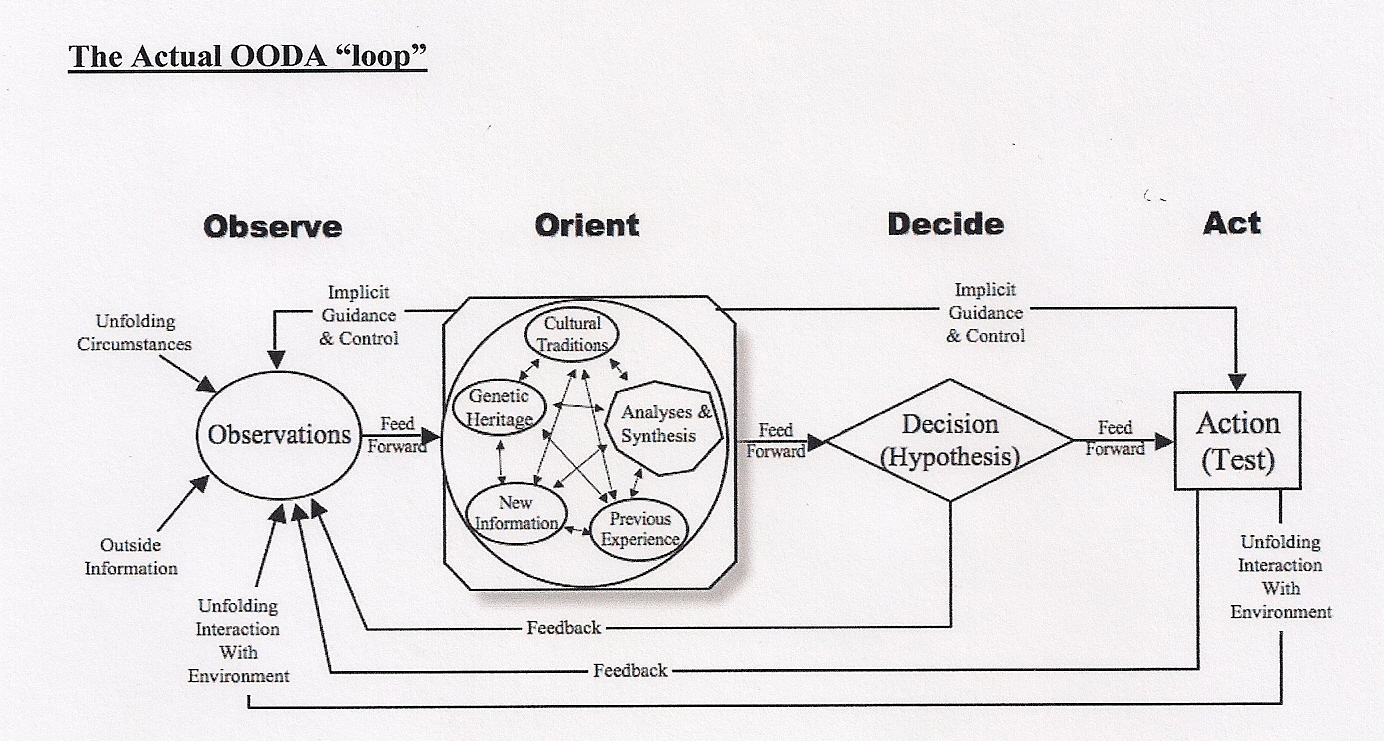
Below is a brilliant essay that shows how cartographic hallucinogenics can capture one’s Orientation and create an incestuously amplifying* decision cycle that disconnects a “policy” maker from real world. * Note to new readers: For an explanation of how “incestuous amplification” operates to disconnect a decision maker from the exigencies of the real world read my essay, Incestuous Amplification and the Madness of King George.
Here’s the Sanders in an ABC News interview with George Stephanopoulos from May 3:
STEPHANOPOULOS: So if you lose in this nomination fight, will you support the Democratic nominee?
SANDERS: Yes. I have in the past.
STEPHANOPOULOS: Not going to run as an independent?
SANDERS: No, absolutely not. I’ve been very clear about that.
Ironically, it seems that the DNC and left-critics of the Sanders campaign agree on a very important fact: they believe Sanders will attract a number of young voters and activists, then dutifully tell them to vote for Hillary when he drops out.
This is an English translation of Arthur De Grave's interview in French. Cross-posted from OuiShare.
Michel Bauwens is one of the pioneers of the peer-to-peer movement. Theoretician, activist, and public speaker, he founded the P2P Foundation in 2005. His work, both rich and complex, is built around the concepts of networks and commons, and lays the conceptual foundations of a production system that would serve as an alternative to industrial capitalism. I had the opportunity to meet him at the French release of his latest book, Saving the World: Towards a Post-Capitalist Society with Peer-to-Peer (published by “Les Liens qui Libèrent”).
Between the local WiFi networks uniting neighbourhoods and whole cities being developed a bit all over the world, and a satellite based cheap broadband link into the internet, we just might end up with a net that is more resilient in the case of disasters and less open to surveillance, which today is quite ubiquitous…