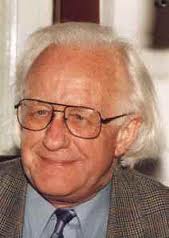
Johan Galtung: Battle for the Globe — the Subsconcious Contest Between DMA & HDT

Advanced Cyber/IO, Cultural Intelligence, Peace Intelligence
0Shares
Johan Galtung
Johan Galtung

Who runs the world? The Subconscious*)

Not one or a group of persons, not one or a group of countries. But they may serve as instruments for scripts engraved on the deeper recesses of their minds, not the conscious, easily retrievable ones. Scripts that are too trivial, obvious, too painful/shameful and hence repressed. Jung calls them archetypes; they often come in syndromes.

Imagine that deep down an actor–person, gender-generation-race-class, state-nation, region-civilization–is programmed for two forces in the world, one good the other evil, and sooner or later there will be a final battle for the victory of one over the other: the solution.

Continue reading “Johan Galtung: Battle for the Globe — the Subsconcious Contest Between DMA & HDT”

Berto Jongman: Bits, Bytes, & Stuff

Uncategorized
0Shares
Berto Jongman
Berto Jongman

CYBER: Guccifer Files on Hacking Spree

CYBER: Resetting Cyber System with High Security Computing

CYBER: The Internet of Things Is Wildly Insecure — And Often Unpatchable

Global Disasters Killed More, Cost Less In 2013

Gulf region emerges as a cyber conflict flashpoint

LIFE: Ortega's Revolt of the Masses (1929) Explains Today

LIFE: Study Reveals How You can Upgrade your Genes

RUSI Security Predictions

SYRIA: Sharmine Narwani: Syrian Opposition is not United and Cohesive

Click on Image to Enlarge

SYRIA: UN Stops Updating Syrian Death Toll

SYRIA: Why Al Assad's Rule May Endure

Timeline of the Far Future (InfoGraphic)

THREAT: Global Terrorism Database

THREAT: Insecurity & the Retrograde State

THREAT: Saudi Arabia moving ahead with Gulf union

Top Risks 2014 (Eurasia Group)

1 – America’s troubled alliances
2 – Diverging markets
3 – The new China
4 – Iran
5 – Petrostates
6 – Strategic data
7 – Al Qaeda 2.0
8 – The Middle East’s expanding unrest
9 – The capricious Kremlin
10 – Turkey


Robin Good: Curation Tools and Techniques for Journalists

IO Tools, Media
0Shares
Robin Good
Robin Good

Paul Bradshaw, author, blogger and reference point for anyone doing online journalism, illustrates with a rich series of examples, the different types of content curation tools and techniques that can be effectively used by journalists today. The article covers basic curation principles and guidelines as well as offering a set of mini-tutorials on curating lists, playlists, image boards, maps and timelines, news magazines and more. Informative. Resourceful. Examples-rich. 9/10 Full guide: http://onlinejournalismblog.com/2013/09/30/curation-tools-tips-advice-journalism/

Journalism *is* curation: tips on curation tools and techniques

Amazon’s Jeff Bezos’ in his talk to employees at the Washington Post said: “People will buy a package … they will not pay for a story.” Previously that package was limited to what your staff produced, and wire copy. But as more content becomes digitised, it is possible to combine more content from a wider variety of sources in a range of media – and on any one of a number of platforms.

Read illustrated post with links.


4th Media: Big Banks Are Manipulating EVERY Market to the Tune of Trillions of Dollars

Commerce, Corruption
0Shares

4th media croppedBig Banks Are Manipulating EVERY Market to the Tune of Trillions of Dollars

RBS Pays $600 Million for Manpulating Interest Rates … But Big Banks Are Manipulating EVERY Market to the Tune of Trillions of Dollars

Interest Rates Are Manipulated

Bloomberg reports today:

Continue reading “4th Media: Big Banks Are Manipulating EVERY Market to the Tune of Trillions of Dollars”

Stephen E. Arnold: Information Black Holes + Findability

Commerce, Corruption
0Shares
Stephen E. Arnold
Stephen E. Arnold

Information Black Holes: Autonomy and Its Value Proposition

I follow two or three LinkedIn groups. Believe me. The process is painful. On the plus side, LinkedIn’s discussions of “enterprise search” reveal the broken ribs in the body of information retrieval. On the surface, enterprise search and content processing appear to be fit and trim. The LinkedIn discussion X-ray reveals some painful and potentially life-threatening injuries. Whether it is marketing professionals at search vendors or individuals with zero background in information retrieval, the discussions often give me a piercing headache.

Continue reading “Stephen E. Arnold: Information Black Holes + Findability”

Stephen E. Arnold: Fraud in Academic Publishing

Academia, Corruption
0Shares
Stephen E. Arnold
Stephen E. Arnold

The Slipping Standards in Academic Publishing

There is a troubling article over at Priceonomics titled, “Fraud in the Ivory Tower.” The post begins with the tale of former Tilburg University professor Diederik Stapel, who was found in 2012 to have fabricated or manipulated data in at least 30 papers that had been published in peer-reviewed journals. This case is a dramatic example of a growing problem; Fang Labs reports that instances of fraud or suspected fraud tripled between the 2002-2006 period and 2007-2011. Why the uptick?

We’re reminded that the famed “publish or perish” academic culture grows ever more demanding. At the same time, policies at scientific journals often mean that research integrity takes a back seat to provocative assertions.

We learn:

Continue reading “Stephen E. Arnold: Fraud in Academic Publishing”

Stephen E. Arnold: Free Big Data Mining Book — Mining of Massive Databases

IO Impotency
0Shares
Stephen E. Arnold
Stephen E. Arnold

Free Data Mining Book

We enjoy telling you about free resources, and here’s another one: Mining of Massive Datasets from Cambridge University Press. You can download the book without charge at the above link, or you can purchase a discounted hardcopy here, if you prefer. The book was developed by Anand Rajaraman and Jeff Ullman for their Stanford course unsurprisingly titled “Web Mining.” The material focuses on working with very large data sets and emphasizes an algorithmic approach.

Continue reading “Stephen E. Arnold: Free Big Data Mining Book — Mining of Massive Databases”