
Advancing Human Intelligence Integration for GEOINT and the IC
6-8 May 2013 Arlington Virginia
Download the Human Geography 2013 Brochure

The truth at any cost lowers all other costs — curated by former US spy Robert David Steele.
Advancing Human Intelligence Integration for GEOINT and the IC
6-8 May 2013 Arlington Virginia
Download the Human Geography 2013 Brochure

Humanitarianism in the Network Age: Groundbreaking Study
My colleagues at the United Nations Office for the Coordination of Humanitarian Affairs (OCHA) have just published a groundbreaking must-read study on Humanitarianism in the Network Age; an important and forward-thinking policy document on humanitarian technology and innovation. The report “imagines how a world of increasingly informed, connected and self-reliant communities will affect the delivery of humanitarian aid. Its conclusions suggest a fundamental shift in power from capital and headquarters to the people [that] aid agencies aim to assist.” The latter is an unsettling prospect for many. To be sure, Humanitarianism in the Network Age calls for “more diverse and bottom-up forms of decision-making—something that most Governments and humanitarian organizations were not designed for. Systems constructed to move information up and down hierarchies are facing a new reality where information can be generated by any-one, shared with anyone and acted by anyone.”
The purpose of this blog post (available as a PDF) is to summarize the 120-page OCHA study. In this summary, I specifically highlight the most important insights and profound implications. I also fill what I believe are some of the report’s most important gaps. I strongly recommend reading the OCHA publication in full, but if you don’t have time to leaf through the study, reading this summary will ensure that you don’t miss a beat. Unless otherwise stated, all quotes and figures below are taken directly from the OCHA report.

Doctor Steven Greer has been on the front-lines of the UFO-Disclosure and Free-Energy Movement for over a decade. Greer is the founder of the vaunted Disclosure Project that interviewed/documented over 200 former military personnel about their experiences with UFOs, ETs, and Exotic Technologies under oath/signed affidavit.
Later this month Greer and his team will be releasing Sirius, a crowd-funded documentary that may very well eclipse the impact of Disclosure Project. Only time will tell.
UFO documentary reveals “humanoid of unknown classification” (OpenMinds, 3 April 2013)
Sirius Theatrical Trailer – Dr. Steven Greer, UFO's, Extraterrestrials, Alternative Energy (YouTube, 2:20)
 Fourth Estate 2.0 puts innovation above the fold
EXTRACT
The Tribune, which is known for its strong coverage of Texas politics and policy, has become proficient at taking information that’s either massive or confusing (or both) and distilling it down to a format more suitable for public consumption. The data is accompanied by related news stories that give context to the numbers.
Lawmaker Explorer, for example, is an interactive tool that launched earlier this year, allowing the public to learn the degree to which 180 state legislators’ personal interests (i.e. stock holdings, property listings) conflict with public interest when passing bills and shaping policy. Its data came from old-fashioned reporting, and the tech team figured out how to present the information. You can use a search box, click on head shots, sort by party, office or occupation.
Public Schools Explorer is a comprehensive database of the 8,500 public schools in the state of Texas. There are searchable applications for160,000 state inmates; salaries of 665,000 public employees; and 6.5 million contributions to candidates and political action committees.
ProPublica is also leading the way in nonprofit news media applications, graphics, databases and mapping. One of its most popular, with more than 4 million page views: the Dollars for Docs survey, which is a database of more than $2 billion in payments from drug companies to health care providers. It was developed in an effort to learn more about the relationship between drug companies, medical professionals and the effect on patient care.
‘Gravity-powered lamps' offer ray of hope
Light powered by gravity with no running costs aims to replace kerosene lamps in developing world.
Solar, wind, tide – now there is a new renewable energy which may bring light to the developing world. It is a simply-designed light powered by gravity with no running costs and no hidden extras.
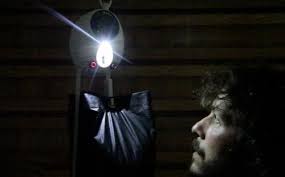 The ultimate goal of the gravity light is to wean the developing world off kerosene lights that can cause fires, are expensive and have been linked by researchers to millions of early deaths due to exposure to household air pollution.
After a few more design tweaks, the product will be ready to ship out for trial, and if feedback is good, production will begin in earnest.
Al Jazeera's Jessica Baldwin reports from London.
“The innovation is the placing of these documents into one place and in a database which can be searched by the public. That makes them accessible in a way not seen in the past.”
Wikileaks publishes 1.7m US diplomatic records
Wikileaks says it has created the world's largest searchable collection of US diplomatic documents
Wikileaks has published more than 1.7 million US diplomatic and intelligence reports from the 1970s.
They include allegations that former Indian PM Rajiv Gandhi was a middleman in an arms deal and the first impressions of eventual British PM Margaret Thatcher.
The documents have not been leaked and are available to view at the US national archives.
Wikileaks says it is releasing the documents in searchable form.
Much of the work has been carried out by the website's founder Julian Assange while he has been holed up at the Ecuadorean embassy in London.

A visual model showing the value of open data
Prof. Robert Appleton of Ryerson University recently told me: “In most fields, the language [of communication] is still dominated by words and numbers.” I think he is right. Think about the daily routine in most organizations. We produce reports and strategy papers. We often forget to convey this knowledge into tangible pictures and stories.
Visualize Business Models
I bought the book Business Model Generation: A Handbook for Visionaries, Game Changers, and Challengers [72 slides free online at SlideShare] by Alexander Osterwalder. First, this book provides and easy understandable and visual approach for capturing the value and the implications of business models. This book is a useful “ready to use” tool to change the way in which you approach your work. Roger Martin, an advocate for design thinking in business says: “Businesspeople don’t just need to understand designers better – they need to become designers.”
Second, the book itself has a new business model. It is co-created by 470 practitioners.
Value Model of Open Data
Continue reading “Jean Lievens: Wikinomics Model for Value of Open Data”
