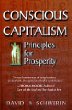
+ Economic crisis we are experiencing is a blessing. We NEEDED this kind of large systemic failure to wake us up.
+ Systems, such as capitalism, are value-neutral. It is the individuals whose personal and social and cultural values determine the direction and nature of the system.
+ Values are a means of teaching what works for the long run. Individuals that cheat others know deeply that they are less worthy and soiled, but they get away with it, and the community does not protest, provided there is a certain level of global stabilization. When everything goes bad, then values re-assert themselves as “timeless.”
+ Politicians follow rather than lead. In the absence of public engagement, they follow the money.
+ “There is an influx of consciousness coming into the planet.” The new generation of young people have a different consciousness and appear to be ready to adopt longer views, less selfish views.
I really like the above point, and am reminded of Will and Ariel Durant, and their Lessons of History, that specifically isolated morality as a strategic value that is priceless.
The author is a phenomenal speaker and the message in this book is not out of date at all, but I do want to alert Amazon customers to the imminent availability of his new book, “Conscious Globalization.”
From my own reading, I am listing below 5 books for each of two groups:
This book has been translated into Chinese and is in its second mass printing in China. From my own listening to this author in person, I draw out the lesson that capitalism is a system for innovation and individual entrepreneurship, and that no system is sustainable that seeks–as the USA does–to consume 25% of the earth's resources for the benefit of 5% of the global population.
Worthy of time and money, could have been better, June 25, 2009
The Amazon review above stinks. Ignore it.
I would never, ever, have known of Morning Light if I had not been the only other person in an advanced meterology class in Seattle under master weatherman Lee Chesneau. The skipper Jeremy, the navigator Piet, and the back-up navigator Chris, and I, spent a full week together. I ended up feeding them and the instructor a lot of sushi.
These three were a cut above the norm, but one of the things I learned from being with them was just how normal the crew was, and the fact that they were giving up a working position in order to carry a camaraman–in other words, they came in second to a world-class professional crew even though handicapped by one cargo camaraman. I was surprised not to see this mentioned in the film.
As for the film, it had me on the edge of my seat and as mundane as some may find aspects of the film–not exactly a James Bond movie, and certainly not a drama with hotties such as Wind–for anyone who loves sailing, this is absolutely a great film to view alone or as an excuse for a gathering of like-minded folk.
My biggest disappointment in the film is the lack of detail on training–absent my comment and my direct experience, no one would know they got advanced meterology training, or that their initial southern pick went against everything they were taught (the wind rotates counter-clockwise). Nor did I learn anything of other training.
From talking to them I learned far more about the training and the details of equipping the boat, e.g. they were each allowed one small sack of personal items, and as the boat was put together there were furious arguments about the exact weight of the navigation light at the top of the mast, and the weight of the wire from the light to the power source. That is the kind of stuff I was hoping would be in this film.
So a bit disappointing, but a superb contribution and one that I would recommend as a gift to any aspiring sailor from high school onwards.
Our Bunker Hill-a STAKE in the Heart of “The Borg”, June 27, 2009
Michael Vlahos
I consider this book one of the most important books of our time, for it takes on “the Borg” at an intellectual level in a cultural context, and in so doing, speaks truth to power: our Emperors (“the Borg”) are naked and ignorant.
Early on he points out that ours is not the first globalization, and that previous globalizations have demonstrated that new identities rise within globalization and *cannot be put down* (his emphasis). New ideas, counter-establishment ideas, cannot be suppressed, and ultimately triumph in new consciousness at multiple levels. States struggle vainly, equating everything “new” with being a “threat,” and ultimately collapse under the weight of their own ignorance and inability to adapt.
The first few chapters suggest that our reaction to 9-11 opened a Pandora's box, that AF-IQ are our Waterloo, and that “non-state actors” is a generic term for all that is outside the state.
He specifies six “identity” migration paths: networks of conversion and subversion (e.g. the Muslim Brotherhood and the Pentecostals); autonomous urban subcultures (e.g. gangs); emerging nations; fighter fraternities; militarized Bucellani (vandal elites, e.g. the Taliban, a state within a state); and our own cross to bear, intercessor security sub-cultures (e.g. our military-industrial complex to which I would add, a Congress lacking in integrity).
TWO MAJOR POINTS:
1. The US Military is no longer Of, By, and For We the People, no longer a collective citizenry that is armed–in brief, the militarization of national policy has made us arrogant, ignorant, and repugnant.
2. By resisting change we are promoting change. I cannot help myself, I think of the anti-Borg from outer space that grows when we nuke it, shrinks when we show love.
The author points out that every US military intervention into a Muslim society has failed; that our failures lead to new formulas (reformations) rather than new directions (transformations); and that in being drawn in and maintaining the chaos space, we are feeding the metamorphosis of non-state cocoons into butterflies very hard to hit with an artillery shell or even an aimed bullet.
The middle of the book expands on the theme of war as “creative destruction” (a mantra in the commercial intelligence world), while pointing out that in ignoring morality, the Napoleonic and Clauswitzian essential (“the moral is to the physical as three is to one”–today I would make it 10:1) the US is giving up the very power that matters, and failing to understand that identity is stronger than materiel. He points out that the “others” have commitment, sacrifice, collective effectiveness, breeding in battle, are fighting on their home ground, and achieve transcendence in resisting the US. Meanwhile, in the US, 1% do the fighting and the other 99% are asked to go shopping.
P26: “America's problem comes with the discovery that it is merely the midwife rather than the godfather. We fight so as to get nothing from those we legitimize.”
I have a note culture is identity is being is sacred and together form consciousness.
The author is critical of Al Qaeda and its many mistakes, but credits them with drawing the US out into creating the chaos space within which other indigenous forces are rising.
His section on method discusses the utility of history and anthropology, both foreign “denied areas” to the USG IMHO.
The author points out the obvious that is not so obvious to those sacrificing America's blood, treasure, and spirit in our name, i.e. two thirds of humanity is “the other” living the Hobbsian life that is “poor, nasty, brutish, and short.,” For these people, war is an entry point to negotiations, and the new players acquire legitimacy by out-lasting (not necessarily out-fighting) US forces.
As we move toward the conclusion the author speculates that we may be headed for a new Middle Ages with a global pandemic, climate change, and an energy crunch (to which I would add water crunch).
AF-IQ went wrong in five ways:
1. Liberation fizzled (I add, because neither Rumsfeld nor Gates are serious about waging peace)
2. Al Qaeda showed up in Iraq (the author neglects Iran's glee and strategic leverage)
3. No miraculous reconstruction (according to Paul Wolfowitz , “at their expense”)
4. No democratic transformation (to have expected one was idiocy or mendacity)
5. World did not, will not, accept the “Long War”
Chapter 8 on “fit” credits Martin van Creveld with the term, and elegantly discusses how our leaders went to war, ordered others to war, without the slightest understanding of “the other.” The “American way of battle” that Tony Echeverria has pointed out is not a way of war at all, has been, in the author's words, “the helpmate to enemy realization.”
On page 176 the author itemizes our “transformation” rules set and concludes it is flat out wrong.
1. Situational awareness (based on remote technologies)
2. Precision killing (ineffective for individuals)
3. Rapid dominance (not so fast)
4. Kill enough of the enemy and their leaders, and resistance will fold (simply not so).
PP191-192 are a stake in the heart of COIN–it is not wrong, it is simply ignorant and oblivious of the strategic Whole of Government and Whole Earth ramifications of spending all of our money on a lemon. COIN is (my words) “Borg triumphant.” COIN is “bento-box consciousness” and RAND–normally a supplicant cheer-leader– has outlined its demise in detail.
P202: “The events of 9/11 drove us back to Great War, but this time without *the people.* This Great War was *and remains* a war of the leadership and its tribal confederacy. It is a state-military enterprise, but far more significantly, *it is also now a state-military liturgy.* (Emphasis in original.]
The author notes that the “other” has a faster learning curve than we do, and on page 182: “Today's non-state actors know us better than we wish to know them.” This is an indictment of the USG.
Nobel Prize Material–Elegant, Exudes Integrity, a Joy to Read, June 27, 2009
Antoon De Baets
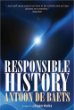
This is, in my opinion, a Nobel-level contribution to all scholarship as well as to humanity. The author is at the intersection of history and human rights, but I also see him as having provided a definitive typology of responsible scholarship that exudes INTEGRITY, the one word that captured the essence of Buckminster Fuller and his ideal to create a world that works for all with disadvantage to none.
See the image I have posted for a number of other book covers and the core “data pathology” concepts that undermine our ability to create a prosperous world at peace.
The author is also responsible for Censorship of Historical Thought: A World Guide, 1945-2000, a book that is grotesquely over-priced by the publisher, so with sadness I must limit my foundation for praising this author on the basis of this single properly-priced volume.
As with most books I consider special I began by reading the notes (40 pages) and the bibliography (18 pages), and from these extracted the following terms I place in alphabetical order:
The book does not contain a biography of the author, searching for <dr. A.H.M. (Antoon) de Baets> yields his contact information, I have copied and loaded his photo from another site.
I learn that 2005 was the first time in history that “abuse of history” is formally defined as a meaningful concept, by the International Committee of Historical Sciences. The author is a founding leader of the Network of Concerned Historians, generally in support of human rights investigations.
Table 1.1 on page 13 is so valuable I am loading an image to honor the author. I am not doing this for the many other more complex tables that represent deep nuanced thinking and a philosophy of history that is GOOD. Buy the book.
On page 14 he gives us two definitions:
+ The abuse of history is its use with intent to deceive.
+ The irresponsible use of history is either its deceptive or its negligent use.
Table 1.2, 4 pages (19-22), is an exquisite typology of abuses within irresponsible history.
Table 1.3, 3 pages (26-28) is a delightful itemization of 19 general motives for historical writing, with many more refined motives included as subsets.
Table 1.4 on page 34 lists 22 attributes of abusers, and I cannot help but think of how easily they describe the most senior officials of most governments and corporations.
The author discusses the nature of dictatorships and their abuses as well as the post-dictatorship abuses that characterize the handing of their archives. I am of course reminded that the USA today is “best pals” with 42 of the 44 dictators discussed in Breaking the Real Axis of Evil: How to Oust the World's Last Dictators by 2025, *and* that Leon Panetta, the Director of the Central Intelligence Agency, is refusing Congressional demands for archives on CIA's role in rendition and torture.
I learn from the chapter on defamation and how restrictive defamation laws are used to repress the truth. I also learn that the courts have made clear that charges of anti-Semitism as a means of repressing honest criticism of Israel and the Jewish lobby do NOT enjoy the same standing as normal charges of defamation because the anti-Semitic smear campaign violates rights of others rather that addressing the truth of the matter.
The author provides a fascinating discussion of judicial deference to historians in recognition that arriving at a best truth is a specialized craft.
The second half of the book on responsible history is equally engaging and most professional. It covers the duties of the living to the dead and the rights to memory and history. The author concludes that the dead do not have rights, but the living do have duties to both the dead of the past and the unborn of the future. Table 4.2 on pages 134-137 is a phenomenal listing of moral and or legal wrongs to the dead.
In examining memory and history, the author concludes, with full and proper documentation of work by others, that memory is a foundation for thought and therefore is a right; and that in exceptional cases the government can and must intervene to establish a right to the truth that is an essential aspect of transitional justice and is a right of the larger social group that has been wronged, not just of an individual. I learn–and perhaps this is Dutch humor but I appreciate it–that habeas corpus has a counterpart in history, habeas data.
The final chapter discusses and rejects eight reasons not to have a code of ethics for history, and then lists ten on page 187 that I provide in abbreviated form below.
He concludes that the past will not go away and will remain both an area of conflict and abuse, and an area of reconciliation and responsible use. I am taken with one of the last lines in the book, on page 198:
“…historical writing is not an ordinary operation of memory. It is a rather peculiar operation of factual memory, based on freedom and integrity, r3espect, and the careful and methodically determined search for truth.”
This book is unique! It is in my view one of the most important works published in recent memory, and it has value for the future of humanity in defining the moral obligations of all professional researchers, not least of which are the spies–intelligence collectors, analysts, and managers.
Unique, Not a Substitute for Manuals, But Practical Clever Sense, June 28, 2009
Hal Roth
I stayed up late to finish this book, and regret the publisher has not seen fit to offer Amazon readers a “Look Inside the Book.”
I am adding this book to my list of great sailing manuals, handbooks, and other guides, with the observation that this book is in no way a substitute for those more detail oriented step by step books BUT this book is also unique. It is PACKED with real-world experience and clever sense–much beyond common sense–that is literally priceless. Put clearly, I would not leave this book out of my calculations in planning to acquire and manage an offshore journey that includes an ocean crossing.
Chapter 15 on “Can You Be Seen At Night” is alone worth the price of the book. I have NEVER seen this much useful detail anywhere else, including the so-called everything guides. The author excels at providing contact information and specific recommendations and I absolutely would not go to sea in the future without buying the masthead light he recommends in the book. I also realized that the 65 MacGregor, which I have my eye on, falls just within the 65.6′ limits of international regulations on masthead lights sufficing (when sailing), and personally think MacGregor is making a mistake in thinking about a 70′ version.
This book has FOUR chapters on storm management, and I have NEVER seen it explained more sensibly, in logical progression. I am not a lifelong sailed despite a provisional D Skipper rating (less celestial), so these four chapters are for me the equivalent of a life-time tutorial that I badly need.
While speaking of celestial, this book persuaded me I have to get on with that qualification. The author is compelling in describing the circumstances under which GPS could go out, both locally or by military dictat, and I finally appreciate the urgency of having celestial capability in extremis.
The rest of the book is a joy. I now wish I had done this when my three boys were still in middle school range. The chapter on home schooling is fantastic, with lots of detail, and I am fully convinced that the author is correct when he says that two hours of focused study a day easily equal a “full” school day with all its distractions and change-ups.
The chapters on fuel for cooking and fuel for heating are both very important, and marvelous supplements to the more sterile ground as covered by others. The author ranges widely, covers the pros and cons well acorss the various fuel categories, and I put down the book knowing a great deal more. This merits a special comment: this author is gifted at talking sense. I understand his words more easily than the more formal manuals.
Final chapters include one on nine ideas covering tools, water, flashlights, mast climbing steps, nonskid desk surfaces, ship's book (history and details of every sail, fitting, etc.), cockroaches, enhancement to the topping lift, and stuffing box leaks with ACE bandages in or out of the hull.
The book does not mention piracy, so I am loading a graphic from an article I wrote recently, and anticipate the need for a global guide to piracy and rapid response services. I also see a need for fully concealable sniper rifles that are impervious to salt-water.
No one needs my review of this superb film, this annotation is just a marker for those who follow my generally non-fiction reading and viewing.
Johnny Depp has become an icon for me, a brand name. One of my teenagers brought this home and I put it on background while doing paperwork, but the TV is above my desktop and I watched every single minute, stopping as necessary when leaving the room.
I admire the reviewer that has researched Jack the Ripper more deeply and tells us that we have been let off the worst of the worst. That's fine by me. Between Johnny Depp's performance, the other stars in the cast, the over-all screenplay and the period depiction, this was simply a fine offering.
I might offer that Heather Graham shows great promise, brining to mind such stars as Jodie Foster and Julianne Moore.
I'd like to see more reviewers use the “Insert a Product Link” that Amazon offers, instead of just typing out the name of a book or DVD.

 Straight from the Author: Systems are Value-Neutral, June 25, 2009