Best Book Clancy Has Offered Recently, Zinni is Superb!,
June 10, 2004
Tom Clancy
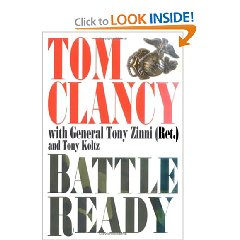
For the serious, this book absolutely merits a careful reading, together with Dana Priest's “The Mission: Waging War and Keeping Peace with America's Military,” and–for a fuller and free overview–my varioius reviews on emerging threats, strategy and force structure, and why our current “military only” approach to foreign policy is ineffective.There are some tremendous gems in this book, some of which I summarize here.
1) Zinni is mpressive in his grasp of grand strategy, of the urgency of understanding the threat, devising a full approach that mixes and matches *all* instruments of national strategy, and that focuses–as Zinni learned to focus in Viet-Nam, on the hearts and minds of the people rather than the force on force battles (a means to an end, not an end in themselves).
2) Zinni's understanding of war comes across very early in the book when he describes the six completely different wars that took place in South Viet-Nam, each with its own lessons, tactics, and sometimes equipment differences–nuances that conventional military policy, doctine, and acquisition managers back in the US still do not understand: a) Swamp War, b) Paddy War, c) Jungle War, d) Plains War, e) Saigon War, and f) DMZ War.
3) Zinni has read SLA Marshall on “The Soldier's Load”, and he notes that the equipment that the South Vietnamese carried was lighter and better for their needs–the US military-industrial complex burdens our Armed Forces with overly heavy things, too many of them, that actually impair our ability to fight. Perhaps even more fascinating, Zinni sees that buying equipment for our troops locally cuts the cost by 4/5th. Not what your average US contractor wants to hear, but precisely what I as a taxpayer am looking for–with the added advantage that this puts money into the local economy and helps stabilize it.
4) Within the center of the book, there are rich lessons about war-fighting and peace-making that will stand the test of time. Most impressive is Zinni's focus on pre-emptive relationship building across the region.
a) Relationships matter, and relationships forged in advance go a very long way in avoiding misunderstanding and defusing crises. If you have to fight, relationships are the single best means of reducing the fog of war and assuring good integration of effort across cultures, nations, and armies.
b) Speed and mixed forces matter. Zinni was the master, in four different timeframes, of using speed and properly mixed forces to achieve effects not possible with larger forces arriving late. In Viet-Nam he worked with “the Pacifiers”, especially reinforced company-size units that had been specially augmented with flamethrowers, extra machine guns and mortars, and their own engineers and scouts, all trained for instant deployment. At Camp Hansen, during the times of race riots, he learned the value of a fast, big guard force *combined with* constant and open dialog with the troops in distress. In humanitarian operations, he learned that rapid delivery of food tended to rapidly reduce the violence–get the food flowing fast, and reap the peace benefits. And finally, in developing the Marine Corps variant of special operations capable forces (not to be confused with the uniquely qualified Special Operations Forces), he developed the original capabilities of doing special things “from the sea.”
c) Non-state entities, both tribal threats and non-governmental organizations, are the heart of the new battle. Repeatedly Zinni comments on how poorly we do in terms of thinking about strategy, operations, and tactics for the sub-state war, and how badly we do at intelligence about tribes, and at coordinating with non-governmental organizations. Zinni finally discovered the true value of Civil Affairs and Psychological Operations as a flag officer, and ended up nurturing the creation of Civil Military Operations Centers, and a new language, such as “Humanitarian Relief Sectors” instead of “kill zone.”
5) Zinni makes some other observations throughout the book that are relevant now.
a) His respects Clinton as a quick study. Without disparagement, he makes it clear that Sandy Berger and Bill Cohen were mediocrities. He admired James Baker, who tried to do Marshall Plan kinds of things and could not get the beltway crowd to see the light. He is cautionary on General Wayne Downing (who went on with the Rendon Group to sponsor Chalabi–Zinni, on page 343, makes it clear he knew Chalabi was a thief and liar as early as 1998). He is admiring of Ambassador Bob Oakley.
b) With respect for foreign capabilities, among the insights are the integrity and capability of Pakistani and Bangladeshi troops, who maintained and then returned US complex equipment in better condition than it was received, with every single tool in every single kit present and accounted for; Italian military field hospitals; African troop tactical fighting discipline and capability.
6) The book wraps up with Zinni's recommendations for change, all of which are on target: use retired Service and theater chiefs to constitute the Joint Chiefs of Staff, rather than the Service Chiefs with their parochial interests; earmark budgets for the theater commanders–inter-agency budgets; create an inter-agency strategy and operations center to make the government, not just the military, “joint.”
Zinni's final observations deal with ethics and the obligation to avoid spin and always speak the truth. Zinni is smarter than the current crop of military leaders, who mistake loyalty to specific individuals with loyalty to the Constitution. He also differs from them in understanding that Operations Other than War (OOTW) is where it is at and will be for the foreseeable future.
Missing from the book is any reference to national and military intelligence, other than one small section where he notes it simply was not reliable and not available at the tribal level. Also missing from this book are any references to John Boyd, Mike Wylie, Bill Lind, or G.I. Wilson, all four of whom were, in my opinion, the legs of the intellectual stool that Zinni constructed for himself over time.
21st Century Intelligence: A History from the Future
Robert David STEELE Vivas
Let me begin by paying tribute to two historians, five realists, and one futurist.
Will & Ariel Durant, in The Lessons of History, provide an executive summary of their life’s work, and I will begin by summing up their lessons.
oGeography matters.
oInequality is natural.
oFamine, pestilence, and war are Nature's way of balancing the population.
oBirth control (or not) has *strategic* implications (e.g. see Catholic strategy versus US and Russian neglect of replenishment among the higher social and economic classes).
oHistory is color-blind. Morality is strength. This is worth saying again: morality is strength.Immoral capitalism and immoral US policy are threats to US survival.
John Lewis Gaddis, in The Landscape of History, is bluntly critical of the political science and social science communities, branding them with an inability to engage in methodical research or articulation.
He tells us that history is a “denied area” when we combine our current lack of appreciation of history across all the disciplines, with our long track record of disdain for religion and culture as fundamental aspects of the total intelligence picture. I agree with him, and believe that we must recognize that we have created many “virtual denied areas” for ourselves, Islam being but one of many.
He provides us with a historian’s handbook for analytic tradecraft, addressing his methods
in detecting larger patterns of the period being studied;
distinguishing between the larger reality being studied and the representations of reality actually available to the student;
the art of distillation and emphasis; the many trade-offs that must be made in depicting reality;
the manipulation of time and space with the advantage of being able to see distant places simultaneously but the disadvantage of having fragmentary and conflicting depictions to work with;
the craft of historical selectivity and shifting of scale to paint a picture as much as to document with scientific rigor;
the use of abstraction as a relative truth, accepting that with all the objectivity possible, there is no such thing as absolute truth;
how to create a theory of relationships among people, places, things, and events; and–skipping over many other points of tradecraft—
how at the end of it all, the historian must be compelling in their presentation of the information.
He ends by defining the value of history: “to interpret the past for the purposes of the present with a view to managing the future.”History is the foundation for teaching; for balance in society and between societies; and the foundation for wisdom and maturity.
Now for a quick look at five realists whose work defines what I think of as “lost history.”I refer to the failure of most historians to calculate the actual social and economic costs of unintelligent foreign and security policies.The Cold War, the oil and economic coups d’etat managed by the CIA, the Central American misadventures, and most recently, 9-11 and Iraq.We have little time, so I refer you to my extended reviews at Amazon, and here honor each of these realists with a short summary.
Derek Leebaert, in Fifty-Year Wound: The Price of America’s Cold War Victory, teaches us that the Cold War glorified certain types of institutions, personalities, and attitudes, and points out that we paid a very heavy cost–much as General and President Eisenhower tried to warn us–in permitting our society to be bound by weaponry, ideology, and secrecy.
Chalmers Johnson, in Sorrows of EMPIRE: Militarism, Secrecy, and the End of the Republic, examines the cost of American militarism and unilateralism.Absent a radical reverse, he tells us, four really bad things will happen to America: 1) it will be in a state of perpetual war, inspiring more terrorism than it can defeat in passing; 2) there will be a loss of democracy and constitutional rights; 3) truthfulness in public discourse will be replaced by propaganda and disinformation; and 4) we will be bankrupt.
Donald Vandergriff et al., in Spirit, Blood and Treasure: The American Cost of Battle in the 21st Century, tell us that the U.S. military machine, consuming today over $500 billion a year of our hard-earned dollars, is not connected to reality and has no strategy.The books are crooked, and the enormous “black” or secret parts of the budget lack accountability, increase costs, and encourage unethical behavior.
Robert Parry, author of LOST HISTORY: Contras, Cocaine, The Press & Project Truth, deserves to be credited with the term “lost history.”I served on the Central American Task Force of which he writes, and was myself completely unaware, from the inside, of the degree to which the contras were characterized by drug-running, money-laundering, corruption, rape, torture, routine murders, and perhaps worst of all, total incompetence and ineffectiveness.
Finally, I cannot end this brief tour without reference to the most decorated Marine Corps officer in history, General Smedley Butler, whose book, WAR IS A RACKET, makes the point that the U.S. military—regardless of how decent and honorable its individual members are—islargely in the service of immoral capitalists.I offer this quote from the past, and suggest you connect it to the present in Iraq:
“I helped make Mexico, especially Tampico, safe for American oil interests in 1914.I helped make Haiti and Cuba a decent place for the National City Bank boys to collect revenues in.I helped in the raping of half a dozen Central American republics for the benefits of Wall Street.The record of racketeering is long.I helped purify Nicaragua for the international banking house of Brown Brothers in 1909-1912.I brought light to the Dominican Republic for American sugar interests in 1916.In China I helped to see to it that Standard Oil went its way unmolested.”[p. 10]
Stewart Brand, in contrast, is a futurist.The Clock of the Long Now: Time and Responsibility: The Ideas Behind the World's Slowest Computer, is about reframing the way people–the entire population of the Earth–think, moving them from the big now toward the Long Here, taking responsibility for acting as it every behavior will impact on the 10,000 year long timeframe.
This book is in the best traditions of our Native American forebears (as well as other cultures with a long view), always promoting a feedback-decision loop that carefully consideres the impact on the “seventh generation.” That's 235 years or so, or more.
The author has done a superb job, drawing on the thinking of others, in considering the deep deep implications for mankind of thinking in time (a title popularized, brilliantly, by Ernest May and Richard Neustadt of Harvard), while adding his own integrative and expanding ideas.
He joins Lee Kuan Yew, brilliant and decades-long grand-father of Asian prosperity and cohesiveness, in focusing on culture and the long-term importance of culture as the glue for patience and sound long-term decision-making. His focus on the key principles of longevity, maintainability, transparency, evolvability, and scalability harken back to his early days as the editor of the Whole Earth Review (and Catalog) and one comes away from this book feeling that Stewart Brand is indeed the “first pilot” of Spaceship Earth.
It is not possible and would be inappropriate to try to summarize all the brilliant insights in this work. From the ideas of others to his own, from the “Responsibility Record” to using history as a foundation for dealing with rapid change, to the ideas for a millennium library to the experienced comments on how to use scenarios to reach consensus among conflicted parties as to mutual interests in the longer-term future, this is–the word cannot be overused in this case–an extraordinary book from an extraordinary mind.
This book is essential reading for every citizen-voter-taxpayer, and ends with an idea for holding politicians accountable for the impact of their decisions on the future.
This is the book that sets the stage for the history of the future. There are many other books I have reviewed, books about the costs of secrecy, books about the immorality of capitalism and the costs of the corporate system that lacks accountability, books about the urgency of adopting ecological economics and respecting the social costs of producing certain goods, books about emerging threats, why people hate Americans, and what we should do about it.I would be glad if you had time to read my 450+ reviews at Amazon.
I end my introduction with the observation that we will never be wise until we can do two things with history: first, reveal the secret history—in the US, the official diplomatic history is officially “incomplete” because CIA refuses to declassify very old documents essential to understanding the 1960’s and 1970’s—and second, integrate and compare histories from different cultural perspectives.
At least 80% if not 90% of what can be known to arrive at multi-cultural historical reviews, for example of the competing Chinese, Vietnamese, Philippine, and American points of view with respect to the Spratley Islands, is not digital and in some cases is not openly available.Most of our history, however, is not secret as much as it is neglected, unharvested, and thus unavailable for examination with our wondrous new tools.
History is the foundation for modern intelligence, and I begin by paying tribute to each of you, historians that you are.
First, the Chronology from 2004 to 2020
2004Nov Bush wins as Kerry and Nader split vote, one third of Americans do not vote
2005JanBush announces universal draft, Americans begin fleeting to Canada
FebBush announces a blockade of Syria and Iran
MarSoviet Spetznatz nuclear suitcase bomb detonated in Australia
AprNorthern Malaysia/Southern Thailand explode, Indonesia in revolution again
May Central Asia: three “secret” US SOF bases overrun, every American killed
DecEurope declares all Americans persona non grata, followed by Asia
2006Economic depression descends on America, impacts on Europe & Asia
Riots in the streets, with burning of several Federal buildings across America
Cheney suspends Congressional elections, extends incumbents to keep majority
FBI closes MoveOn, MeetUp, and other sites as “comforting the enemy”
American underground emerges, using Napster, steganographics, other means
Federal representatives begin to be assassinated across America
10 million man march begins against Washington—hundreds killed/jailed enroute
US troops overseas mutiny, commit suicide, or go into slow motion disobedience
UN declares US to be a failed state, moves headquarters to Geneva
2007The People’s Government of the United States convenes in New Zealand
Europe sponsors The Voice of Europe and places it at disposal of PGUS
US airlines and US shipping industry collapse, ports and airports close
Democratic Senators and Congressmen are jailed by Republicans or are fugitives
Africa comes to its senses—Libya, Nigeria, South Africa lead a renaissance
In Asia, Malaysia leads a Pacific Muslim Confederation that chooses peace
Russia invades Central Asia with help from China and India
India invades Pakistan, with help from Iran and China
From Los Angeles to Las Vegas, water stops flowing, aquifers dry up, cities die
2008Cheney attempts to suspend Presidential elections, is locked up by Secret Service
Head of the Secret Service assumes temporary control of US Government
PGUS is offered control of airwaves, sends small delegation to DC
All US media are nationalized and begin operating under people’s committees
Peaceful election of delegates to a Constitutional Convention is held quickly
Constitutional Convention, with all media broadcasting, and Internet votes, held
Interim coalition government with all parties in Cabinet is formed
Peaceful election of new Congressional representatives is held
2009Europe terminates NATO, UN invited to reconstitute NATO as UNForceComHQ
UN invites PGUS to a global summit chaired by J.F. Rischard of the World Bank
PGUS agrees to reduce defense spending by $250B/year, redirect to world peace
World Bank agrees to become the World Knowledge Bank, activates Seven Tribes
Plague wipes out half the population in Arabia, Central Africa, and South America
Forest fires in Amazonia and US mountain region replicate Indonesian fires
Millions of Americans march into Canada and Mexico, or sail to Cuba
Global state of emergency is declared—all non-essential production stopped
2010Religious summit is held in Kuala Lumpur, hosted by moderate Muslims
RULE ONE:Golden Rule is reaffirmed as the basis for civilized society
RULE TWO: public interests require public intelligence
RULE THREE: public interests come before private interests
RULE FOUR:corporations will no longer have personalities, are liable for actions
RULE FIVE: Governments will serve the people and destroy the gangs
RULE SIX: Only legitimate governments may receive trade and aid
Religious summit is followed immediately by Global Government Summit
o44 dictators are invited, subject to accepting a five year plan to retire
oInternet is confirmed as the primary vehicle for all official communications
oOpen spectrum, open source software, open source intelligence are triad
oSeven issues are selected for immediate global action at every level
oFor each issue, all known information is digitized and publicly available
oVirtual budgets are created for each issue
2011Peace reigns around the world.Outlaws and terrorists are turned in daily.
2012The Internet is available to every person on the planet, with free education
2013Every person is part of local, provincial, national, regional, & global governance
2014Corruption is eliminated through open banking & transactional transparency
201535 dictators transfer power peacefully, the other 9 are arrested by their own people
2016Religion and the humanities are reaffirmed as essential to science & governance
2017Universal public health care, preventive medicine, and fair labor laws are the norm
2018Moral capitalism and faith-based diplomacy and consensus conferencing rule all
2019Deserts begin to recede, forests re-emerge, cities disperse, cultures blossom
2020Mohammed and Jesus return to Earth in a global vision that touches every person.
Second, an overview of the seven tribes, seven standards, seven issues
So, how is it that we had this history?There are several key ingredients.
God, and there is a God, knew that the greatest threat to world peace was apathy.
Visionaries and alarmists were not succeeding at establishing common sense action.
George Bush the Second was right—God did speak to him—but God was using him.
The anti-Christ was not Saddam Hussein, but George Bush the Second.
Only an out-of-control America could frighten the entire world into common sense.
However, a scary dangerous America was not enough.The Internet was not enough.What was needed to break through the religious, national, cultural, economic, and other obstacles to HUMANITAS was a framework within which people of diverse backgrounds could come together for their mutual benefit.
I call this framework the “seven tribes, seven standards, seven issues.”I will not discuss them, only list them, with the hope that each of you will be inspired to return home and begin a local monthly meeting of the seven tribes using www.osint.meetup.com.You can be a host, announce your interest, or be an anonymous observer.
The seven tribes are these:
National
Military
Law Enforcement
Business
Academic
NGO-Media—what I call the Ground Truth Tribe
Citizens—including labor unions, religions, and civil societies not acting at NGOs
I have created lapel pins for each of these seven tribes, but given journalists their own orange color instead of the NGO color so as not to dilute the value of neutral NGOs.
The seven standards where we must devise generic sources and methods of equal value to all seven tribes, and in this way enable all seven tribes to share the cost, knowledge, and time burden of monitoring all open sources around the world, in all languages, all the time are these:
Collection or global data capture in all languages and all mediums
Processing or data mining but with geospatial as well as time reference attributes
Analytic tool-kits that require breaking the back of Microsoft to get open APIs
Analytic tradecraft including multi-cultural and historical methods of analysis
Defensive security & counterintelligence including online security for everyone
Overt action metrics and methods for coordinating volunteer and funded labor
Mind-set standards to establish good leadership, training, & organizational culture
The seven issues, and here I credit J. F. Rischard but also Tom Atlee, Paul Ray, E. O. Wilson, Herman Daly, and many others I review at Amazon.com, are these:
First, a commitment to co-intelligence—creating the world brain in action
Second, a commitment to democracy through faith and consensus
Third, an absolute commitment to a global Digital Marshall Plan—Access for All
Fourth, a commitment to ecological economics—pricing goods to the value of life
Fifth, a commitment to equal education for all, in both humanities & science
Sixth, a commitment to public health and preventive medicine
Seventh, a commitment to moral rules of the road—an end to corruption
I did not emphasize these points in my retrospective history of global disorder and the global renaissance, but the renaissance would not have been possible without the seven tribes using the seven standards and focusing on the seven issues—initially, at least in the United States, being forced to operate in a quasi-clandestine fashion because of federal government efforts to put revolutionary thought leaders in jail, and the deliberate denial by the US corporate media of all funded advertising and information that ran counter to the criminal nexus among the White House, Wall Street, and selected multinational corporations that in the aggregate, make the North Korean and Saudi Arabian criminal government networks look like minor-league shop-lifting.The Americans—and here I refer only to the criminal elite, not to the tens of millions of good-hearted but naïve Americans—are not just stealing a few items from the store, they are stealing the store and the ground it is built upon as well as the gold beneath the ground.
This is my vision.
In five years’ time it will be fashionable for each of you to see yourself as a member of one of the seven tribes, and to wear a pin such as I am wearing, a pin that instantly connects you to strangers who share our vision, our values, our commitment to saving the future by learning from history and making history through intelligence in action.We cannot have sound public policy without sound public intelligence, and it is to this that I dedicate the remainder of my life in your service.
In seven years’ time, with the Internet as the backbone for global connectivity, including the necessary tools for protecting privacy as well as confidences, these tribes will be well-established at the local, state or province, national, and regional levels.Governments will be important partners, but citizens and civil societies will do the leading.
In ten years’ time, every issue and every location of common concern to our “intelligence minutemen” will have an Internet “hub” that is well-structured and replete with validated information.Such a hub will have eight functional offerings, and be maintained by volunteers around the world who are proven and trusted just as the developers of LINUX are proven and trusted.
Eight Points of the World Brain Node on Anything of Public Interest
These eight offerings will be, in increasing order of importance:
oVirtual Library—all that can be known, easily visualized and accessed
oDistance Learning—self-study on every aspect at all levels of complexity
oCalendar—of conferences and events, all monitored by local minds
oDirectory—of interested and qualified parties, self-validating
oActive Map—of the time, space, costs, benefits, and imminent dangers
oExpert Forum—certified, well-behaved, public, wisdom on the fly
oVirtual Budget—what is being spent, easily redirected by consensus
Third, and last, the emergence of a new intelligence order
I will end with a preview of some remarks that I have been developing for discussion with those governments that are prepared to listen to me.I believe that Europe has the most to offer and the most to gain from devising the first continental approach to the new intelligence order.Here are some high points, remembering that my focus is not on governments against governments, but rather on all governments against all gangs, including corrupt politicians and corrupt corporate managers.
First, Europe must suggest, and ideally persuade the Americans to fund and the indigenous countries to support, Regional Intelligence Centers that are multi-national in nature and focused predominantly on collecting, processing, translating, and exploiting all relevant open sources in all languages and all mediums, from within each region.Thus must include competency at both the main languages that the Americans do not do well at—such as Arabic, of which there are 2000 current dialects—or critical local languages such as Berber and Aramaic, not to mention Dari, Farsi, and Urdu, as well as the thousands of local dialects.Imagine such centers as primarily UNCLASSIFIED, but with possibilities for hosting coalition clandestine and technical operations that are secret or top secret.Such centers will serve as both a intra-regional network for intelligence sharing at the basic level of open sources of information, and as a service of common concern for providing essential local information to all nations.
Second, each nation must harness the distributed intelligence of its seven tribes through SECRET national intelligence centers where the very best and the very brightest of each of the seven tribes come together, bound by their oaths of loyalty to their country, and work together to optimize what can be collected, processed, and analyzed by members of all seven tribes, all over the world, working toward agreed-upon mutual interests.Most of the information will be unclassified, but governments must overcome their reluctance to share secret and top secret information with non-government parties, at least within the confines of these individual national centers.Every citizen is an intelligence minuteman, but they must be trained, organized, and equipped with the necessary knowledge to be useful in legal and ethical ways.
Third, within governments, we must break new ground in creating TOP SECRET intelligence centers that bring together the spies, the military intelligence professionals, the law enforcement intelligence professionals, and the government professionals responsible for political, economic, cultural, energy, water, and other topics where spying is sometimes the only means of protecting one’s national interests.The existing concept of “liaison officers” is insufficient.We need to integrate people, money, and data with appropriate information security and audit and privacy procedures, because the next 9-11, like the last one, will happen not because we did not know, but because we did not share.
I end now, looking back from 2020 toward 2004, when the American dream turned to shit, and I realize that shit is a good fertilizer.We have, as J.F. Rischard has pointed out, 20 years to solve our problems, or we will die as a species.We have, as E. O. Wilson has pointed out, plenty of money with which to address the common problems of water scarcity, energy, small arms, trade in women and children, corporate crime, political corruption, and ideological hate crimes leading to genocide, among our many challenges.
What we lack is intelligence—public intelligence.I have found over the course of the past thirty years that secret intelligence is too easily manipulated at the policy level, but it is also too easily protected from just accusations of incompetence.
We have a bright future.Of this I am certain.George Bush the Second is God’s gift to America, for he is certain to shake us out of our apathy and to bring home to every American—every big-hearted, good-hearted, decent human being in America—that we are connected to the world and that we ignore the common good at our peril.We do, however, need your help.The French saved us from the British long ago.Now we need your help to save us from ourselves.Create the European Intelligence Network, create the Voice of Europe broadcasting uncensored truths to America, and be the first region to truly harness the distributed intelligence of your populations.
God Bless every intelligence professional, in every tribe; they are our hope for the future.
E Veritate Potens.From Truth, Power.I thank you for your kind attention.
Good Focus, Good Examples, Will Improve Your Writing,
May 30, 2004
Richard A Lanham
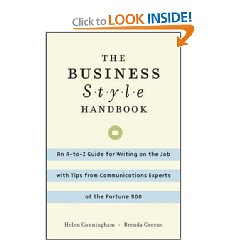
There are two kinds of bad English: one is the bureaucratic bad English, using 100 words where 10 will do, and the other kind is the one I have suffered from for decades, complex layering of convoluted ideas with too many commas and semi-colons, and too few periods. In a word, undisciplined.This book will help both kinds of English. It is short, to the point, and after reading and practicing what this book preaches, you should be able to cut your confusion of words in half, and increase your clarity and communications value by 100%
Vote on Review
Disappointing–Useful if You Didn't Learn English Well,
May 30, 2004
Helen Cunningham
I was very disappointed by this book, which came highly recommended. The other book recommended by the same source, Revising Business Prose by Richard Lanham, is much more suited to helping an already educated (and the over-educated) person focus their writing.This book is essentially a double-spaced simpleton's dictionary. It lost me right away when I happened upon the entry “bullion Gold of silver in bar form. Do not confuse with boullion, a clear broth with seasoning.” Good heavens. If you do not know the difference, this is the book for you. It has hundreds of other similarly inane examples, as I found in going over it as carefully as possible, trying to understand why on earth it had been recommended to me.
Vote on Review
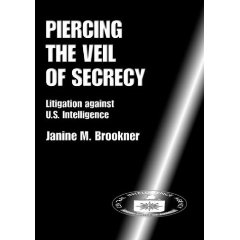
Disclosure: I knew and served with Janine Brookner as a case officer overseas. I liked her then and I like her now even through I have not heard from her since we ran into one another in the halls near SOG Maritime in the late 1980's. She deserved to win her case against the white-boy wanna-be-preppy bubbas that are destroying the Directorate of Operations today, and now, with the modest sum she got after paying her lawyer, she has–after law school and substantive experience taking on US Intelligence Community lawyers–*nailed it* with a book that is both a lawyer's dream and every intelligence professional's awakening.
I have myself had experience with security morons (these are the guys that got to their high ranks after twenty years of checking safes at night), and I have also had experience with the very high quality people that CIA has in the Office of the General Counsel and in some positions in security. Interestingly, when I had my problem with morons, the Deputy Director of Security was a woman, she got it, and she fixed it. On balance, from experience, I give CIA as a whole and the US Intelligence Community over-all, very very high marks for being good to its people and bending over backwards to avoid harassment. If anything, as the Ames case showed, the Agency has been too tolerant of aberrant behavior (alcoholism, adultery, divorce, and suicide are too high in the DO, although this has improved in the past ten years). I also have to give the Agency's publications review process an A+. Tough love critic of the CIA/IC that I am, I have *never* felt abused by the righteous and correct process that I signed a lifetime deal on.
There are, however, with the above as context, two major problems that this book addresses, and Janine Brookner has earned my “beyond five stars” for the service she renders with her methodical and documented endeavor. This book is an instant classic and reference manual in two ways:
1) When “management” decides to railroad someone, they have unlimited power to do so, and most people cannot fight back. I was myself rail-roaded by a man named Ted Price, a real mediocrity, a small man with a Napoleon complex, and it took me years to get the system to clean up the mess he made. I was not smart enough to fight back legally. This book empowers the many people who have been set to “Fitness for Duty” physicals (emphasis on showing them to be nuts, or scaring them into resigning for fear of being officially classified as nuts and barred from further federal employment). I know several such people, both analysts and operators, and in every single case it was management that was nuts or derelict in its duty, not the officers. The officers were all out-spoken, deeply in love with their profession and proud of their work, and loath to see the system break down as it has (and as we all knew it would from about 1985 onwards). Had the “nuts” been listened to in the 1980's and 1990's, 9-11 would not have happened and George Tenet would not be making excuses for having faired to unscrew the Directorate of Operations in the past seven years. Now he needs another five years, with the same fools in charge? Please.
2) The other area where this book is vital is in outlining in terms that any Senator or Representative (most of them lawyers) can understand–there needs to be a legal section in the National Security Act that is inevitably making its way toward passage. I used to think that a FISA Court Ombudsman–someone we all trust, like Ken Bass, one of the twelve masters of the court, or Janine Brookner herself, was the solution. What this book had demonstrated to me is that there are both too many problems (and more remedies than I realized), and someone has to codify a body of law that remediates the dysfunctionality of personnel protections within an archipelago of secret fiefdoms.
This book is relevant to both the lawyers and the serving professionals in each of the seven tribes of intelligent work: national, military, law enforcement, business, academia, NGO-investigative journalism, and citizen-labor-religions, because all organizations in the last ten years have been moving toward what one early critic of the CIA called “the cult of secrecy.” Credit card companies and other vendors are including binding arbitration on their terms as a condition of the sale, and those not reading the fine print are trapped into giving up all of their existing rights under due process law, including rights to a jury trial. Secrecy goes hand in hand with corruption and bad practices that desires concealment, so this book is relevant as a guide to what happens when secrecy and corruption are taken to their nth degree.
You cannot discuss 9-11 or Iraq, and be credible, without having read this book carefully and thoroughly (many of the other reviews strike me as glib, superficial, and not representative of having actually read the book).Clarke begins by pointing out that four US Presidents, not one, are responsible for the over-all failure.
Clarke strikes out at the Joint Chiefs of Staff, the Central Intelligence Agency, and the Federal Bureau of Investigation, throughout the book.
Clarke confirms both all the reports of CIA failing to tell FBI, FBI leaders ignoring their own field reports and consequently failing to tell the White House clearing house on terrorism, of any and all the indicators and warnings received from June 2001 to September 10 2001. Clarke confirms that as of January 2001, despite a decade or more of Al Qaeda activism, “most senior officials in the administration did not know the term.”
The historical review, going back to the Iranian revolution of 1979 (which overturned a CIA coup much earlier) and the Soviet invasion of Afghanistan (which mobilized global jihad), is quite helpful. The failure of the White House to kill the Republican Guard in the first Gulf War, and the post-Gulf War decision to put thousands and thousands of US contractors into Saudi Arabia, thus further inflaming Saudi dissidents, and the related misadventures in Lebanon as well as over-tolerance for Israeli aggression on the Palestinians, are all put into useful context. The book begins with a solid meticulous review unlike any other I have found.
CIA and FBI both take substantive and deserved beatings. The CIA Directorate of Operations–with the full backing of the DCI– cannot be considered to be anything other than “chickenshit” in the manner in which it blocked just about every proposed initiative including the arming of the Predators and the insertion of language-qualified personnel into Afghanistan.
Clarke lists four strategic mistakes: 1) CIA becoming overly dependent on the Pakistani intelligence service; 2) CIA importation to the Afghanistan jihad of Arab extremists it did not understand; 3) USG's quick pull-out from Afghanistan without flooding them with water, food, medicine, and security first; and 4) US ignorance of and failure to help Pakistan stabilize itself and survive the deadly mix of millions of Afghan refugees and thousands of radicalized Arab Muslims.
The Saudi government's sponsorship of Bin Laden as a religious revolutionary with a global mission beginning in 1989 cannot be denied. The book documents what we knew and when we knew it, and how we chose to ignore it.
1993-1994 were clearly turning point years–both the 1993 World Trade Center car bombing, and the discovery of a network of suicidal terrorists based in the US and tied to the blind Muslim preacher in Brooklyn, should have but did not lead to a nation-wide cleansing and appropriate border controls and foreign intelligence measures. Al Qaeda was formed in 1990. It would be five years before CIA and the FBI would realize this.
On page 84, Clarke makes my day by providing the ultimate OSINT (Open Source Intelligence) story. After ordering a strike on Iraqi intelligence headquarters, Clinton refused to go on TV until it was confirmed. The $35 billion a year intelligence community could not confirm it–no spies or agents on the ground, satellites out of position, etcetera. Bill Clinton, without telling anyone, called CNN, CNN called its Jordan bureau, whose cameraman had a cousin who lived near the intelligence headquarters, who confirmed the strike.” Got to love it–all money, no eyes. When will Congress get it!?
Clarke confirms the many ugly stories about CIA's operational incompetence in Somalia (professionals will recall we sent old dogs without language skills, two of whom went nuts, literally, afterwards). The following quote should be hung in CIA's entryway until we get a serious clandestine service: “They had nobody in the country when the Marines landed. Then they sent in a few guys who had never been there before. They swapped people out every few weeks and they stayed holed up in the U.S. compound on the beach, in comfy trailer homes that they had flown in by the Air Force.” Sure, there have been some improvements, but as CIA operations super-star Reuel Gerecht says, until diarrhea is accepted as part of the job description, the DO will never be real.
Clarke sums up the Clinton era by saying that policy was good, and intelligence bad. The bureaucracy was not willing to take terrorism seriously nor to work as a team. He sums up the Bush the Second era by saying that both were bad. Clarke slams George Tenet repeatedly, identifying 1994 as the year in which he blew the chance to nail Bin Laden and the Saudis early on.
Clarke fails Congress for failing America in 1995, when its oversight should have identified the failures of the past two years, and moved to correct them.
The Atlanta Olympics stand out as a major success story, and I emphasize this to note that there were successes, and there were extraordinary new means developed of planning, of inter-agency coordination, of rapid response. The Secret Service emerges from Clarke's book with its reputation much enhanced.
Saudi mendacity and Canadian complacency (the latter fixed since 9-11, the former not) get special mention. Prince Bandar is labeled a liar on more than one occasion.
There are many other important points raised by this book, including specific recommendations for addressing our global vulnerability to terrorism, and they will not be listed here. Buy the book.
One final comment: this is a very intelligent man who has actually read books and done some cross-cultural historical thinking. He laments the fact that politicians with power tend to view visionaries with knowledge as nuts (page 131). This is a brilliant book that should be read in detail, not–as Rich Armitage confessed to the 9-11 Commission on C-SPAN–the way Washington reads: checking the index for one's name. Washington has become stupid. Richard Clarke is not.
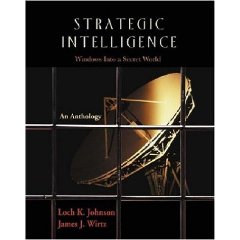
The publisher should be spanked for failing to provide Amazon with proper information (e.g. the Table of Contents and copy of the cover) for this book, which is an instant best reference on intelligence for the English-speaking audience.This anthology brings together 36 world-class authorities on their respective domains to discuss in nine parts: Introduction to US Intelligence; Intelligence Collection; Intelligence Analysis; The Danger of Intelligence Politicization; Intelligence and the Policymaker; Covert Action; Counterintelligence; Accountability and Civil Liberties; and Intelligence in Other Lands.
The book is very strong on historical overviews of US intelligence, and is easily the single best collection of US-oriented materials available to the professional or students of intelligence. Absolutely recommended as a readings book for all university classes, both graduate and undergraduate, focusing on intelligence.
I was pleasantly surprised to see one of my very old articles on open source intelligence (from about 1995) in the book. It was sufficient for the book's purposes, but suffered from not having been sent to me for review–for example, on page 115 the practical example that was attributed to a Marine Corps wargame on Somalia is a repeat of an editorial error at the International Journal of Intelligence and Counterintelligence. This performance was actually for the Aspin-Brown Commission, where 6 telephone calls, on an overnight basis, produced vastly more than the US Intelligence Community was able to find with its billions of dollars in capability. I hope and suspect that the other chapters do not have the same problem as OSINT is the most vibrant and newest aspect of intelligence, and the other articles and authors have a richer past and more stable story. To update on OSINT, Google for <Open Source Intelligence OSINT> without quotes or the brackets.
The book is weak in failing to properly criticize the US clandestine service, in failing to examine the complete lack of multi-disciplinary processing and lack of analytic toolkits and trade-craft (Jack Davis should have been in this book, Google for “analytic tradecraft”), and in failing to both examine other nations such as China and Israel and The Netherlands, as well as other intelligence tribes and the prospects for collaboration among national, military, law enforcement, business, academic, NGO-media, and citizen-labor-religious intelligence.
The book would have benefited from a tenth section focusing on intelligence challenges of the future, including special chapters on peacekeeping intelligence, medical intelligence, environmental intelligence, corporate and common crime intelligence, and religious or cultural intelligence.
The bibliography is weak and appears to have been thrown together, failing to list most of the top 25 books on intelligence that I have listed as essential reading for Amazon (see more about me should really say see my other reviews and lists–follow it for the lists on information society, intelligence, emerging threats, strategy & force structure, etc.).
The publisher should immediately correct the deficiencies in this book's listing here at Amazon, because this is a superb book that merits the respect of every professional and every professor teaching intelligence. It should be a standard reference in the military and law enforcement schoolhouses. However, the publisher should immediately begin planning a second edition with an improved bibliography, an index of relevant web sites, and the new Part X suggested above.
Kudos to Johnson and Wirtz for a job well done. The intellect and time that went into selecting each contributor is not to be underestimated. This is a magnificent effort and will be very valuable to all students in all seven tribes (all of whom are now using MeetUp to link up in cities around the world). I want the second edition, improved as noted above, out within the year.