SchwartzReport: McDonald’s McRib — Toxic to the Non-Bone

07 Health, Civil Society, Commerce, Commercial Intelligence, Corruption, Government

schwartz reportBrings new meaning to counter-intelligence.

McDonald’s McRib Sandwich a Franken Creation of GMOs, Toxic Ingredients, Banned Ingredients

Anthony Gucciardi

Natural Society, 8 January 2013

It’s ‘McRib season’, and thousands across the nation are scrambling to use online websites like the ‘McRib locator‘ to stuff the McDonald’s McRib sandwich down their throats. A sandwich that is not only full of genetically modified ingredients, a medley of toxic fillers and preservatives, but also some ingredients that are actually banned in other nations around the world. But honestly, are you surprised?

The McRib is the result of intensive marketing by McDonald’s. Utilizing the basics of supply and demand through creating scarcity over the McRib by only unleashing the culinary abomination for a fraction of the year that is only known once it is released, McDonald’s fans have been known to ‘hoard’ McRib sandwiches and eat them in extreme excess. It’s even a topic of the popular documentary Super Size Me, where filmmaker Morgan Spurlock (who gorges himself with McDonald’s for 30 days only to find serious health consequences) encounters ‘McRib hunters’ who actually travel the country eating McRib sandwiches.

Related: 3 Fast Food Secret Ingredients

McDonald’s even made McRib fans sign a petition to ‘save the McRib’ online, bringing out a conglomerate of fans to bring back their favorite franken sandwich.

What’s Inside a McDonald’s McRib Sandwich?

Read full article.

Phi Beta Iota: Be afraid, be very afraid.  The McRib is a perfect metaphor for the information environment within which most Americans subsist — barely.  Toxic to the non-bone, no truth here.

See Also:

John Robb: Community Supported Agriculture — Farming as Service

01 Agriculture, Commercial Intelligence, Cultural Intelligence, Earth Intelligence
John Robb
John Robb

Farming is Becoming a Service. Here's How to Benefit From It

By John Robb

Farming is increasingly becoming a service.

The reasons for this are simple.

People want the freshness, quality, and meaning they get from buying local food from people they know.  It's also great for the farmer, since it enables them to directly interact with customers again.

One of the ways this service is being provided is Community Supported Agriculture, or a CSA.

A CSA is essentially a subscription to a farm's output, usually delivered weekly.   Here's what a good sized box looks like (via dirtandveggies):

Click on Image to Enlarge

The weekly delivery system works nicely to the benefit of both the resilient customer and the farmer. The customer gets freshly picked, locally procured, high quality produce, that is grown in a way that they approve of (this is going to become very, very important when the GMO bubble pops).

The farmer benefits from a predictable income stream. Income that is paid upfront (instead of being reliant of volatile commodity markets and government subsidies) by willing customers.

Continue reading “John Robb: Community Supported Agriculture — Farming as Service”

Mongoose: The bloodhounds of [corrupt] capitalism

Commercial Intelligence
Mongoose
Mongoose

Corporate intelligence

The bloodhounds of capitalism

It is a good time to be a corporate investigator

SHERLOCK HOLMES once remarked that: “It is my business to know what other people don’t know.” These days, detective work is a huge business. Thanks to globalisation, there is a lot that companies would like to know but don’t, such as: is our prospective partner in Jakarta a crook?

Corporate detectives sniff out the facts, analyse them, share them with clients and pocket fat fees. Yet, oddly for a multi-billion-dollar industry devoted to discovering the truth, little is known about private investigators. So your correspondent took up his magnifying glass and set off in pursuit of the bloodhounds of capitalism.

Read full article and comments.

Continue reading “Mongoose: The bloodhounds of [corrupt] capitalism”

Michel Bauwens: Noam Chomsky on Passionate Production

Commercial Intelligence, Cultural Intelligence
Michel Bauwens
Michel Bauwens

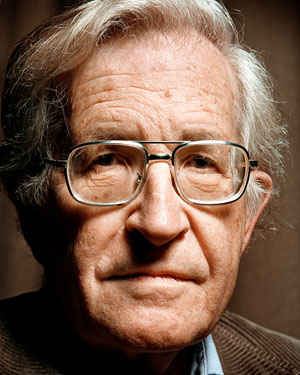
Noam Chomsky on Passionate Production

“The kind of work that should be the main part of life is the kind of work you would want to do if you weren’t being paid for it. It’s work that comes out of your own internal needs, interests and concerns.”

Excerpted from an interview with Noam Chomsky, conducted by Michael Kasenbacher:

(the full original has details on Noam Chomsky’s own career evolution)

MK:The philosopher Frithjof Bergmann says that most people don’t know what kind of activities they really want to do. He calls that ‘the poverty of desire.’ I find this to be true when I talk to a lot of my friends. Did you always know what you wanted to do?

Noam Chomsky
Noam Chomsky

NC: That’s a problem I never had – for me there was always too much that I wanted to do. I’m not sure how widespread this is – take, say, a craftsman, I happen to be no good with tools, but take someone who can build things, fix things, they really want to do it. They love doing it: ‘if there’s a problem I can solve it’. Or just plain physical labour – that’s also gratifying. If you work on command then of course it’s just drudgery but if you do the very same thing out of your own will or interest it’s exciting and interesting and appealing. I mean that’s why people look for work – gardening for example. So you’ve had a hard week, you have the weekend off, the kids are running around, you could just lie down to sleep but it’s much more fun to be gardening or building something or doing something else.

It’s an old insight, not mine. Wilhelm von Humboldt, who did some of the most interesting work on this, once pointed out that if an artisan produces a beautiful object on command we may admire what he did but we despise what he is – he’s a tool in the hands of others. If on the other hand he creates that same beautiful object out of his own will we admire it and him and he’s fulfilling himself. It’s kind of like study at school – I think we all know from our experience that if you study on command because you have to pass a test you can do fine on the test but two weeks later you’ve forgotten everything. On the other hand if you do it because you want to find out, and you explore and you make mistakes and you look in the wrong place and so on, then ultimately you remember.

Read full article (as excerpted).

Phi Beta Iota:  Peter Drucker defined work as a calling, not as labor — work should be a joy, a labor of love, not odious painful labor.

Jiemian YANG: Global Governance Limits and Potentials

02 China, Commercial Intelligence, Communities of Practice, Cultural Intelligence, Earth Intelligence, Ethics, IO Deeds of Peace, Officers Call, Policies, Threats
Jiemian YANG
Jiemian YANG

 Limits and Potentials of the Developing Countries in Global Governance

Inclusive global governance is one of the on-going efforts of the developing countries in this fast changing and complicated world. This is a process that started in the 1960s and will continue for many years to come.

I. Current Roles of the Developing Countries in Global Governance. Among all the roles, the following three stand out prominently. (1) They are the promoters of the UN centrality and democratization of international relations. Actually they are evolutionary reformers of the existent mechanisms. (2) They are invigorators of new mechanisms to cope with new challenges of our times, both institutionally and conceptually. A case in point is their role of G-20 by pursuing consultation and cooperation with the developed countries during the ongoing financial crisis and economic difficulties. (3) They are initiators of mechanisms of developing/emerging powers, such as the BRICS. The forming of BRICS reflects the shifting distribution of powers and upgrading of the developing countries.

Continue reading “Jiemian YANG: Global Governance Limits and Potentials”

SchwartzReport: Lack of Integrity in the US Media – On Murdoch & Petraeus

Commercial Intelligence, Corruption, Cultural Intelligence, Media

schwartz reportWhy the US media ignored Murdoch's brazen bid to hijack the presidency

Did the Washington Post and others underplay the story through fear of the News Corp chairman, or simply tin-eared judgment?

The Guardian,

So now we have it: what appears to be hard, irrefutable evidence of Rupert Murdoch‘s ultimate and most audacious attempt – thwarted, thankfully, by circumstance – to hijack America's democratic institutions on a scale equal to his success in kidnapping and corrupting the essential democratic institutions of Great Britain through money, influence and wholesale abuse of the privileges of a free press.

In the American instance, Murdoch's goal seems to have been nothing less than using his media empire – notably Fox News – to stealthily recruit, bankroll and support the presidential candidacy of General David Petraeus in the 2012 election.

Read rest of article.

Continue reading “SchwartzReport: Lack of Integrity in the US Media – On Murdoch & Petraeus”

SchwartzReport: Fake Images Impacting on Humans

Commercial Intelligence, Corruption, Cultural Intelligence, Media

schwartz reportHow fake images change our memory and behaviour

Rose Eveleth

BBC, 13 December 2012

Doctored images can affect what we eat, how we vote and even our childhood recollections. The question scientists are asking is why there’s nothing we can do to stop it.

The year was a memorable one – looking back at the unforgettable images over the past 12 months, you might think of apocalyptic-looking clouds over Manhattan during Hurricane Sandy, or Mitt Romney’s children mistakenly standing in a line spelling out the word “MONEY”, or even the winning US Powerball lottery ticket that became the most shared picture on Facebook. There’s only one problem. All these images are fake.

It would be fine if we could dismiss these images as a fleeting joke, an amusing but harmless tidbit shared among our friends and followers, if it weren’t for the fact that our minds appear to have a curious but fundamental glitch. People tend to think of their memories as a transcript, a rough history of events from some early age until the very moment they are experiencing. But human memory is far more like a desert mirage than a transcript – as we recall the past we are really just making meaning out of the flickering patterns of sights, smells and sounds we think we remember.

Read full article with examples of doctored images.

noble gold