SchwartzReport: Putting Play – Imagination Back Into the Lives of Children

Architecture, Cultural Intelligence

schwartz reportTear Down the Swing Sets
NICHOLAS DAY – Slate

As the father of two Waldorf educated daughters, and the husband of a career Waldorf teacher, I have observed the truth of this report.

Ronlyn kept baskets of bits and pieces in baskets in her classroom, and not a single formal toy. It was fascinating to watch the inventiveness of her 5 year olds, and the many uses to which a corn cob, some pieces of 2×4 lumber, and colored scarves could be turned as her students created imaginary worlds. Their play required imagination in a way no video game, or complete miniature recreation could possibly stimulate.

What surprised me was that Ronlyn often had to teach her children to play when the school year began. Initially they would just sit, waiting to be entertained by some electronic gadget, or to push buttons. Play is the business of childhood, because it stimulates the brains of children, and imagination is an essential part of the process. Modern toys which leave nothing to the imagination, and risk-free plastic playgrounds completely miss this point.

In 1888, the psychologist Stanley Hall published a story about a sand pile. A minor classic, it describes how a group of children created a world out of a single load of sand. These children were diligent, they were imaginative, they were remarkably adult.

More than a century later, at the architect David Rockwell’s Imagination Playground in lower Manhattan, small humans scurry back and forth all day long, carrying Rockwell’s oversized blue foam blocks from self-devised task to self-devised task. These children are intent, they are cooperative, they are resourceful. The scene resembles nothing so much as Stanley Hall’s sand pile-with each grain of sand much bigger and much bluer. (Except for the bits of actual sand, that is.)

More than any playground in recent memory, the Imagination Playground has inspired an outburst of excitement. It’s a hit with the hip parents who take their kids to Dan Zanes concerts, and is just as crowded as one. But it also represents something much more mundane: the triumph of loose parts. After a century of creating playgrounds for children, of drilling swing sets and plastic forts into the ground, we have come back to children creating their own playgrounds. Loose parts-sand, water, blocks-are having a moment.

The resurgence of loose parts is an attempt to put the play back in playgrounds. The late 1960s and early 1970s were a time of exuberant playground design, culminating in the great Richard Dattner adventure playgrounds in New York City. Then the grownups got skittish. Down came the merry-go-rounds and the jungle gyms, and in their place, a landscape of legally-insulated, brightly-colored, spongy-floored, hard-plastic structures took root. Today, walking onto a children’s playground is like exiting the interstate: Regardless of where you are, you see the exact same thing.

Read full article.

Rob Dover: Intelligence Failures in Syria & Algeria — Is Open Source Everything an Alternative? Steele Comments

#OSE Open Source Everything, Commercial Intelligence, Corruption, Cultural Intelligence, Government, Idiocy, Ineptitude, Military

Rob-DoverSyria, Mali, Algerian gas-works and ‘Open Source Everything’

Read any government security document, any of the national security strategies produced by a now large number of states and you will get a feel for the proliferation in the number of threats they feel they face. The preamble will normally contain a paragraph explaining that after the Cold War or after 9/11 everything got a little more complex, a little less explicable.

Heightened complexity in the international system appears to have coincided (and is only partially causally linked) to the increased levels of activity/ improvements in technology, social media etc. The rate at which information can be collected has increased, even if the sort of information being collected is broadly the same.

The problem of accounting for events like the Algerian gas-plant siege a few weeks ago (or the development of the insurgency in Syria, or in the hijacking of the state in Mali) for state-based security organisations is that their resources allocated in such a way that it logical for them to be looking the wrong way when this happens. It would be unlikely – although we can’t be sure, obviously – that there’s a bod in every security community across Europe pondering the safety of gas-plants in the ME and Maghreb. So, when this happens the information required to rapidly come down the pipe needs to be hastily scoped and drawn in. And this got me thinking about Robert Steele’s ‘open source everything’ manifesto (I declare the interest that Robert has written a chapter for the Routledge Handbook on Intelligence that I, Mike Goodman and Claudia Hillebrand have compiled and which will be in a good bookshops from August, and that he and I have corresponded at length about these issues), and how it could be used or applied in these circumstances. I have my own take on this, and I’ve provided the link above to the source: Robert also has a good search on his name I think so I’d guess he’ll correct me in comments too! But my wonder is more in the aggregation of huge quantities of information.

Read full article.

Continue reading “Rob Dover: Intelligence Failures in Syria & Algeria — Is Open Source Everything an Alternative? Steele Comments”

Tom Atlee: Participatory Wisdom & Sustainability

Cultural Intelligence
Tom Atlee
Tom Atlee

Qualities of folly and wisdom – with factors that support each aspect of participatory wisdom

A. Fairness vs. bias
1. Folly comes from narrow-mindedness, bias, partisanship
2. Wisdom depends on open-mindedness, equity, objectivity
3. Factors supporting this aspect of participatory wisdom include balanced information; attention to “broad benefit” and “general welfare”; balance of power; neutral conveners and facilitators; all voices heard; holistic thinking; attending to deep needs/interests of all parties; identifying lies and manipulation; legitimate mini-publics / random selection; citizens considered experts on community values; public visibility; transparency

B. Knowledge vs. ignorance
1. Folly comes from ignorance, denial, obliviousness
2. Wisdom depends on awareness, insight, understanding
3. Factors supporting this aspect of participatory wisdom include balanced information; access to diverse experts; systems thinking; 21st century info access (online, open source, crowd sourced, citizen science); focus on “taking into account what needs to be taken into account”; deliberation; iteration (reviewing results); all voices heard; understandable information; free flow of information; holistic thinking; respect for science; identifying lies and manipulation

C. Responsiveness vs. arrogance
1. Folly comes from arrogance, hubris, dogmatism
2. Wisdom depends on humility, judiciousness, responsiveness
3. Factors supporting this aspect of participatory wisdom include focus on learning; listening; integrating multiple viewpoints; iteration; collective intelligence; dialogue; systems thinking; holistic thinking; identifying lies and manipulation; citizens considered experts on community values

Continue reading “Tom Atlee: Participatory Wisdom & Sustainability”

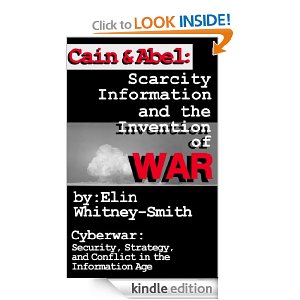
Elin Whitney-Smith: Cain and Abel – Scarcity, Information, and the Invention of War

Cultural Intelligence, Peace Intelligence
Amazon Page
Amazon Page

We have not always been warriors. War was invented along with political hierarchy, writing, and the invention of kingship.

This chapter tells the history of war starting with the end of the last ice age, 10,000 years ago, (before war was invented) up till the present when we may be seeing war becoming obsolete.

It examines various information revolutions and how they impacted the way war has been waged.

One thing which is constantly overlooked is that to have a successful war it is necessary that both parties have the same definition of what constitutes winning. The chapter shows how, from the very beginning of war, there were two different definitions of group violence – that of the agricultural peoples and that of the herding peoples. This difference in definition has been relevant throughout history and continues to this day.

Phi Beta Iota:  $1.99 for Kindle.  33 pages.  Elin Whitney-Smith is one of the original thinkers that the US Government has chosen to ignore for the past 20 years, because her ideas are affordable, practical, and would eradicate corruption while creating a prosperous world at peace.

See Also:

DuckDuckGo / Elin Whitney-Smith

DefDog: 9/11 Refutations Gaining Traction

Corruption, Cultural Intelligence, Government
DefDog
DefDog

From JFK to 9/11 to the Bin Laden Raid, what I am seeing is growing public disbelief of any government claim.

Architects and Engineers Question The Official 9/11 Story

Libertarian News, January 18, 2013

It may come as a surprise to many readers who are unfamiliar with the evidence surrounding the 9/11 terrorist attacks, but explosives were indeed found in all of the dust samples taken from the World Trade Center.  Of course, the state organized investigation failed to turn up any, but that was because they didn’t look for the particular type of explosive used.  A team of private investigators, physicists and engineers conducted an independent analysis of the dust and found it to contain unreacted nano-thermite, which is a special type of military grade explosive.  Engineer Jim Hoffman explains the various properties of the explosives used to destroy the towers:

Read full article.

Continue reading “DefDog: 9/11 Refutations Gaining Traction”

Penguin: Open-Ended Global War on “Terrorism”

08 Wild Cards, 10 Security, 11 Society, Corruption, Cultural Intelligence, Government, Ineptitude, Military, Officers Call
Who, Me?
Who, Me?

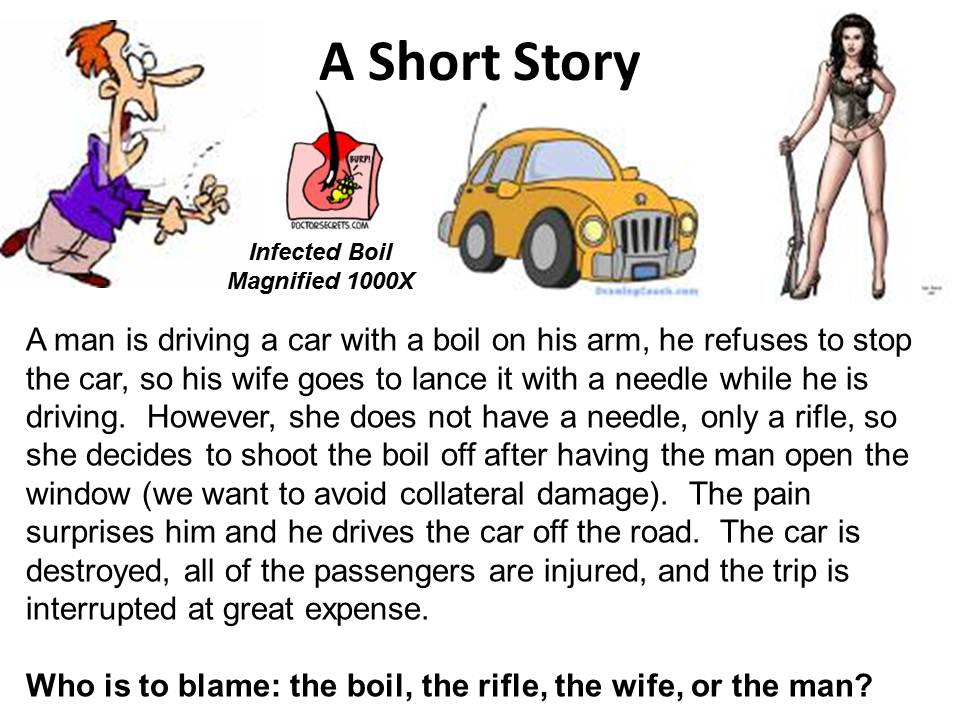
Cannot help but remember the graphic on terrorism as a boil.

Haven't We Seen This Movie Before?

The Open-Ended Global War on Terrorism

PEPE ESCOBAR

Asia Times, 23 January 2013

And the winner of the Oscar for Best Sequel of 2013 goes to… The Global War on Terror (GWOT), a Pentagon production. Abandon all hope those who thought the whole thing was over with the cinematographic snuffing out of “Geronimo”, aka Osama bin Laden, further reduced to a fleeting cameo in the torture-enabling flick Zero Dark Thirty.

Click on Image to Enlarge

It’s now official – coming from the mouth of the lion, Chairman of the Joint Chiefs of Staff General Martin Dempsey, and duly posted at theAFRICOM site, the Pentagon’s weaponized African branch.

Exit “historical” al-Qaeda, holed up somewhere in the Waziristans, in the Pakistani tribal areas; enter al-Qaeda in the Islamic Maghreb (AQIM). In Dempsey’s words, AQIM “is a threat not only to the country of Mali, but the region, and if… left unaddressed, could in fact become a global threat.”

With Mali now elevated to the status of a “threat” to the whole  world, GWOT is proven to be really open-ended. The Pentagon doesn’t do irony; when, in the early 2000s, armchair warriors coined the expression “The Long War”, they really meant it.

Even under President Obama 2.0′s “leading from behind” doctrine, the Pentagon is unmistakably gunning for war in Mali – and not only of the shadow variety. [1] General Carter Ham, AFRICOM’s commander, already operates under the assumption Islamists in Mali will “attack American interests”.

Thus, the first 100 US military “advisers” are being sent to Niger, Nigeria, Burkina Faso, Senegal, Togo and Ghana – the six member-nations of the Economic Community of West African States (ECOWAS) that will compose an African army tasked (by the United Nations) to reconquer (invade?) the parts of Mali under the Islamist sway of AQIM, its splinter group MUJAO and the Ansar ed-Dine militia. This African mini-army, of course, is paid for by the West.

Students of the Vietnam War will be the first to note that sending “advisers” was the first step of the subsequent quagmire. And on a definitely un-Pentagonese ironic aside, the US over these past few years did train Malian troops. A lot of them duly deserted. As for the lavishly, Fort Benning-trained Captain Amadou Haya Sanogo, not only did he lead a military coup against an elected Mali government but also created the conditions for the rise of the Islamists.

Continue reading “Penguin: Open-Ended Global War on “Terrorism””

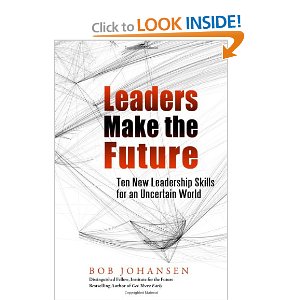
Berto Jongman: Recommended Book — Leaders Make the Future: Ten New Leadership Skills for an Uncertain World

Cultural Intelligence, Leadership
Berto Jongman
Berto Jongman

Rate Your Leadship Skills for the Future – Free Self-Assessment

•    Grounded in the most recent ten-year forecast by the prestigious Institute for the Future
•    Identifies the new skills needed to thrive in the next decade
•    Provides tools, examples, and advice to help develop your expertise in each of the ten future skills

Amazon Page
Amazon Page

Some leadership skills are enduring.  But to be successful in the future, leaders also need an emerging set of skills uniquely suited to dealing with the challenges of the threshold decade we are entering.  Today’s businesses and organizations are operating in a world characterized by volatility, uncertainty, complexity, and ambiguity.  Though they already seemed stressed to the breaking point, Johansen reminds us that we are also more connected than ever before in our history, but we must fully realize the benefits of that connectivity. In the next decade, leaders will not just see the future—they will make it!  But they will not be able to do it alone.

– – – – – – – – – – – –

Bob Johansen was president and CEO of the Institute for the Future from 1996 to 2004 and is now the IFTF Distinguished Fellow, as well as serving on its board. Bob has worked for more than 30 years as a forecaster, exploring the human side of new technologies. He has a deep interest in the future of religion and its impact on business, society, and individuals. Bob works mainly with senior corporate executives across a wide range of industries. Bob is a frequent keynote speaker. He has taught both graduate and undergraduate courses. He is the author of six books, including Upsizing the Individual in the Downsized Organization with novelist Rob Swigart, a guide for organizations undergoing technological change and reengineering, and GlobalWork with Mary O'Hara-Devereaux, a guide to managing global, cross-cultural teams. A social scientist with an interdisciplinary background, Bob holds a BS degree from the University of Illinois, where he also played varsity basketball, and a Ph.D. from Northwestern University. Bob also has a divinity school degree from what is now called Colgate Rochester Crozer Divinity School, where he studied comparative religions.

noble gold