2004 Tongeren (NL) A Need for a Global Alliance for Human Security

Collaboration Zones, Communities of Practice, Historic Contributions
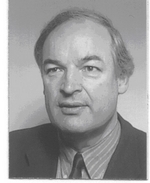
Paul  van Tongeren
Paul van Tongeren

GOLDEN CANDLE AWARD: Mr. Paul van Tongeren

OSS '04: To Mr. Paul van Tongeren, leader, educator, advocate, and pioneer in the prevention and resolution of conflict.  As Executive Director of the European Centre for Conflict Prevention, his is a critical voice in facilitating peace through hinter-disciplinary study, cross-cultural communication, and the creation of Open Source Intelligence (OSINT).


The ECCP received its own award in 2002:

GOLDEN CANDLE AWARD:  European Centre for Conflict Prevention, The Netherlands


OSS '02: European Centre for Conflict Prevention. For their consistent and superior efforts to make open sources of information more readily available to those who deal with conflicts and humanitarian emergencies, to include their surveys of conflict prevention and peacebuilding activities, and their lessons learned. Their web site, www.conflict-prevention.net, is a global resource.

Below is the outline of the speaker's remarks to OSS '04.
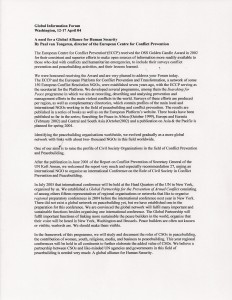
Tongeren

2004 Vlahos (US) The Muslim Renovatio and US Strategy

02 Diplomacy, 04 Indonesia, Civil Society, Cultural Intelligence, Historic Contributions
Michael Vlahos
Michael Vlahos

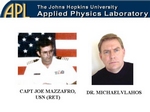
GOLDEN CANDLE AWARD: Johns Hopkins University Applied Physics Laboratory

OSS '04: To the JHU-APL, and especially to Capt Joseph Mazzafro, USN (Ret) and Dr. Michael Vlahos, for sustained excellence in the integration of Open Source Intelligence (OSINT) into their complex all-source analytic efforts in support of the Department of Defense.  Aided by the Gibson Library, they have set a new standard.

Michael Vlahos is an iconoclast and a free-thinker.

Michael Vlahos
Michael Vlahos

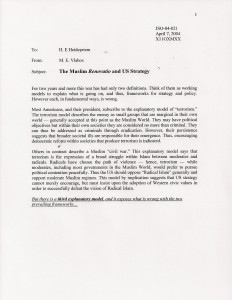
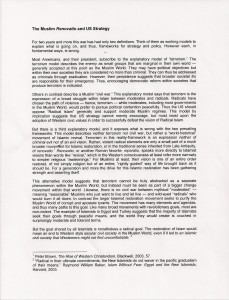
The transmittal memorandum below, and the paper, each shown for separate access, represent an update on his views as expressed in his seminal monographs,“Culture’s Mask: War and Change After Iraq” (62-page pdf), Johns Hopkins (2004) and“Terror’s Mask: Insurgency Within Islam” (34-page pdf), Johns Hopkins University (2002), and new thinking that has NOT been understood by either the outgong Bush-Cheney Administration or the incoming Obama-Biden Administration.

The U.S. Intelligence Community and its policy and operational consumers do not “do” culture and are seriously challenged at geo-anything.  Michael Vlahos, in our view, has ably articulated the central lens by which we should be crafting our collection, policy, trade, and operational strategies with respect to the rising tide of Islam (India, Indonesia, Iran, and pockets everywhere else).

Michael Vlahos
Michael Vlahos
Michael Vlahos
Michael Vlahos

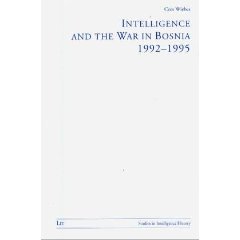
2004 Wiebes (NL) Intelligence and the war in Bosnia 1992 – 1995 The role of the intelligence and security services

Communities of Practice, Cultural Intelligence, Historic Contributions, Peace Intelligence
Cees Wiebes
Cees Wiebes

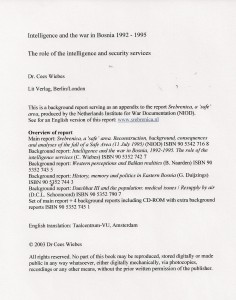
This extraordinary scholar benefits from being given access by an enlightened secret intelligence service whose Parliament demands full transparency as required.  His book is one of those very, very few that can legitimately claim to be fully informed from a full examination of all classified messages and archives, as well as the usual unclassified or publicly available information, and the author is himself an extraordinary scholar and a founding member of the Netherlands Intelligence Studies Association, which which his photo connects absent an English-language biographic page.

This book is worth getting at any price from any source–we have urged the author to send us the book for a reprint at cost if his publisher will not do it imemdiately.  It should not be out of print.

Below left are his remarks on the book and his investigation as made to OSS '04.

Cees Wiebes
Cees Wiebes

War on Bosnia

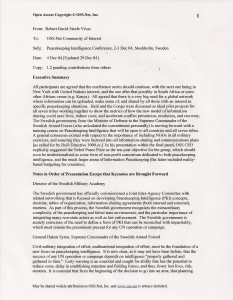
2004 4 Dec Stockholm Peacekeeping Intelligence Trip Report

Communities of Practice, Memoranda, Peace Intelligence
Full Source Online
Full Source Online

Recently (2007) the United Nations asked the Nordic countries, which customarily operate in a multinational multifunctional fashion (both intelligence and operations) to create a multinational multifunctional information sharing and sense-making program of instruction for the UN.  Col Jan-Inge Svensson is the lead in Sweden, and his first two offerings of the course combined with the contributions to this conference will comprise the new book, the second in the series, INTELLIGENCE FOR PEACE: Multinational Multifunctional Information-Sharing and Sense-Making.

Reference: Italian Ministry of Defense Briefings

Analysis, Budgets & Funding, Collaboration Zones, Communities of Practice, DoD, Ethics, Key Players, Methods & Process, Policy, Reform, Strategy, Threats, Tools

These briefings were commissioned by the Ministry of Defense in Italy and delivered over two days with independent official briefings from Carol Dumaine, then the active leader of the Global Futures Partnership Initiative (GFP).

2002 FAILURE of 20th Century Intelligence

2004 The Failure of 20th Century Intelligence (Updated 2006)

2004 COLLECTION: Know Who Knows

2004 PROCESSING: Make the Most of What You Know

2004 ANALYSIS: All-Source Analysis, Making Magic

2004 NEW RULES for the New Craft of Intelligence

Reference: Multiscale Networks for Global Environmental Governance

Advanced Cyber/IO, Articles & Chapters, Cultural Intelligence

Summary:  The rigid hierarchy that characterizes state bureaucracies has also been embedded into internaitonal institutions, and it is this architecture that can be vastly improved by restructuring it into a multiscale network.  There are both descriptive and prescriptive reasons for doing so: 1) increases in functional efficiency and robustness, and 2) improvements from a normative perspective.  As we enter the 21st century, the international system already exhibits many aspects of multiscale networks, but there are typically seen as liabilities and not assets.  By providing a richer understanding of multiscale networks, this paper proposes an alternative to Cox's “with them or against them” ultimatum.

Reference: Panarchy–Governance in the Network Age

Advanced Cyber/IO, Articles & Chapters, Cultural Intelligence

ABSTRACT:  The primary hyposthesis that I will endeavor to support is that leveraging the benefits of network organization constitutes a new source of power and a new way of accomplishing global governance.

Complexity + Networks + Connectivity = Panarchy

CONCLUSION:  In this paper I have shown that the convergence of processes crosses a critical threshhold to create new possibilities for governance.  The result is a new system.  The key distinction between the old system and the new lies in the fact that governance in the old system was achieved through states, whereas in the new system it is not only achieved outside of hierarchies through horizontal networks, but is in fact often achieved in spite of hierarchies.

45 Page PDF

Phi Beta Iota: The author is meticulous in crediting James N. Rosenau, Turbulence in World Politics: A Theory of Change and Continuity (Princeton, NJ: Princeton University Press, 1990) for originating many of the concepts that underlay the emergent scholarship on panarchy.