Steve Aftergood: Court Finds CIA in Contempt on FOIA Abuse

Corruption, Government
Steven Aftergood
Steven Aftergood

COURT CURBS CIA USE OF A FOIA EXEMPTION

The Central Intelligence Agency tried to make “inappropriate” use of an exemption from the Freedom of Information Act to withhold information that was not subject to the exemption, a federal court ruled last month.

In a significant interpretation of the Central Intelligence Agency Act, Judge Beryl A. Howell narrowed the permissible scope of records that CIA may withhold under Section 403g of the Act.  That section allows CIA to exempt from release information concerning “the organization, functions, names, official titles, salaries, or numbers of personnel employed by” the Agency.

But in a 163 page opinion in response to a lawsuit brought by the non-profit National Security Counselors, Judge Howell ruled on August 15 that CIA was interpreting this provision in a manner that was “inappropriately broad” (discussed at pp. 99-122).

Instead of just withholding information about CIA organization and personnel, she concluded, the Agency was also wrongly attempting to withhold “information that relates to” CIA organization and personnel– which is almost everything the Agency does.

“The Court holds that the CIA may not invoke [50 USC] 403g to withhold information merely because that information may be used by CIA personnel to carry out their responsibilities or functions,” Judge Howell wrote. “The CIA Act does not protect all information about CIA functions generally… The CIA may only invoke 50 USC 403g to withhold information under the FOIA if it would reveal the specific categories of personnel-related information enumerated in the statute.”

If that seems like a common-sense conclusion, it is also a rare judicial setback for the CIA, and a reversal of the more familiar expansion of national security secrecy authority.

“This really is something pretty remarkable,” said Harry Hammitt of Access Reports, which monitors FOIA policy. “Judge Howell has narrowed the interpretation of the statute dramatically.”

Berto Jongman: Jeff Richelson’s Collection of Documents on Underground Facilities – Intelligence and Targeting Issues

04 Inter-State Conflict, 08 Proliferation, 08 Wild Cards, Government, IO Deeds of War, Military, Peace Intelligence
Berto Jongman
Berto Jongman

Underground Facilities: Intelligence and Targeting Issues

U.S. Intelligence: Hiding of Military Assets by “Rogue Nations” and Other States a Major Security Challenge for 21st Century

U.S. Documents Describe Monitoring Effort Going Back to Early Cold War Years

National Security Archive Electronic Briefing Book No. 439

UPDATE – September 23, 2013

Originally Posted – March 23, 2012

For more information contact:
Jeffrey T. Richelson – 202/994-7000
nsarchiv@gwu.edu

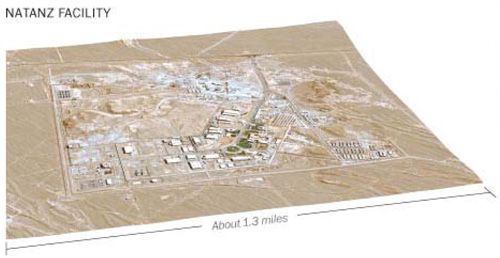
natanzWashington, D.C., September 23, 2013 – While the focus on Syria's chemical weapons use, and the possibility of military action against Syrian government targets pushed aside, for a while, the issue of how to deal with Iran's nuclear program,1 the two situations have one thing in common — their reported reliance on underground facilities to shield the production and storage of weapons of mass destruction.

Documents posted today by the National Security Archive show that such sites in Syria are only the latest in a long line of alleged and real underground facilities that have posed a high priority challenge for U.S. and allied intelligence collection and analysis efforts, as well as for military planners. There may be more than 10,000 such facilities worldwide, many of them in hostile territory, and many presumably intended to hide or protect lethal military equipment and activities, including weapons of mass destruction, that could threaten U.S. or allied interests.

Today's posting features 21 new documents, in addition to the 41 records from the Archive's initial March 23, 2012, posting on this subject. The new materials include several concerning a key topic of Cold War intelligence collection and analysis — hardened and underground communications facilities. Also included for the first time are draft charters for the National Reconnaissance Office (NRO) working group on hardened and buried targets. The majority of the new materials consist of reports from the Asian Studies Detachment (ASD) of the 500th Military Group of the Army Intelligence and Security Command. The ASD reports, based on open source intelligence, focus on various aspects of hardened and buried facilities in North Korea and China.

The 21 new items, with one exception, were acquired via Freedom of Information Act requests or research in the National Archives. The original posting described in detail the agencies and programs the U.S. government has brought to the task of identifying and assessing underground structures in foreign countries since World War II.

Read New Introduction and See Complete List of Documents with Links

SchwartzReport: The Middle Class Does Better In States With Lots Of Union Members

Civil Society, Commerce, Corruption, Government

schwartzreport newThis ought to be fairly self-evident. That it isn't tells us something about our media and the American voters, neither very complimentary. It should also be noted that the Republican Party has been doing everything in its power to destroy the Unions. If you are a working person and you vote Republican, I'm sorry, you're nuts. Anyone who cares about the middle class ou! ght to support Unions, and here is the evidence.

The Middle Class Does Better In States With Lots Of Union Members
ALAN PYKE – Think Progress

The middle class brings home a substantially larger share of aggregate earnings in states that have high rates of union membership than in those where fewer workers are organized, a Center for American Progress Action Fund (CAPAF) analysis of Census data shows. Amid very high and still increasing income inequality, union density appears to offer some buffer for middle-class Americans.

Continue reading “SchwartzReport: The Middle Class Does Better In States With Lots Of Union Members”

4th Media: 80 Percent of U.S. Adults Face Near-Poverty, Unemployment

01 Poverty, 03 Economy, 11 Society, Commerce, Corruption, Cultural Intelligence, Government

4th media cropped80 Percent of U.S. Adults Face Near-Poverty, Unemployment

Four out of 5 U.S. adults struggle with joblessness, near-poverty or reliance on welfare for at least parts of their lives, a sign of deteriorating economic security and an elusive American dream.

Survey data exclusive to The Associated Press points to an increasingly globalized U.S. economy, the widening gap between rich and poor, and the loss of good-paying manufacturing jobs as reasons for the trend.

Read full article.

4th Media: Saudi Intelligence Behind Chemical Attacks in Syria

07 Other Atrocities, 08 Wild Cards, Corruption, Government, IO Deeds of War, Peace Intelligence

4th media croppedSaudi Intelligence Behind Chemical Attacks in Syria But Unfortunately Nobody Will Dare Say That

A senior United Nations official who deals directly with Syrian affairs has told Al-Akhbar that the Syrian government had no involvement in the alleged Ghouta chemical weapons attack: “Of course not, he (President Bashar al-Assad) would be committing suicide.”

When asked who he believed was responsible for the use of chemical munitions in Ghouta, the UN official, who would not permit disclosure of his identity, said: “Saudi intelligence was behind the attacks and unfortunately nobody will dare say that.” The official claims that this information was provided by rebels in Ghouta.

Read full article with many links.

See Also:

Saudi Arabia’s “Chemical Bandar” behind the Chemical Attacks in Syria?

Paul Craig Roberts: The War on the Poor

01 Poverty, 03 Economy, 07 Other Atrocities, 11 Society, Commerce, Corruption, Government
Paul Craig Roberts
Paul Craig Roberts

Guest Column — The War On The Poor — Jeffrey St. Clair & Alexander Cockburn

The American poor are being driven into the ground. Not only is owning a home out of the question, but also the poor can’t even afford to rent. They lack the money for a damage deposit, and they lack the cash for the large deposits that utility companies require in order to have utilities connected.

The declining ability of the poor to rent is adversely affecting those who provide rental shelter to the poor.

For the dispossessed middle class, foreclosure on a home is often just the beginning of trouble. If, for example, a bank forecloses on a home with a $200,000 mortgage and sells the house for $100,000, under some circumstances the IRS treats the $100,000 difference as income to the foreclosed homeowner and requires the bank to issue a 1099 form to the homeowner showing taxable income of $100,000. http://www.irs.gov/uac/Home-Foreclosure-and-Debt-Cancellation

Alternatively, if the sale does not cover the mortgage, the bank can come after other property that the foreclosed homeowner might possess, such as a second home, car, work equipment, checking account balance. For example, a construction subcontractor who loses his home and moves his family into the office or construction trailer on the lot where he keeps the backhoe loader and work truck can find himself dispossessed of these assets in order to apply the proceeds to the difference between his mortgage and the price at which the bank sells his foreclosed home.

Americans who have not been personally affected by foreclosure have little idea how the system is rigged in favor of the banks that caused the problem and against the victims of financial deregulation.

In the article below, Jeffrey St. Clair and Alexander Cockburn show that the assault on the poor began with the Clinton administration.


Continue reading “Paul Craig Roberts: The War on the Poor”

David Swanson: Harvey Wasserman on Fukushima’s Coming Mega Meltdown

03 Environmental Degradation, 07 Other Atrocities, 08 Proliferation, 08 Wild Cards, Corruption, Government, Idiocy, Ineptitude
David Swanson
David Swanson

The Crisis at Fukushima 4 Demands a Global Take-Over

By Harvey Wasserman, WarIsACrime.org

We are now within two months of what may be humankind’s most dangerous moment since the Cuban Missile Crisis.

There is no excuse for not acting. All the resources our species can muster must be focussed on the fuel pool at Fukushima Unit 4.

Fukushima’s owner, Tokyo Electric (Tepco), says that within as few as 60 days it may begin trying to remove more than 1300 spent fuel rods from a badly damaged pool perched 100 feet in the air. The pool rests on a badly damaged building that is tilting, sinking and could easily come down in the next earthquake, if not on its own.

Some 400 tons of fuel in that pool could spew out more than 15,000 times as much radiation as was released at Hiroshima.

Continue reading “David Swanson: Harvey Wasserman on Fukushima's Coming Mega Meltdown”

noble gold