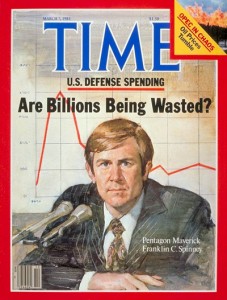
Chuck Spinney: Israel Still Angling for Attacks on Syria and Iran

04 Inter-State Conflict, 05 Iran, 07 Other Atrocities, 08 Wild Cards, Corruption, Government, Idiocy, Ineptitude, IO Deeds of War, Military
Chuck Spinney
Chuck Spinney

The author is one of the best journalists in the Middle East.

Israel Still Angling for Attacks on Syria and Iran

Jonathan Cook

Counterpunch:, 2013-09-18

Nazareth.

President Barack Obama may have drawn his seemingly regretted “red line” around Syria’s chemical weapons, but it was neither he nor the international community that turned the spotlight on their use. That task fell to Israel.

It was an Israeli general who claimed in April that Damascus had used chemical weapons, forcing Obama into an embarrassing demurral on his stated commitment to intervene should that happen.

According to the Israeli media, it was also Israel that provided the intelligence that blamed the Syrian president, Bashar Al Assad, for the latest chemical weapons attack, near Damascus on August 21, triggering the clamour for a US military response.

It is worth remembering that Obama’s supposed “dithering” on the question of military action has only been accentuated by Israel’s “daring” strikes on Syria – at least three since the start of the year.

It looks as though Israel, while remaining largely mute about its interests in the civil war raging there, has been doing a great deal to pressure the White House into direct involvement in Syria.

That momentum appears to have been halted, for the time being at least, by the deal agreed at the weekend by the US and Russia to dismantle Syria’s chemical weapons arsenal.

To understand the respective views of the White House and Israel on attacking Syria, one needs to revisit the US-led invasion of Iraq a decade ago.

Israel and its ideological twin in Washington, the neoconservatives, rallied to the cause of toppling Saddam Hussein, believing that it should be the prelude to an equally devastating blow against Iran.

Israel was keen to see its two chief regional enemies weakened simultaneously. Saddam’s Iraq had been the chief sponsor of Palestinian resistance against Israel. Iran, meanwhile, had begun developing a civilian nuclear programme that Israel feared could pave the way to an Iranian bomb, ending Israel’s regional monopoly on nuclear weapons.

The neocons carried out the first phase of the plan, destroying Iraq, but then ran up against domestic cookclash-e1312398376396.jpegopposition that blocked implementation of the second stage: the break-up of Iran.

The consequences are well known. As Iraq imploded into sectarian violence, Iran’s fortunes rose. Tehran strengthened its role as regional sponsor of resistance against Israel – or what became Washington’s new “axis of evil” – that included Hizbollah in Lebanon and Hamas in Gaza.

Israel and the US both regard Syria as the geographical “keystone” of that axis, as Israel’s outgoing ambassador to the US, Michael Oren, told the Jerusalem Post this week, and one that needs to be removed if Iran is to be isolated, weakened or attacked.

But Israel and the US drew different lessons from Iraq. Washington is now wary of its ground forces becoming bogged down again, as well as fearful of reviving a cold war confrontation with Moscow. It prefers instead to rely on proxies to contain and exhaust the Syrian regime.

Israel, on the other hand, understands the danger of manoeuvring its patron into a showdown with Damascus without ensuring this time that Iran is tied into the plan. Toppling Assad alone would simply add emboldened jihadists to the troubles on its doorstep.

Continue reading “Chuck Spinney: Israel Still Angling for Attacks on Syria and Iran”

Stephen E. Arnold: Economic Analysis? Makes Me Cry…

Commerce, Government, Idiocy, Ineptitude, IO Impotency
Stephen E. Arnold
Stephen E. Arnold

A Lament for the State of Analysis Tech in Economics

It seems like state-of-the-art analysis tools would be a priority in the data-rich field of finance. That’s why it is startling to learn that the technology being used by economic analysts and consultants seems to be stuck in the era of Windows 95. About Data shares a data-loving former economist’s lament in, “Bridging Economics and Data Science.”

Blogger Sam Bhagwat majored in economics because he was intrigued by innovative uses of data in that field; for example, a professor of his had gleaned conclusions about European patent law from a set of 19th century industrial-fair records. As he progressed, though, Bhagwat came to the disappointing realization that his field still relies on technology for which “outdated” is putting it mildly. He writes:

“When I graduated, the questions had changed, but the fundamental tools of analysis remained constant. Half of my classmates, including me, were headed to consulting or investment banking. These are ‘spreadsheet monkey’ positions analyzing client financial and operational data.

“In terms of relationship-building, this is great. Joining high strategy or high finance, you walk through the halls of power and learn to feel comfortable there. But in terms of technical skill-set, not so great. You begin to specialize in spreadsheets, a tool which hasn’t significantly improved since 1995.

“For someone like me, who wants to solve the most interesting problems out there, dealing with gigabytes and terabytes of data, realizing this was bitter medicine. Computational data analysis has changed a lot in the last twenty years, but my career track — economics, consulting, finance — hadn’t.”

So that is how one inquiring mind decided to make the leap from economics to data science. Bhagwat says he taught himself programming so he could pursue work he actually found challenging. I wonder, though—will he use his dual expertise to help bridge the gap between the two disciplines, or has he moved on, never to look back?

Cynthia Murrell, September 18, 2013

Sponsored by ArnoldIT.com, developer of Augmentext

Berto Jongman Et Al: Navy Yard, Drugs, Story Unravels

07 Other Atrocities, Commerce, Corruption, Government, IO Deeds of War
Berto Jongman
Berto Jongman

Berto Jongman: Was Navy Yard Killer on Anti-Depressant Meds?

Jon Rappoport:  Navy Yard shooting: Aaron Alexis narrative crumbling

Phi Beta Iota: The CIA has a long history of using drugs to make people do terrible things.  We now know that anti-depressants are unstable medications, and life insurance companies have begun to deny life insurance to people known to be taking anti-depressants.  A broad literature has emerged that shows the pharmaceutical industry — and ignorant doctors that do not do their homework — to be terribly irresponsible, ignorant, and ultimately liable for malpractice.

NIGHTWATCH: China-Jordan, Syria Questions, Russia-Arctic

02 China, 06 Russia, 08 Wild Cards, Government, Military

China-Jordan: The Foreign Ministry also said that on Tuesday, Yang met with King of Jordan Abdullah II ibn Al-Hussein on bilateral ties, the Syria situation and the Middle East peace process.

King Abdullah II is paying a state visit to China from 15 to 18 September, at the invitation of Chinese President Xi Jinping.

Comment: Jordan is looking for Chinese help with refugees and its economic burdens. China is in a position to advance its interests and influence because of the ripple effects of the Syria crisis, along with Russia. China has welcomed the UN inspection report on Syria, but has not commented about who executed the 21 August sarin attack.

Syria: Special note. The UN inspectors judged that one of the two rockets they examined was an M14 140mm rocket, which is fired from a BM-14 multiple rocket launcher. NightWatch checked the web today to try to determine whether the Syrian Arab Army still fields or keeps in inventory or storage BM-14s. The BM-14 is a an old system, a variation of the Soviet World War II BM-13 towed or truck-mounted, 16-round Katyusha multiple rocket launcher.

One reason for the search is that this weapon system is more than 70 years old and was replaced in most Soviet-equipped armies decades ago. Usually it was replaced by the BM-21 122-mm multiple rocket launcher. Syria can make these rockets.

A second reason for the search is that the BM-14 is an area saturation weapon. An army rocket unit usually would not fire it singly or in small numbers for a tactical mission. Each salvo should launch at least 16 rockets.

Global Security posts to the web detailed inventories of military equipment fielded by most national armies, including that of the Syrian army. Its charts show the Syrian army fields large numbers of BM-21s, but no BM-14s. They also show no rocket launcher that fires a rocket with a diameter of 330-mm. The UN inspectors found parts of such a rocket, but could not match it to any systems they knew. Our search found that Iran's Fajr-5 333-mm rocket is the closest in diameter, but it is 18 feet long.

Global Security's information might be incomplete and the numbers are estimates. However, the site has proven to be a reliable source of detailed military information. Its list of the types of major items of equipment that the Syrian army fields is reliable. The list does not include the BM-14.

The question for Feedback is where did the M-14 rocket come from? Who is still using this system in Syria? Does Syria still have stocks of long outdated rockets? Did the opposition capture any?

Russia: On Monday, President Putin announced that Russia is set to reopen a military base on the Arctic's Novosibirsk Islands, which it closed in 1993 with the collapse of the Soviet Union. Putin pointed to efforts to create a northern coast global shipping route and to defend Arctic energy resources as reasons for reinstating operations on the base. The islands are off the coast of eastern Siberia.

Comment: Russia announced that it has begun patrolling the Arctic Ocean sea lanes which are now passable in summer months. The Northern Fleet flagship, the guided missile cruiser Peter the Great led a ten ship flotilla on a 2,000 mile patrol to the Islands, which arrived last Thursday. Russia announced they have returned to Siberia to stay. Russia also intends to rebuild airfields and other infrastructure in the Arctic region. Strategic air deployments to the Arctic might resume.

One reason is the Northern Sea Route cuts two weeks off shipping time and that cuts shipping costs to Europe. Another is that receding ice sheets have made exploitation of sea and seabed resources cost effective and practical.

Greg Palast: Senate Puts Summers Back Into Shit Can

Commerce, Commercial Intelligence, Corruption, Cultural Intelligence, Government
Greg Palast
Greg Palast

Larry Summers:  Goldman Sacked

By Greg Palast for Vice Magazine
Monday, 16 September 2013

Joseph Stiglitz couldn't believe his ears.  Here they were in the White House, with President Bill Clinton asking the chiefs of the US Treasury for guidance on the life and death of America's economy, when the Deputy Secretary of the Treasury Larry Summers turns to his boss, Secretary Robert Rubin, and says, “What would Goldman think of that?”

Huh?

Then, at another meeting, Summers said it again:  What would Goldman think?

A shocked Stiglitz, then Chairman of the President's Council of Economic Advisors, told me he’d turned to Summers, and asked if Summers thought it appropriate to decide US economic policy based on “what Goldman thought.”  As opposed to say, the facts, or say, the needs of the American public, you know, all that stuff that we heard in Cabinet meetings on The West Wing.

Summers looked at Stiglitz like Stiglitz was some kind of naive fool who'd read too many civics books.

R.I.P. Larry Summers
On Sunday afternoon, facing a revolt by his own party’s senators, Obama dumped Larry as likely replacement for Ben Bernanke as Chairman of the Federal Reserve Board.
Until news came that Summers’ torch had been snuffed, I was going to write another column about Larry, the Typhoid Mary of Economics.  (My first, in The Guardian, 15 years ago, warned that “Summers is, in fact, a colony of aliens sent to Earth to turn humans into a cheap source of protein.”)

But the fact that Obama even tried to shove Summers down the planet’s throat tells us more about Obama than Summers—and whom Obama works for.  Hint:  You aren’t one of them. [Emphasis added.]

Full email story below the line.

Continue reading “Greg Palast: Senate Puts Summers Back Into Shit Can”

Berto Jongman: NSA Has Access to SWIFT – Ergo US Government Complicit in all Financial Crimes by All Financial Actors Subject to US Law

03 Economy, Commerce, Commercial Intelligence, Cultural Intelligence, Government, Military
Berto Jongman
Berto Jongman

‘Follow the Money': NSA Monitors Financial World

By Laura Poitras, Marcel Rosenbach and Holger Stark

The NSA monitors banks and credit card transactions — sometimes in apparent violation of national laws and global regulations. The European SWIFT financial transaction network is being tapped on different levels, internal documents from the US spy agency show.

EXTRACT

Monitoring SWIFT

The classified documents show that the intelligence agency has several means of accessing the internal data traffic of the Society for Worldwide Interbank Financial Telecommunication (SWIFT), a cooperative used by more than 8,000 banks worldwide for their international transactions. The NSA specifically targets other institutes on an individual basis. Furthermore, the agency apparently has in-depth knowledge of the internal processes of credit card companies like Visa and MasterCard. What's more, even new, alternative currencies, as well as presumably anonymous means of payment like the Internet currency Bitcoin, rank among the targets of the American spies.

Read full article.

Continue reading “Berto Jongman: NSA Has Access to SWIFT – Ergo US Government Complicit in all Financial Crimes by All Financial Actors Subject to US Law”

Veterans Today: Kerry Was Wrong – Turkey Indicts Six Jihadists for Sarin — Not Whole Story But Good Start

02 Diplomacy, 04 Inter-State Conflict, 07 Other Atrocities, 08 Proliferation, 08 Wild Cards, Ethics, Government, IO Impotency, Officers Call

veterans todayKerry Was Wrong

Turkish prosecutor indicts six jihadists for alleged attempts to acquire chemicals with intent to produce sarin

Does the truth really set you free?  Do I care?
Does the truth really set you free? Do I care?

The Turkish Republican Prosecutor in Adana has issued a 132-page indictment, alleging that six members of the al-Qaeda-aligned al-Nusra Front and Ahrar ash-Sham – one Syrian and five Turks – tried to acquire chemicals with the intent to produce the chemical weapon sarin.

The Turkish newspaper Radikal reports that the suspects were under surveillance by Turkish police after they received information that the al-Nusra members tried to acquire two government-regulated military-grade chemical substances.

11 people were arrested in their safe house in the city of Adana in southeastern Turkey on May 23, 2013, after they had acquired some of the chemicals.

Read full article.

Continue reading “Veterans Today: Kerry Was Wrong – Turkey Indicts Six Jihadists for Sarin — Not Whole Story But Good Start”

noble gold