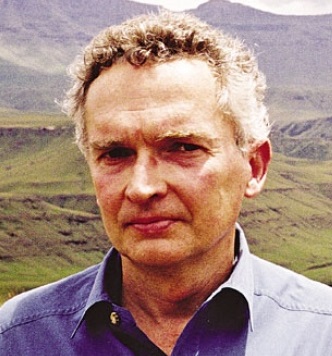
Tax avoidance, secret mining deals and financial transfers are depriving Africa of the benefits of its resources boom, ex-UN chief Kofi Annan has said.
BBC 10 May 2013
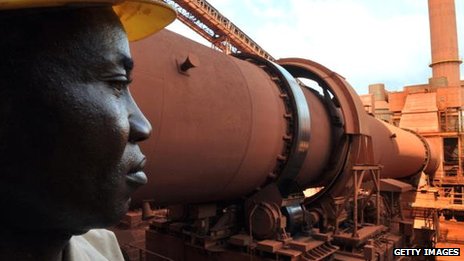
Firms that shift profits to lower tax jurisdictions cost Africa $38bn (£25bn) a year, says a report produced by a panel he heads.
“Africa loses twice as much money through these loopholes as it gets from donors,” Mr Annan told the BBC.
It was like taking food off the tables of the poor, he said.
Under-pricing deprives Africa of much-needed money, the report says
The Africa Progress Report is released every May – produced by a panel of 10 prominent figures, including former Nigerian President Olusegun Obasanjo and Graca Machel, the wife of South African ex-President Nelson Mandela.
African countries needed to improve governance and the world's richest nations should help introduce global rules on transparency and taxation, Mr Annan said.
The report gave the Democratic Republic of Congo as an example, where between 2010 and 2012 five under-priced mining concessions were sold in “highly opaque and secretive deals”.
This figure was equivalent to double DR Congo's health and education budgets combined, the report said.
China-North Korea: Update. China's Foreign Ministry declined Wednesday, 8 May, to confirm the Bank of China's closure of the account of the North Korean Foreign Trade Bank. In response to a question at Wednesday's news conference, Ministry spokeswoman Hua Chunying said, “For specifics, please refer it to competent Chinese authorities.”
Sources of the Daily NK reported that since 7 May, “other Chinese state banking entities including China Construction Bank have apparently ceased business dealings with North Korean financial entities as well. The banks did so in accordance with guidance handed down by the China Banking Regulatory Commission, and as such is actually a policy of the Chinese government.”
Comment: If the Chinese are exerting economic pressure against North Korea as punishment for refusing to listen to guidance, some reaction by North Korea should become evident soon. Such action would represent a strategic change in China's relationship with North Korea. More on this later.
How the 1860s Changed the Fields of Battle Forever
By Ralph Peters
The ten-year span that began with the American Civil War in 1861 and climaxed with a Prussian-led German army besieging Paris in 1870 changed warfare as profoundly as—and certainly more abruptly than—the introduction of steel blades or the development of gunpowder weapons.That decade dramatically altered strategic and operational mobility, military communications, killing power, the relative value of combat arms and the tactics for employing them, the composition of armies, logistics, and medical care for the wounded (while navies moved to steam-driven ironclads mounting long-range guns).A consideration of military leadership across the decade should teach us not to mock the inability of most generals to adjust to a disorienting environment, but to marvel at the few who managed to figure things out—despite the crushing weight of legacy thinking.
The complexity of warfare exploded as the strategic pace accelerated.And one rarely noted determinant of victory may, in fact, have been the decisive factor: literacy.In the end, the armies with the soldiers who could read were the armies that were able to adapt–those of the United States and Prussia.(Indeed, our contemporary experience in attempting to professionalize Afghan troops underscores the degree to which literacy is the fundamental building block of military modernity.)
As this epochal decade approached, Napoleon’s shadow clouded the thinking of even the most-able generals.Only outliers, such as Grant and von Moltke, escaped his thrall, while Napoleonic maxims, codified by Jomini and others, excused less-able leaders from thinking at all.The 1860s came as a series of thunderbolts, following the confused military actions of the previous decade.Even as steam power allowed for more rapid strategic concentration in the 1850s, European armies assembling in a theater of war had made no doctrinal advances since Waterloo.Indeed, the allied armies that landed in the Crimea marched more slowly than had the troops of either the Duke of Wellington or Napoleon.English rifles slaughtered Russian infantrymen, but English generals (and cholera) squandered English soldiers.And when the Piedmontese and French fought the Austrians in Italy in 1859, the battles of Magenta and Solferino were clumsy bloodbaths that convinced generals that very little had changed on the tactical battlefield.New rifles in the hands of poorly trained, unmotivated and ineptly led Austrian soldiers proved useless against superior leadership—resulting in a failure to appreciate the killing power of massed rifled weapons.
Soon enough the race would be on to find generals who could think as fast as modern weapons could kill.
Bad news continues to pour out of Fukushima-Daiichi. The first article below discusses the impact of F-D radiation on Canadian flora and fauna. The second details the involvement of the Japanese Mafia, the Yakuza, in the containment/cleanup process. The third describes TEPCO's mounting financial losses, as they struggle to keep on top of the problems of contaminated groundwater, electrical outages, etc., move ahead with taking the rods out of the dangerous spent fuel pools, and deal with the many lawsuits arising from the disaster. TEPCO has admitted culpability, so has to pay the victims.
Clearly, the situation is out of control. The US needs to lead the way in rallying international support for the crippled plant,- it's more than Japan can handle. A Senate investigation would be a first step in making that happen. Please continue to circulate this petition. Anyone can sign it!
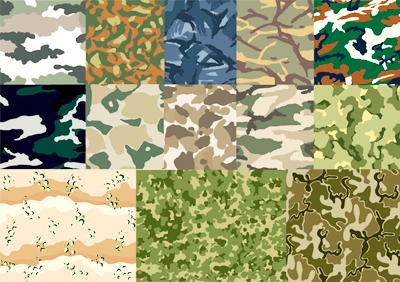
In 2002, the U.S. military had just two kinds of camouflage uniforms. One was green, for the woods. The other was brown, for the desert.Then things got strange.
Click on Image to Enlarge
Today, there is one camouflage pattern just for Marines in the desert. There is another just for Navy personnel in the desert. The Army has its own “universal” camouflage pattern, which is designed to work anywhere. It also has another one just for Afghanistan, where the first one doesn’t work.
Even the Air Force has its own unique camouflage, used in a new Airman Battle Uniform. But it has flaws. So in Afghanistan, airmen are told not to wear it in battle.
In just 11 years, two kinds of camouflage have turned into 10. And a simple aspect of the U.S. government has emerged as a complicated and expensive case study in federal duplication.
Duplication is one of Washington’s most expensive traditions: Multiple agencies do the same job at the same time, and taxpayers pay billions for the government to repeat itself.
The habit remains stubbornly hard to break, even in an era of austerity. There are, for instance, at least 209 federal programs to improve science and math skills. There are 16 programs that teach personal finance.
Phi Beta Iota: The above do not include the range of uniforms in black, brown, green, blue, and white. There is absolutely no truth to allegation that the USAF has spent $500M on an invisibility cloak for airmen. That is a DARPA project, ranked slightly higher in priority than the automated dog. Meanwhile, OmB (the Management is silent) continues to punch numbers without actually thinking about substance.
My former professor and former Legal Adviser Abram Chayes once said, after he had sued the United States government from the academy, “I have always thought there is nothing
wrong with an American lawyer holding the United States to its own best standards.”
It is in that spirit that tonight, from this important podium, I call my country to its own best values and principles.