Skagit County, Wash. — Robert M. Gates is a crier. He is also an expert at restraining himself.
The war is fought in the throat, and lost in the eyes.
He clears his throat as if it will hitch his composure back into compliance. His eyes, however, water and redden. It’s clear what will happen if he blinks.
“I’m — ” he says and stops.
“I’m — ” he says and stops.
“I think I’m — ” he says and stops. “I think I’m at peace.”
He sits in a wooden swivel chair but has stopped swiveling.
I talk about that session in my story, but let me note a few general takeaways:
The dual mission of the NSA generates cognitive dissonance. Right on its home page, the NSA says its core missions are “to protect U.S. national security systems and to produce foreign signals intelligence information.” The officials repeatedly claimed they pursue both responsibilities with equal vigor. There’s a built-in conflict here: If U.S. industries distribute strong encryption throughout the world, it should make the NSA’s signals-gathering job much harder. Yet the NSA says it welcomes encryption. (The officials even implied that the tension between the two missions winds up making both efforts more robust.) Nonetheless, the Snowden leaks indicate that the NSA has engaged in numerous efforts that tamper with the security of American products. The officials resisted this characterization. Why, they asked, would they compromise security of products they use themselves, like Windows, Cisco routers, or the encryption standards they allegedly compromised?
This month the US Congress could pass legislation that would make sure that complex trade agreements favored by multinational corporations – like the TransPacific Partnership (TPP) – would be pushed through Congress with little debate and little information provided to the public. This so-called “fast-track” authority – and the trade agreements it is designed to facilitate – would seriously undermine what remains of US democracy. We invite you to act on this matter soon as your conscience dictates.
Dear friends,
In my blog post The rapid growth of serious responses to climate disruption I mentioned the movement to protest the secretly negotiated Trans-Pacific Partnership agreement (TPP) that could have profound impacts on democracy, on public health and welfare, and on the fate of the planet.
Robert Steele is one of the more interesting writers on intelligence. Based in the US, and a former practitioner he has brought an enormous amount of energy to the questions around intelligence effectiveness and intelligence reform, and can rightly be thought of as a grandfather of the open source intelligence movement, and more recently the expanded “Open Source Everything” meme. I should insert the health warning that he has appeared in the Companion guide that Mike Goodman, Claudia Hillebrand and I edited, so I am not entirely impartial on this, but I would place myself as a ‘critical friend’ of his work.[i]
He has recently published a semi-manifesto piece about US intelligence and it can be found on this link. I have distilled the following key points from it, that I want to write around briefly here, but the original piece is where his take on these issues sit, obviously: 1) intelligence should be about decision support; 2) intelligence is currently being justified along the lines of the quantity of secrets it produces the Executive without regard to the total government need; 3) there is a dominant discourse that only secret intelligence agencies are equipped to ‘do’ intelligence; 4) Parliament and politicians in general desperately need intelligence qua decision-support, sense-making applied to all information secret and open that applies to their functional domains; and 5) the public desperately needs intelligence, again in the form of decision support. Recently the public has become the object – Americans would say the target – of intelligence agencies, which is quite the opposite of the public being a virtual intelligence network in being, contributing to national and public security more effectively by leveraging the creative commons approach to information, what some call collective or co-intelligence.[ii]
I did not think I would see the day. Bloomberg Businessweek informs us that the “New York Times Grudgingly Embraces Branded Content.” Though other news outfits have adopted the controversial money-making trend, it somehow seemed like the Times would prefer to shutter its doors before blurring the line between articles and ads. I guess not.
Reporter Felix Gillette describes the sneaky marketing trend:
The year 2013 was shockingly damaging to relations between the U.S. and the countries of Latin America. Edward Snowden’s revelations showed that in the Western Hemisphere, Washington is trying to play only by the rules it itself has written.
Using such spying programs as Prism, Boundless Informant and others, U.S. intelligence was collecting strategically useful information throughout the South American continent and using it to ensure the effectiveness of its policy in the region…
The constellation of Earth-imaging satellites launched yesterday—28 individual sputniks, called “Doves,” each about the size of its namesake and weighing in at a svelte five kilograms—is on its way to the International Space Station. If all goes well, by the end of the month “Flock 1,” as the group is called, will distribute its nanosatellites in Earth orbit, the better to photograph the complete surface of the planet at high resolution 365 days a year. The satellites will provide near-continuous pictures of Earth’s surface at a resolution of three to five meters per pixel.
Planet Labs, the San Francisco start-up that built Flock 1, is one of a growing group of companies and governments launching very small satellites. As their cost and size have plummeted, partly in response to the availability of standardized off-the-shelf components, nanosatellites such as CubeSat, have opened up unprecedented opportunities in remote sensing. Unlike traditional Earth-imaging satellites, which cost millions to build and launch, each of Planet Labs’ diminutive sky cameras, which in its predeployed state resembles a child’s kaleidoscope, comes in at a fraction of that cost.


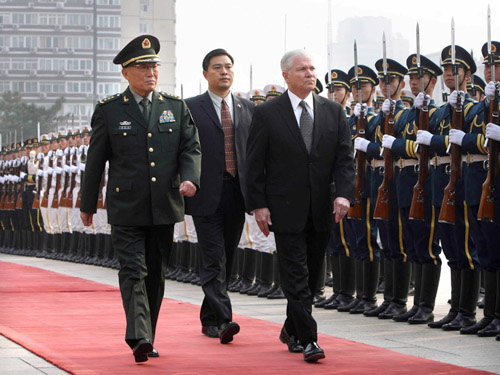 He clears his throat as if it will hitch his composure back into compliance. His eyes, however, water and redden. It’s clear what will happen if he blinks.