Penguin: Has America Become an Authoritarian State?

Corruption, Government
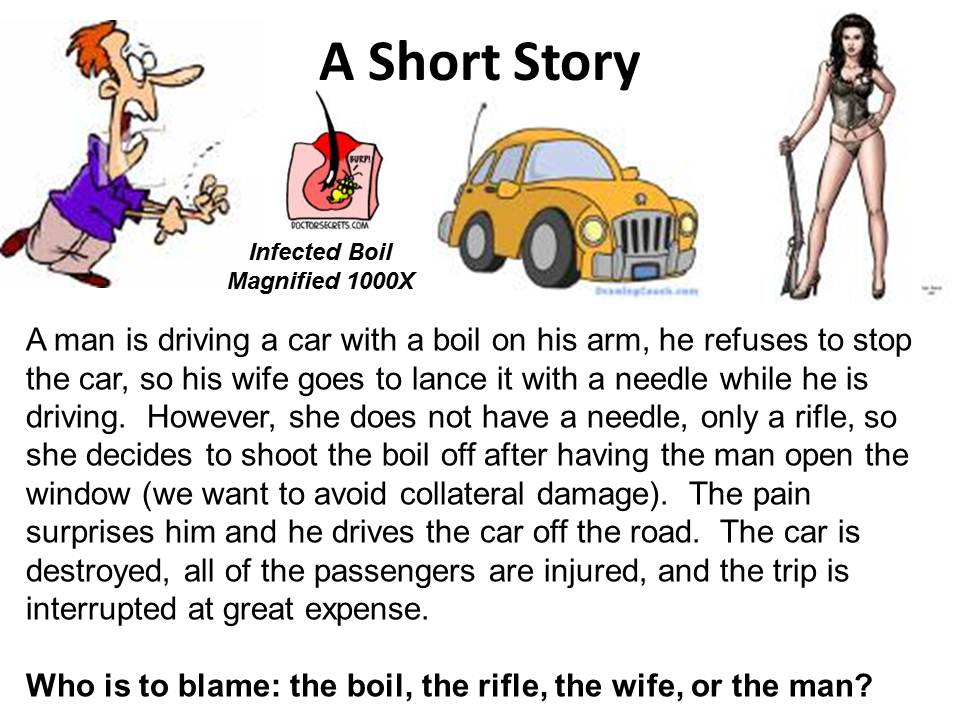
Who, Me?
Who, Me?

Macro-analysis.  But it is absolutely essential to understanding how it works.

Has America Become an Authoritarian State?

On the destruction of our democracy.

January 25, 2013  |

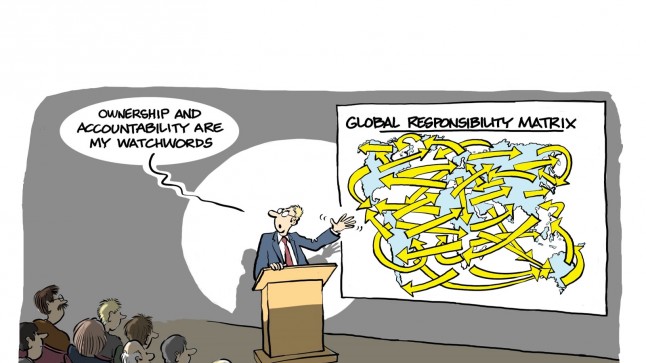
The debate in both Washington and the mainstream media over austerity measures, the alleged fiscal cliff and the looming debt crisis not only function to render anti-democratic pressures invisible, but also produce what the late sociologist C. Wright Mills once called “a politics of organized irresponsibility.” For Mills, authoritarian politics developed, in part, by making the operations of power invisible while weaving a network of lies and deceptions through what might be called a politics of disconnect. That is, a politics that focuses on isolated issues that serve to erase the broader relations and historical contexts that give them meaning. These isolated issues become flashpoints in a cultural and political discourse that hide not merely the operations of power, but also the resurgence of authoritarian ideologies, modes of governance, policies and social formations that put any viable notion of democracy at risk. Decontextualized ideas and issues, coupled with the overflow of information produced by the new electronic media, make it more difficult to create narratives that offer historical understanding, relational connections and developmental sequences. The fragmentation of ideas and the cascade of information reinforce new modes of depoliticization and authoritarianism. 
Read full article.

Chuck Spinney: Into the Sahel Rabbit Hole….

Corruption, Government, Idiocy, Ineptitude, Military
Chuck Spinney
Chuck Spinney

This is a very important report by highly regarded scholar of the region, especially Algeria.

Call to arms will bring no peace to Sahel

Region cannot be returned to Mali’s control militarily, says Hugh Roberts

By Hugh Roberts, Financial Times, January 24, 2013 6:03 pm

The writer is Edward Keller Professor of North African and Middle Eastern History at Tufts University

David Cameron’s vision of decades of global counter-terrorist struggle in north Africa sounded like the promise of doom to anyone who cares about the region. The Sahel’s terrorism problem dates back no further than 2003 – the west’s global war on terror gave birth to it; the west’s part in the destruction of Muammer Gaddafi’s Libya aggravated it; and France’s decision to pursue another war in Mali is expanding it.

In 2003, two drastic changes occurred. Washington launched its Pan-Sahel Initiative, soon renamed the Trans-Saharan Counterterrorism Initiative; and a branch of the Salafist Group for Preaching and Combat (known by its French acronym of GSPC) migrated from north-eastern Algeria to the far south of the Algerian Sahara, announcing its arrival with the abduction of 32 European tourists that year.

These developments were linked. In its drive to involve itself in the Sahel, where it blithely trespassed on France’s traditional sphere of influence, the Pentagon massively hyped the terrorist threat. But what really made the PSI feasible was Algeria’s involvement. Algiers had seized on the terrorist attacks of September 11 2001 to align itself with US President George W. Bush’s war on terror. One reason for this was to avoid being marked for destruction, like Iraq. But the country also saw an opportunity to resume normal relations with its western partners, following a French-led boycott begun after a 1994 terrorist attack on an Air France flight.

Read full article.

Chuck Spinney: Why we lose wars at ever increasing cost…

Corruption, Government, Idiocy, Ineptitude, Military
Chuck Spinney
Chuck Spinney

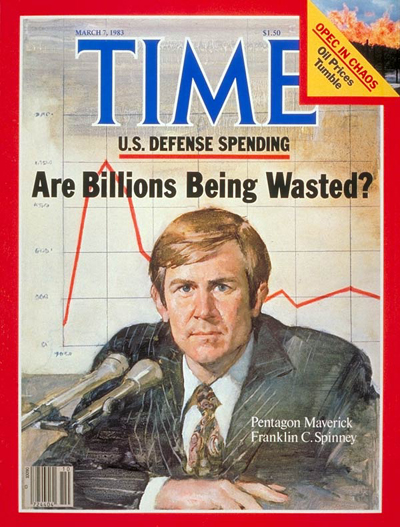
Don't hold your breath: One impediment to understanding what works and what does not work in war is an out-of-control secrecy system that clogs up DoD's own OODA loops with over-classified needlessly compartmented information.  The barriers within this system work to stretch out our own decision cycles.  But, as the American strategist Colonel John Boyd showed, one of the central objectives implicit in any military strategy is to stretch out the OODA loops governing your adversary's decision cycles.  Operating inside your adversary's OODA loops enables you to disconnect his decisions from the reality and collapse him into confusion and disorder (short explanation here, longer explanations here).  So, stretching out your own loops is, ipso facto, really loopy. 

 
The attached report by Scott Shane may seem hilarious, but it is really an outward symptom of the much deeper strategic problem posed by the compartmented nature of this self-inflicted wound.  Think about the mentality that fuels a predilection to burn books that reveal harmless chickenshit details — like, for example, the widely used nickname for National Security Agency and the real name of Baghram Air Force base, a name that became well known to the entire world during the Soviet Union's aborted occupation, or the reclassification of an unclassified citation for a bronze star medal.  Is this the behaviour of decision making system that is tightly connected to its own environment and is trying to improve its performance by learning from experience?  To ask this question is to answer it.
 
Of course, understanding how we disconnected our own decisions from reality in hot wars does not matter: The epistemological essence of a mindset ruled by the secret compartments of the military-technical revolution is that the future will be different from the past.  We are leaving the hot war in Afghanistan and an intensification of the secrecy system will be necessary to extract ever larger amounts of taxpayer dollars to fund the super-secret deep strike ‘precision' weapons which lie at the heart of the Obama's strategic pivot to a new cold war focused on China.

Pentagon Reverses Some of Its Censoring of a War Book

By SCOTT SHANE
New York Times, January 25, 2013

WASHINGTON — In an illustration of the government’s changeable ideas of what should be secret, Pentagon censors have decided that nearly half of more than 400 passages deleted from an Afghan war memoir can be printed without damaging national security.

Mini-Me: Wall Street is Untouchable — No One Goes to Jail

Commerce, Corruption, Government, Law Enforcement
Who?  Mini-Me?
Who? Mini-Me?

Huh?

Phi Beta Iota:  Only Iceland has demonstrated the combination of intelligence and integrity to actually serve the public interest.

See Also:

Matt Taibbi: GRIFTOPIA – RECAP

THE LATEST

January 23, 2013, 6:04 pm ET · by Sarah Childress.  Lanny Breuer is leaving his position as head of the Justice Department’s criminal division, The Washington Post reported Wednesday. As assistant attorney … Continue reading →

Did Wall St. Get Away With It? Live Chat Wed. 2 pm ET
January 22, 2013, 10:52 pm ET · by Nathan Tobey.  Join us for a live chat on “The Untouchables” with producer Martin Smith and New York Times DealBook reporter Peter Eavis at 2pm ET on Wednesday, January 23rd. You can leave a question now.

Blowing the Whistle on the Mortgage Bubble
January 22, 2013, 9:44 pm ET · by Azmat Khan.  Well before the 2008 financial meltdown, mortgage industry insiders discovered a ticking time-bomb that they say went up to the very top of Wall Street. What did they find? Who did they warn? And what happened to their warnings?

Too Big To Jail? The Top 10 Civil Cases Against the Banks
January 22, 2013, 9:44 pm ET · by Jason M. Breslow.  In nearly every major legal case to emerge from the crisis, government prosecutors have won multi-million dollar settlements, but companies and officials have not been required to admit wrongdoing.

Were Bankers Jailed In Past Financial Crises?
January 22, 2013, 9:43 pm ET · by Jason M. Breslow.  Not one Wall Street executive has been prosecuted for fraud related to the subprime crisis. How does that compare to past downturns?

Phil Angelides: Enforcement of Wall St. is “Woefully Broken”
January 22, 2013, 9:42 pm ET.  The current system of enforcement in the financial services industry has done little to deter pervasive fraud, says the former chairman of the Financial Crisis Inquiry Commission.

Lanny Breuer: Financial Fraud Has Not Gone Unpunished
January 22, 2013, 9:42 pm ET.  Prosecutors are holding Wall Street to account for the financial crisis, but success should not be measured solely by the number of convictions to date, says the head of the Justice Department’s criminal division.

Ted Kaufman: Wall Street Prosecutions Never Made a Priority
January 22, 2013, 9:41 pm ET.  The lack of high-level prosecutions from the financial crisis can be traced to the Obama administration’s ambivalence to upset the banks, the former U.S. senator told FRONTLINE.

As Deadlines Loom for Financial Crisis Cases, Prosecutors Weigh Their Options
January 22, 2013, 9:40 pm ET · For more than four years, regulators have struggled to successfully prosecute a Wall Street bank or its executives for alleged misconduct during the financial crisis. Now, time may be running out.


“Fraud Was … the F-Bomb”
January 22, 2013, 10:29 am ET · by Jason M. Breslow.  Well before the housing bubble burst, alarm bells were beginning to sound among key players in the mortgage industry: due diligence underwriters.

Penguin: Open-Ended Global War on “Terrorism”

08 Wild Cards, 10 Security, 11 Society, Corruption, Cultural Intelligence, Government, Ineptitude, Military, Officers Call
Who, Me?
Who, Me?

Cannot help but remember the graphic on terrorism as a boil.

Haven't We Seen This Movie Before?

The Open-Ended Global War on Terrorism

PEPE ESCOBAR

Asia Times, 23 January 2013

And the winner of the Oscar for Best Sequel of 2013 goes to… The Global War on Terror (GWOT), a Pentagon production. Abandon all hope those who thought the whole thing was over with the cinematographic snuffing out of “Geronimo”, aka Osama bin Laden, further reduced to a fleeting cameo in the torture-enabling flick Zero Dark Thirty.

Click on Image to Enlarge

It’s now official – coming from the mouth of the lion, Chairman of the Joint Chiefs of Staff General Martin Dempsey, and duly posted at theAFRICOM site, the Pentagon’s weaponized African branch.

Exit “historical” al-Qaeda, holed up somewhere in the Waziristans, in the Pakistani tribal areas; enter al-Qaeda in the Islamic Maghreb (AQIM). In Dempsey’s words, AQIM “is a threat not only to the country of Mali, but the region, and if… left unaddressed, could in fact become a global threat.”

With Mali now elevated to the status of a “threat” to the whole  world, GWOT is proven to be really open-ended. The Pentagon doesn’t do irony; when, in the early 2000s, armchair warriors coined the expression “The Long War”, they really meant it.

Even under President Obama 2.0′s “leading from behind” doctrine, the Pentagon is unmistakably gunning for war in Mali – and not only of the shadow variety. [1] General Carter Ham, AFRICOM’s commander, already operates under the assumption Islamists in Mali will “attack American interests”.

Thus, the first 100 US military “advisers” are being sent to Niger, Nigeria, Burkina Faso, Senegal, Togo and Ghana – the six member-nations of the Economic Community of West African States (ECOWAS) that will compose an African army tasked (by the United Nations) to reconquer (invade?) the parts of Mali under the Islamist sway of AQIM, its splinter group MUJAO and the Ansar ed-Dine militia. This African mini-army, of course, is paid for by the West.

Students of the Vietnam War will be the first to note that sending “advisers” was the first step of the subsequent quagmire. And on a definitely un-Pentagonese ironic aside, the US over these past few years did train Malian troops. A lot of them duly deserted. As for the lavishly, Fort Benning-trained Captain Amadou Haya Sanogo, not only did he lead a military coup against an elected Mali government but also created the conditions for the rise of the Islamists.

Continue reading “Penguin: Open-Ended Global War on “Terrorism””

Rickard Falkvinge: Scream Out for Integrity Lost

Communities of Practice, Corruption, Cultural Intelligence, Ethics
Rickard Falkvinge
Rickard Falkvinge

Abandon Integrity, All Ye that Gain Power?

Activism – Andrew “K`Tetch” Norton:  If we had any doubt of the reason we need to be extra vigilant in our work, this month has provided them in spades. But there is one thing that ties everything together, and that is the matter of integrity, and accountability. Through all the issues, those that take the lead are never held to account. Often, ironically, they do these acts while trying to hold others to account, in some sort of twisted egotistical irony powertrip.

Click on Image to Enarlge

I could have posted this Friday, but I didn’t. Saturday was an option too, but I wanted to wait. Above all I felt a need to slowly think about things, before acting, or saying. Many have let their emotions speak, but while they’re good for the short-term, we need a long term look.

The past week or two has been a turbulent one for many like me. The success of the one-year anniversary since SOPA/PIPA was overshadowed by the tragic (and preventable) suicide of Aaron Swartz, and the launch of Mega on the one-year anniversary of the raid (pretty much to the minute)

Then, through it all the irony of the Martin Luther King speech about freedom, being locked down. To cap it, the one man going to be imprisoned for the waterboarding, is the one who alerted the public, and not one who conducted it.

It’s a conflicting and emotional time in many ways, as many of the issues we pirates are passionate about are hitting landmark points all in a week. And overshadowing it all is Aaron, and his tragic final decision.

I was invited on a Huffington Post Live panel Friday night to discuss some of these issues. With me was Tim Lee (ArsTechnica), Trevor Timm (EFF), and Holmes Wilson (Fight for the Future). I don’t think I did that well, but judge for yourself.

It was actually quite an interesting spread too, you had the tech press, legal, activist, and me with the political aspects. I doubt they could have got a better spread if they’d wanted.

But from the talk there, and the pre-show banter, I took away one thing. We all care about this, and we all want the situation to improve. Sure we’re all young men, but we’ve looked at the situation out there, and see massive problems. We’re all intelligent and hardworking (well, those three are, I wouldn’t say that about myself, because I know it’s not true) and could easily making a shedload of money in any private concern of our choosing. Instead we choose to do this.

Continue reading “Rickard Falkvinge: Scream Out for Integrity Lost”

Koko: Idiot Humans – Creating Mutant Viruses? Eugenics Play?

02 Infectious Disease, 07 Health, Commerce, Corruption
Koko
Koko

Deadly GM flu research that could ‘wipe out significant portion of humanity' set to restart

Flu experts overturn self-imposed ban on creating mutant firms of the H5N1 bird flu virus
They claim the risky research is needed to prepare in case it naturally mutates to human transmissible form
But leading experts condemn decision to restart research into genetically modified versions of the virus
Humans can only currently catch H5N1 from infected birds, but when they do it is usually fatal

By Damien Gayle

MailOnline, 24 January 2013

Read full article.

Phi Beta Iota:  “Who benefits?”  The “precautionary principle” is well established, and anyone who violates it generally has come combination of moral disengagement and financial corruption attendant to their decision.  The “good guys club” that includes Bill Gates and Warren Buffet is known to have a eugenics agenda.  Could it be that these researchers have been offered a financial incentive of such proportions as to overcome their intellectual appreciation for the risks?  As with nuclear proliferation, and small arms proliferation, the weakness of human ethics is the weak link — once created, such viruses will inevitably be “leaked.”  This is a good time for the public to ask: what is government doing on this issue that is or is not in the public interest?

noble gold