Howard Rheingold: Twitter, Curation, Future of Information

Advanced Cyber/IO
Howard Rheingold

Twitter acquisition confirms that curation is the future

Mathew Ingram

Gigaom, 21 January 2012

Twitter made an interesting acquisition on Thursday, when it bought a young Canadian startup called Summify, a company whose service (as its name implies) was designed to cut through the noise of all those social-media streams and summarize the content that matters. More than anything, this is perhaps the single biggest hole that exists not just in Twitter but Facebook and other services as well: the need to give users more ways of filtering the massive amounts of information that keep flooding their activity streams and other social-media inboxes. There are so many ways of producing and sharing content but so few good ways of filtering.

As has been reported elsewhere, Summify says it’s mothballing its service (a decision that was not received warmly by many users), and the team of five will join the growing ranks at Twitter’s new headquarters. The two co-founders, who are originally from Romania, moved to Vancouver, B.C. when they were accepted into an incubator program called Bootup Labs and later received angel funding (according to one report, a Summify investor posted a message that suggested the Twitter acquisition was an all-stock transaction, but the tweet was later deleted). Like some other services such as News.me, Summify filtered a user’s activity streams, then used an algorithm to produce a daily email with links to the most-shared content in their social networks.

Read full article.

Phi Beta Iota:  CIA, IBM, Google, and NSA all stink at both early warning (anomaly detection and pattern analysis in multi-cultural multidisciplinary multidomain contexts) and at sense-making.  The primary reason they stink is their obsessive substitution of technology for thinking.  As James Bamford has documented so well, one single human brain can do more, with less energy and mass, than all of NSA's corporate vapor-ware computers.  Novices work with data; journeymen work with models; masters worth with whole systems assumptions and fully integrate human and machine capabilities into their M4IS2 system, which does not exist together because of the isularity, myopia, and general ignorance of all so-called “intelligence” services.


Jon Lebkowsky: Clay Shirky on SOPA as Keeping Us Passive Not Producing and Not Sharing

07 Other Atrocities, Advanced Cyber/IO, Blog Wisdom, Commerce, Corruption, Counter-Oppression/Counter-Dictatorship Practices, Government, Movies
Jon Lebkowsky

Clay Shirky has the best overview I’ve seen/heard/read of PIPA and SOPA and the context from whence they emerged; the bottom line: the legilsation’s about wanting us to be passive consumers, not producing and not sharing.

Phi Beta Iota:  To this we would add it is also about a criminally negligent and corrupt Congress exercising its power against the public interest (treason), and a criminally negligent and corrupt combination of Hollywood and Internet Service Providers seeking to legitimize vigilante arbitrary untempered attacks on anyone anywhere without due process.

Marcus Aurelius: Britain Admits Moscow Spy Rock

Advanced Cyber/IO, Government
Marcus Aurelius

Britain Admits Moscow Spy Rock

MOSCOW, January 19 (RIA Novosti)

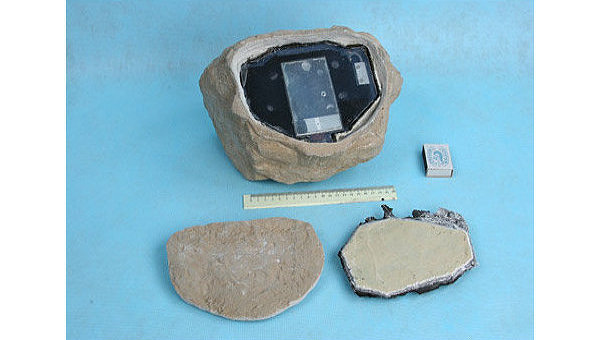
Britain has for the first time admitted it was spying when Russia’s state security service, the FSB, accused British diplomats of using a transceiver hidden inside a rock on a Moscow street.

Footage showing the alleged spies using the device was aired on Russian TV in January 2006. The FSB described it as “absolutely new spy technology.”

The UK Foreign Office then denied the claims.

But in a BBC documentary due to be broadcast later today, Jonathan Powell, then Prime Minister Tony Blair’s chief of staff, admitted the footage was genuine.

“The spy rock was embarrassing,” Powell said, adding that the Russians “had us bang to rights.”

Read full article.

Phi Beta Iota:  Spy rocks are not new–indeed one must give credit to the US for being the best at developing this technology in times past.  What is most interesting about the report is the suggestion that the British are using non-governmental organizations for “deep cover.”

Jon Lebkowsky: The Meaning of the Internet Blackout

Advanced Cyber/IO, Blog Wisdom, Civil Society, Cultural Intelligence, Ethics
Jon Lebkowsky

JOHO: Messages from the Dark

At “JOHO the Blog,” David Weinberger has a simple and very cool summary of the meaning of yesterday’s SOPA-induced blackout. “This is our Internet. We built it. We built it for us, not for you. We get to turn off the lights, not you.” Yes, indeed. It took a long time for the the Internet to smell like money to those folks who like that smell more than they like the smell of creativity, innovation, fellowship, commons, etc. Now it’s a platform for all media in digital formats that are easily replicated, therefore distribution is hard to control. Much of what flows across the Internet is freely shared by its creators, and there’s also channels for media that people pay for (like Netflix). A system that facilitates all that sharing, along with a high degree of interactivity, also makes it easy to do the natural sort of sharing that peopel will inherently do. Content providers could spend less time figuring out how to stop sharing, and more time figuring out how to build a business model that works in a social/sharing environment.  People who invest time and money in media creation and production have a right to charge for it, but we need to rethink how that works in the 21st century networked world.

Four messages from the dark

Posted on:: January 19th, 2012

The black that covered so many sites yesterday spoke well. I think there were four messages.

First, This is our Internet. We built it. We built it for us, not for you. We get to turn off the lights, not you.

Second, we are better custodians of culture than are culture’s merchants because we understand that culture is what we have in common. We feel pain every time something is held back from this Commons.

Third, just as we can make someone famous rather than having to passively accept the celebrities you foist upon us, we can make an idea politically potent. Going dark was the self-assertion with which political engagement begins.

Fourth, there’s a growing “we” on the Internet. It is not as inclusive as we think, it’s far more diverse than we imagine, and it’s far less egalitarian than we should demand. But so was the “we” in “We the People.” The individual acts of darkness are the start of the We we need to nurture.

Patrick Meier: Crisis Mapping Shows Henry Kissinger Wrong in Cambodia, Spatio-Historical Analysis Illuminated

Advanced Cyber/IO, Civil Society, Collective Intelligence, Corruption, Cultural Intelligence, Government, Media
Patrick Meier

How Crisis Mapping Proved Henry Kissinger Wrong in Cambodia

Crisis Mapping can reveal insights on current crises as well as crises from decades ago. Take Dr. Jen Ziemke‘s dissertation research on crisis mapping the Angolan civil war, which revealed and explained patterns of violence against civilians. My colleague Dr. Taylor Owen recently shared with me his fascinating research, which comprises a spatio-historical analysis of the US bombardment of Cambodia. Like Jen’s research, Taylor’s clearly shows how crisis mapping can shed new light on important historical events.

. . . . . . .

In particular, Owen’s analysis shows that:

Click on Image to Enlarge

“… the total tonnage dropped on Cambodia was five times greater than previously known; the bombing inside Cambodia began nearly 4 years prior to the supposed start of the Menu Campaign, under the Johnson Administration; that, in contradiction to Henry Kissinger’s claims, and over the warning of the Joints Chiefs of Staff, Base Areas 704, 354 and 707 were all heavily bombed; the bombing intensity increased throughout the summer of 1973, after Congress barred any such increase; and, that despite claims by both Kissinger and Nixon to the contrary, there was substantial bombing within 1km of inhabited villages.”

Phi Beta Iota:  This is very exciting stuff.  The public does not read nor think well, in large part because the rote “teaching” was designed by Carnegie and Rockfeller to create obedient factory workers able to follow instructions.  Visualization–including spatio-historical analysis but also including advanced visualization as well as the simple visualization for flag officers (red, yellow, green), could be the next revolution in education.  At a minimum it will demonstrate that experts know nothing and elites cannot be trusted.

Event: 18-21 June 2012 NYC Games for Change Festival

Advanced Cyber/IO, Games Serious / Change

JUNE 18 – 20: 9TH ANNUAL GAMES FOR CHANGE FESTIVAL

We will return to the NYU Skirball Center for the Performing Arts for this year’s Festival on June 18-20. Our call for talks, panels and presentations goes live this month, and you can begin registering for the Festival in mid February.

This year's Festival will include Opening Night Festivities, a Game Arcade, Keynotes, the Games for Change Awards and Ceremony, Games for Learning Institute @ Games for Change Festival, Youth Game Design Workshops, Game Demo Spotlight, and more.

Follow Games for Change at www.gamesforchange.org.

Event: 30-31 March 2012 NYC Participatory Budgeting

Advanced Cyber/IO, Budgets & Funding, Civil Society, Collective Intelligence, Ethics, Government, Office of Management and Budget, Policies

Participatory Budgeting in the US and Canada: International Conference – March 30-31, 2012 New York City

Call for Proposals

International Conference: Participatory Budgeting in the US and Canada

March 30-31, 2012, New York City

CALL FOR PROPOSALS–EXTENDED DEADLINE: JANUARY 31, 2012

Read more.

noble gold