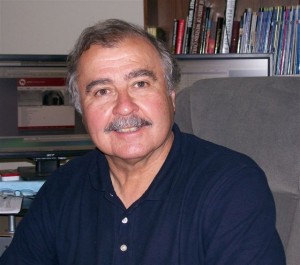
He was one of the most respected intelligence officers of his generation. Now he's Donald Trump’s national security alter ego, goading a crowd to lock Hillary Clinton up. What happened?
James Kitfield, Politico,
Inside military and intelligence circles it was understood that McChrystal, along with another ousted former general, David Petraeus, were the preeminent generals and wartime field commanders of their generation of officers, and the manner of their dismissal struck many as insulting. As did the treatment of Lt. Gen. Mike Flynn. . . .
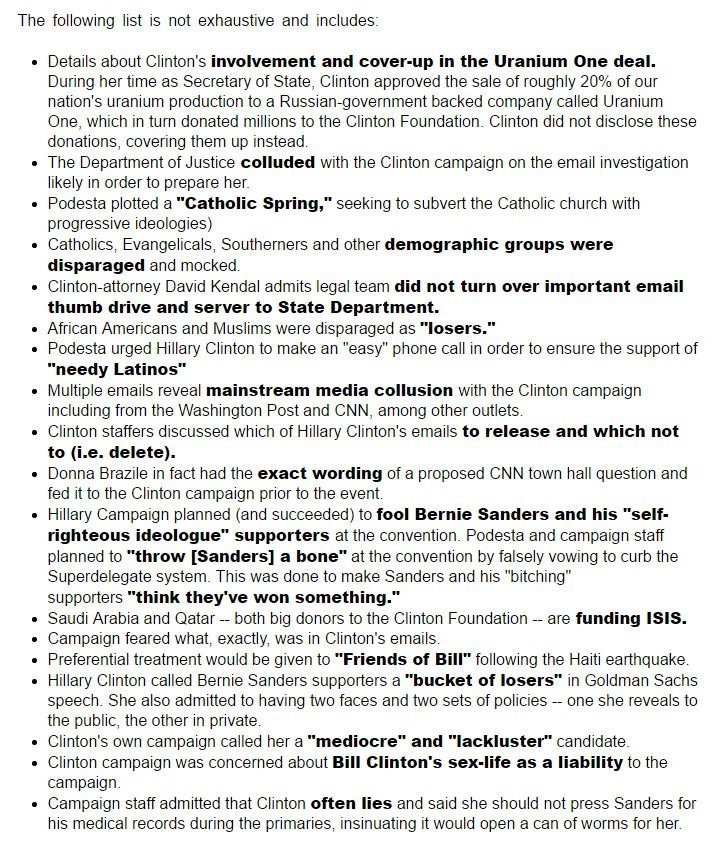
The following JPEG is circulating on the Internet as a summary of some of the disclosures in the newly-released Podesta emails. [PBI Comment and sources below the fold.]
The technology of power is moving from the past’s emphasis on privacy and concealment toward more contemporary techniques of diversion, bias, misconception, and willful stupidity. The crude methods that George Orwell summed up in his image of the incinerator-chute “memory hole” are growing into more sophisticated devices for providing the public with misleading frameworks for mentally organizing (or rationalizations for simply ignoring) the overload of available facts, thus making it harder to remember or understand politically inconvenient knowledge.
We see some of the old-fashioned memory-hole techniques at work currently with Wikipedia. Read full article.
The certificates for these academic credentials are near perfect. But what makes this cybercrime more dangerous is the fact that hackers also manipulate the institution records to make the fake credential genuine.
So what’s in Google's mysterious contract? What have we unknowingly all agreed to whenever we are using Google services, knowingly or not?
What Google Gets: In return, we get to record everything you do 24 hours a day—the questions you ask, the purchases you make, the websites you visit, the videos you watch, the places you go, the people you communicate with, the emails you write—everything.
The fine print: We get to keep these records and to use the information we’re collecting about you to connect you with businesses we think might want to sell you things, so you should expect to get advertisements from these businesses. We might also share this information with the, uh, intelligence community, because they helped us figure out how to set up this whole scam in the first place.

 How Mike Flynn Became America’s Angriest General