Berto Jongman: Open Secure Internet Moves Forward — Estonia Leads the Way

Advanced Cyber/IO, Peace Intelligence, Software
Berto Jongman
Berto Jongman

How the Tech-Savvy Estonian President Led His Country to the Cutting Edge of Internet Politics

On Monday, September 23, the President of Estonia, Toomas Hendrik Ilves, gave the key note address at the United Nations panel discussion entitled “A Secure and Free Internet.” That day he was also hailed in a thorough profile on Buzzfeed as “The President of Twitter.”

Today Ilves spoke about Internet freedom and cybersecurity at Columbia University, as part of their World Leaders Forum, with the authority and expertise of a university professor, complete with a patterned bow tie. His talk this afternoon was basically an introductory lecture on modern warfare and the philosophy of informational technologies, punctuated by references to the books taught in Columbia College's common core curriculum.

Ilves compared the Internet revolution to “a sped up version of industrialization.” After going on a technological tangent, he half-heartedly apologized, but pointed out that, “we will all have to know a little bit of technology in order to survive in the future.”

How did he become such a vocal influence and thought leader, online and off, in Internet politics and cybersecurity? Ilves himself traces it back to 2007, when Estonia became the first target—or at least the first target to go public with the information—of cyberattacks motivated by politics.

In an op-ed for the New York Times earlier this year, Ilves wrote that the 2007 attacks were in fact a “blessing—Estonia took cybersecurity seriously earlier than most.”

Continue reading “Berto Jongman: Open Secure Internet Moves Forward — Estonia Leads the Way”

Berto Jongman: Jeff Richelson’s Collection of Documents on Underground Facilities – Intelligence and Targeting Issues

04 Inter-State Conflict, 08 Proliferation, 08 Wild Cards, Government, IO Deeds of War, Military, Peace Intelligence
Berto Jongman
Berto Jongman

Underground Facilities: Intelligence and Targeting Issues

U.S. Intelligence: Hiding of Military Assets by “Rogue Nations” and Other States a Major Security Challenge for 21st Century

U.S. Documents Describe Monitoring Effort Going Back to Early Cold War Years

National Security Archive Electronic Briefing Book No. 439

UPDATE – September 23, 2013

Originally Posted – March 23, 2012

For more information contact:
Jeffrey T. Richelson – 202/994-7000
nsarchiv@gwu.edu

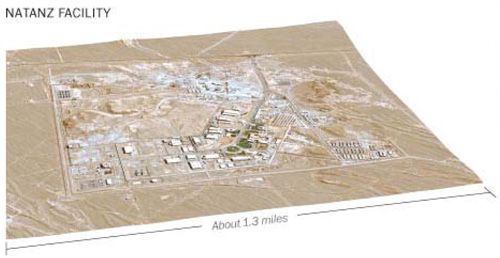
natanzWashington, D.C., September 23, 2013 – While the focus on Syria's chemical weapons use, and the possibility of military action against Syrian government targets pushed aside, for a while, the issue of how to deal with Iran's nuclear program,1 the two situations have one thing in common — their reported reliance on underground facilities to shield the production and storage of weapons of mass destruction.

Documents posted today by the National Security Archive show that such sites in Syria are only the latest in a long line of alleged and real underground facilities that have posed a high priority challenge for U.S. and allied intelligence collection and analysis efforts, as well as for military planners. There may be more than 10,000 such facilities worldwide, many of them in hostile territory, and many presumably intended to hide or protect lethal military equipment and activities, including weapons of mass destruction, that could threaten U.S. or allied interests.

Today's posting features 21 new documents, in addition to the 41 records from the Archive's initial March 23, 2012, posting on this subject. The new materials include several concerning a key topic of Cold War intelligence collection and analysis — hardened and underground communications facilities. Also included for the first time are draft charters for the National Reconnaissance Office (NRO) working group on hardened and buried targets. The majority of the new materials consist of reports from the Asian Studies Detachment (ASD) of the 500th Military Group of the Army Intelligence and Security Command. The ASD reports, based on open source intelligence, focus on various aspects of hardened and buried facilities in North Korea and China.

The 21 new items, with one exception, were acquired via Freedom of Information Act requests or research in the National Archives. The original posting described in detail the agencies and programs the U.S. government has brought to the task of identifying and assessing underground structures in foreign countries since World War II.

Read New Introduction and See Complete List of Documents with Links

4th Media: Saudi Intelligence Behind Chemical Attacks in Syria

07 Other Atrocities, 08 Wild Cards, Corruption, Government, IO Deeds of War, Peace Intelligence

4th media croppedSaudi Intelligence Behind Chemical Attacks in Syria But Unfortunately Nobody Will Dare Say That

A senior United Nations official who deals directly with Syrian affairs has told Al-Akhbar that the Syrian government had no involvement in the alleged Ghouta chemical weapons attack: “Of course not, he (President Bashar al-Assad) would be committing suicide.”

When asked who he believed was responsible for the use of chemical munitions in Ghouta, the UN official, who would not permit disclosure of his identity, said: “Saudi intelligence was behind the attacks and unfortunately nobody will dare say that.” The official claims that this information was provided by rebels in Ghouta.

Read full article with many links.

See Also:

Saudi Arabia’s “Chemical Bandar” behind the Chemical Attacks in Syria?

Stephen E. Arnold: Coping with News Filters

Advanced Cyber/IO
Stephen E. Arnold
Stephen E. Arnold

How to Cope with News Filtering

Ten years ago, I subscribed to traditional newspapers. Each morning I worked through the Courier Journal, the New York Times, the Financial Times, and the Wall Street Journal. Today I rely on the information available to me without charge from various online services.

On two recent research projects, I made a surprising discovery. In this Honk article I want to highlight some of the information services I have to use to get a reasonably complete, unfiltered, current view of certain topics. If I want to learn about the Kardashians or the Miley Cyrus twerking video, I can use Ask.com news, Bing news, Google news and Yahoo news. If I want information about Anthony Weiner’s wife or a fellow with three aliases or akas, I have to use multiple systems.

Continue reading “Stephen E. Arnold: Coping with News Filters”

4th Media: Syria: Both The New York Times and Huma Rights Watch Wrong To Claim Chemical Attack Origin

IO Deeds of War

4th media croppedSyria: Both The New York Times and Huma Rights Watch Wrong To Claim Chemical Attack Origin

Human Rights Watch and the New York Times are trying to implicate the Syrian Arab Army in a chemical incident that happened on August 21 in Ghouta near Damascus.

Using the report of an United Nations commission which investigated various sites around Damascus they try to reconstruct from where the rockets suspected to have been used in the attack may have been fired from.

The UN commission identified two finds of largely intact rockets that landed in a way that lets one estimate from which directions these rockets have been fired.

Lining out from the impact sites towards the direction from where the rockets came the crossing of the two lines point, say HRW and the NYT, to the possible launch point of both rockets.

That point, a Syrian army artillery site, is then seen as implicated in the chemical attack.

When taken together, the azimuths drawn from different neighborhoods lead back to and intersect at Mount Qasioun — so far an impregnable seat of Mr. Assad’s power — according to independent and separate calculations by both The New York Times and Human Rights Watch.“Connecting the dots provided by these numbers allows us to see for ourselves where the rockets were likely launched from and who was responsible,” Josh Lyons, a satellite imagery analyst for Human Rights Watch, noted in a statement on Tuesday.

“This isn’t conclusive,” Mr. Lyons added. “But it is highly suggestive.”

But that analysis is faulty. At least one of the two rockets the UN commission assessed contained no chemical agent at all.

Read full article.

Robin Good: Curate Favorite Web Destinations Visually with Wibki

Advanced Cyber/IO
Robin Good
Robin Good

Wibki is a free web app which allows you to easily organize a series of visual “start pages” from which to access your favorite web sites, resources and apps. Wibki does an excellent job of making it very easy to add and edit new sites to your visual start pages, and it automatically fetches the logo of each one. You can create as many “start pages” (or tabs) as you like, so that you can keep your favorite web sites organized into different thematic categories. Individual cells can be easily edited, removed or dragged nto different positions.

My comments: An excellent tool to keep and organize in a handy way your favorite web sites. The web site icons and the simple and clean organization make this apparently simple visual bookmarking tool a very effective start page builder and web destinations manager. Free to use. In private beta. Request your invitation here: http://www.wibki.com/ Read also the story behind Wibki here: http://www.wibki.com/blog/say-hi-to-wibki-the-future-of-browsing/ Related sites: www.startme.com

Chuck Spinney: Israel Still Angling for Attacks on Syria and Iran

04 Inter-State Conflict, 05 Iran, 07 Other Atrocities, 08 Wild Cards, Corruption, Government, Idiocy, Ineptitude, IO Deeds of War, Military
Chuck Spinney
Chuck Spinney

The author is one of the best journalists in the Middle East.

Israel Still Angling for Attacks on Syria and Iran

Jonathan Cook

Counterpunch:, 2013-09-18

Nazareth.

President Barack Obama may have drawn his seemingly regretted “red line” around Syria’s chemical weapons, but it was neither he nor the international community that turned the spotlight on their use. That task fell to Israel.

It was an Israeli general who claimed in April that Damascus had used chemical weapons, forcing Obama into an embarrassing demurral on his stated commitment to intervene should that happen.

According to the Israeli media, it was also Israel that provided the intelligence that blamed the Syrian president, Bashar Al Assad, for the latest chemical weapons attack, near Damascus on August 21, triggering the clamour for a US military response.

It is worth remembering that Obama’s supposed “dithering” on the question of military action has only been accentuated by Israel’s “daring” strikes on Syria – at least three since the start of the year.

It looks as though Israel, while remaining largely mute about its interests in the civil war raging there, has been doing a great deal to pressure the White House into direct involvement in Syria.

That momentum appears to have been halted, for the time being at least, by the deal agreed at the weekend by the US and Russia to dismantle Syria’s chemical weapons arsenal.

To understand the respective views of the White House and Israel on attacking Syria, one needs to revisit the US-led invasion of Iraq a decade ago.

Israel and its ideological twin in Washington, the neoconservatives, rallied to the cause of toppling Saddam Hussein, believing that it should be the prelude to an equally devastating blow against Iran.

Israel was keen to see its two chief regional enemies weakened simultaneously. Saddam’s Iraq had been the chief sponsor of Palestinian resistance against Israel. Iran, meanwhile, had begun developing a civilian nuclear programme that Israel feared could pave the way to an Iranian bomb, ending Israel’s regional monopoly on nuclear weapons.

The neocons carried out the first phase of the plan, destroying Iraq, but then ran up against domestic cookclash-e1312398376396.jpegopposition that blocked implementation of the second stage: the break-up of Iran.

The consequences are well known. As Iraq imploded into sectarian violence, Iran’s fortunes rose. Tehran strengthened its role as regional sponsor of resistance against Israel – or what became Washington’s new “axis of evil” – that included Hizbollah in Lebanon and Hamas in Gaza.

Israel and the US both regard Syria as the geographical “keystone” of that axis, as Israel’s outgoing ambassador to the US, Michael Oren, told the Jerusalem Post this week, and one that needs to be removed if Iran is to be isolated, weakened or attacked.

But Israel and the US drew different lessons from Iraq. Washington is now wary of its ground forces becoming bogged down again, as well as fearful of reviving a cold war confrontation with Moscow. It prefers instead to rely on proxies to contain and exhaust the Syrian regime.

Israel, on the other hand, understands the danger of manoeuvring its patron into a showdown with Damascus without ensuring this time that Iran is tied into the plan. Toppling Assad alone would simply add emboldened jihadists to the troubles on its doorstep.

Continue reading “Chuck Spinney: Israel Still Angling for Attacks on Syria and Iran”

noble gold