The Triumph of the Military-Industrial-Congressional Complex
To understand perverse military decision-making, follow the money
by BEN COHEN & WINSLOW WHEELER
Medium.com/War-Is-Boring, January 25, 2015
Complete article below the line.

The truth at any cost lowers all other costs — curated by former US spy Robert David Steele.
The Triumph of the Military-Industrial-Congressional Complex
To understand perverse military decision-making, follow the money
by BEN COHEN & WINSLOW WHEELER
Medium.com/War-Is-Boring, January 25, 2015
Complete article below the line.
Consumer Self-Defense: 12 Ways to Drive GMOs and Roundup off the Market
Given the current barrage of pro-GMO propaganda in the mass media, “GMO-Free” proponents need to put far greater emphasis on the fact that it isn’t just the imprecise and unpredictable nature of gene-splicing itself—a process that produces toxin and allergens, and shuts down essential gene functions—that threatens human health and the environment. The billions of pounds of systemic toxic pesticides (herbicides, insecticides, and fungicides), especially Roundup, that are used on GMO and so-called conventional crops, are equally, if not more, hazardous to human health and the environment.These systemic agro-toxins, for the most part, cannot be washed off before eating.
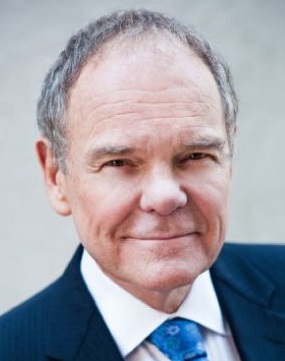
At Davos, Tech Executives Skirt the Real Issues
On the panel were Google chairman Eric Schmidt, Vodafone CEO Vittorio Colao, Facebook COO Sheryl Sandberg, and Microsoft CEO Satya Nadella. During the session I frequently felt that that neither the optimistic statements of hope or anecdotes of those whose lives have improved adequately dealt with the challenge of the digital economy. I was tempted to quote Bill Clinton: “It’s the economy, stupid.”
The Digital Economy has become THE Economy. Yes, technology has created many wonders, but if we look at the macro level, the scorecard on economic results of technology are so far troublesome. Technology has unquestionably been at the heart of some negative developments including massive structural unemployment; growing social inequality where the benefits and wealth generated by technology have been asymmetrical; a fracturing of public discourse; and the loss of privacy and the rise of a surveillance society to name a few.
Continue reading “Don Tapscott: Davos Tech Panel Disappoints”

Well, I don't see how you could make it any plainer than this. I now have two grandsons — two years for one, one month for the other — and I wonder what kind of country, if they stay in this country, the United States will be when they grow to adulthood. It seems very doubtful it will be the democratic republic of my youth, in substance whatever hollow forms may remain.
Princeton Study: U.S. No Longer An Actual Democracy
Continue reading “SchwartzReport: Princeton: US Not A Democracy”
A Manchurian Candidate’s State of the Union
Why do people who nominally like Obama side with his enemies?
This posting has three attachments. Together, they illustrate the patently irrational nature of the cognitive dissonance now shaping the political debate. In Attachment 1, an Obama apologist (who will remain unnamed) recently distributed an email praising Obama’s “achievements.” He ends by posing a question as if the answer were self evident, given these achievements: Why do so many people who nominally like Obama side with Republicans who hate him? The apologist’s email was triggered by Professor Michael Brenner’s analysis of Obama’s State of the Union Address (Attachment 3). Although Brenner does not use the term, his subject is that Obama’s address reflected the dissonance at the center of contemporary political discourse. In Attachment 2, my friend Mike Lofgren responds directly to the question raised in the critique of Brenner’s essay. Taken together, Lofgren and Brenner effectively answer the apologist’s question — but until so-called progressives come to grips with the elemental nature of President Obama’s Manchurian Candidate-cy, silly questions like that in Attachment 1 will merely serve to lubricate the looting operation. Read full post.

Michael Fertik: online reputation is becoming more valuable than money or power
The author of The Reputation Economy believes online reputation is now so important that we risk becoming persona non grata if we ignore it. Here he explains how to transform yourself into search-engine gold

A crowd-mind emerges when formation of a crowd causes fusion of individual minds into one collective mind. Members of the crowd lose their individuality. The deindividuation leads to derationalization: emotional, impulsive and irrational behavior, self-catalytic activities, memory impairment, perceptual distortion, hyper-responsiveness, and distortion of traditional forms and structures. This book presents unique results of computational studies on cognitive and affective space-time processes in large-scale collectives of abstract agents being far from mental equilibrium. Computational experiments demonstrate that the irrational and nonsensical behavior of individual entities of crowd-mind results in complex, rich and non-trivial spatio-temporal dynamics of the agent collectives. Mathematical methods employ theory and techniques of cellular-automata and lattice swarms, applied algebra, theory of finite automata and Markov chains, and elementary differential equations.